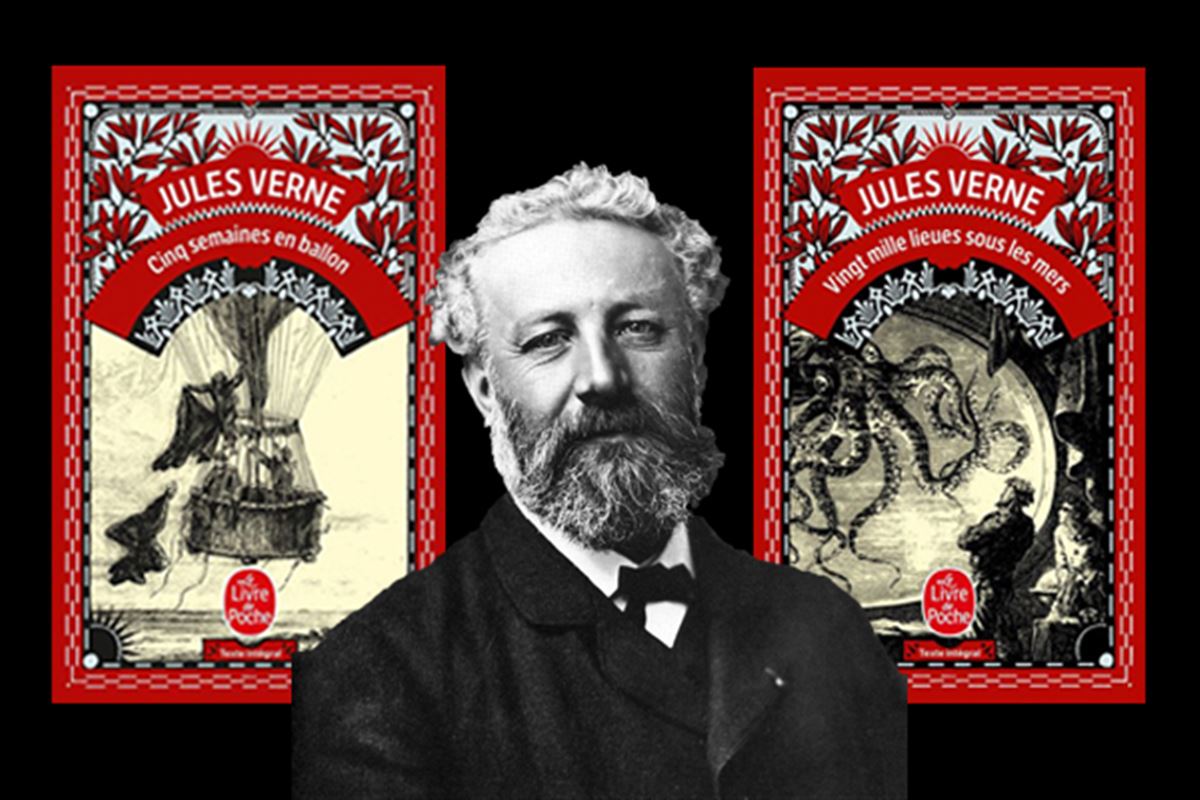
The Unyielding Power of Nature: The True Protagonist in Verne’s Worlds
When analyzing the expansive literary universe of Jules Verne, casual readers often fixate on the magnificent machines, the pioneering scientific theories, and the intrepid human explorers. However, a deeper structural analysis reveals a profound truth: the actual, undisputed protagonist governing these narratives is nature itself. Verne did not merely use the natural world as a passive backdrop or a scenic stage for human endeavors; he elevated it to the status of a dynamic, omnipotent entity that shapes, tests, and ultimately dictates the fate of every character who dares to traverse its domains.
Nature as an Impartial Judge and Ultimate Challenge
In masterpieces such as The Mysterious Island and Twenty Thousand Leagues Under the Sea, nature operates as a complex mechanism of both creation and destruction. The environment serves as a rigorous testing ground where human intellect, morality, and resilience are pushed to their absolute limits. The ocean, the subterranean caverns, and the untamed island wilderness are depicted with meticulous scientific accuracy, yet they harbor an almost mythic power.
To fully grasp how nature functions as the primary driver of Verne’s plots, we must examine the specific roles it plays across his narratives:
- The Catalyst for Innovation: The hostile conditions of Lincoln Island force the castaways to reconstruct human civilization from scratch. Nature provides the raw materials—iron ore, sulfur, clay—but demands immense intellectual labor to unlock them.
- The Great Equalizer: Regardless of a character’s social standing or wealth in the civilized world, nature strips them down to their core competencies. Only those armed with practical knowledge, reason, and adaptability can survive its wrath.
- The Agent of Divine Retribution: When characters exhibit overwhelming hubris or attempt to subjugate the natural order purely for destructive purposes, nature responds with overwhelming force, often resulting in their spectacular downfall.
This symbiotic relationship between human vulnerability and environmental supremacy highlights Verne’s philosophical stance. He championed scientific progress but remained deeply reverent of the natural laws that govern the cosmos. The environment in Verne’s works is a living, breathing entity that commands absolute respect, rewarding ingenuity while ruthlessly punishing arrogance.

The Engine of Endless Curiosity: Jules Verne’s Secret Narrative Drive
Behind the intricate plots and the vast geographical expanses of Verne’s novels lies a singular, inexhaustible psychological engine: the human drive for discovery. Jules Verne’s endless curiosity was not merely a personal quirk; it was the foundational architecture upon which he built the “Extraordinary Voyages” series. Living in the 19th century—an era defined by rapid industrialization, global exploration, and paradigm-shifting scientific discoveries—Verne channeled the zeitgeist of his time into narratives that celebrated the relentless pursuit of knowledge.
The Intersection of Science, Exploration, and Imagination
Verne’s genius lay in his ability to seamlessly blend empirical data with boundless imagination. He spent countless hours in libraries, absorbing the latest reports from geographical societies, astronomical observations, and engineering breakthroughs. This meticulous research allowed him to construct worlds that felt tangibly real, grounded in the scientific realities of his day, yet pushed just beyond the horizon of contemporary capability.
The manifestation of this curiosity is evident in the specific narrative techniques Verne employed to keep readers engaged in highly technical subjects:
- Pedagogical Storytelling: Verne embedded complex lessons in physics, botany, geology, and astronomy directly into the dialogue and action. When Cyrus Harding calculates the island’s coordinates using nothing but a watch and the stars, the reader is invited to partake in the intellectual thrill of the mathematical process.
- The Lure of the Unknown Blank Spaces: Verne was obsessed with the unmapped regions of the globe. Whether it was the depths of the ocean, the center of the Earth, or the dark side of the moon, he used these “blank spaces” on the map as canvases for his characters’ insatiable need to explore.
- Cataloging the World: Through characters like Conseil in Twenty Thousand Leagues Under the Sea, Verne indulged in the exhaustive classification of flora and fauna, reflecting the Victorian era’s passion for taxonomy and the systemic understanding of the natural world.
Ultimately, the secret drive behind Verne’s works is the proposition that knowledge itself is the highest form of adventure. The physical journeys of his characters are invariably mirrored by profound intellectual awakenings. For Verne, a mind devoid of curiosity was a tragedy, while an inquisitive spirit was the key to unlocking the universe’s greatest mysteries.

Classic Role Models: The Pillars of Reason, Loyalty, and Revenge
Jules Verne did not write psychologically ambiguous anti-heroes; instead, he crafted monumental archetypes. His characters are striking embodiments of specific philosophical stances and moral compasses. By distilling human traits into pure, concentrated forms, Verne created classic role models that serve as the structural pillars of his narratives. The interplay between reason, unwavering loyalty, and the consuming fire of revenge forms the emotional core of his most enduring works.
The Apotheosis of Reason: The Engineer Archetype
At the pinnacle of Verne’s moral hierarchy sits the man of science and reason, most perfectly realized in the character of Cyrus Harding (Smith) from The Mysterious Island. Harding is the ultimate polymath, a man whose encyclopedic knowledge of chemistry, metallurgy, and engineering allows him to conquer the wilderness. He represents the 19th-century ideal of progress—the belief that human rationality, when applied ethically and systematically, can overcome any physical obstacle. Harding never panics; his emotional restraint is matched only by his formidable intellect.
Unwavering Loyalty and the Bonds of Brotherhood
Contrasting the cold calculus of reason is the warm, beating heart of absolute loyalty. Verne frequently populated his novels with characters whose primary motivation is an unbreakable devotion to their companions. Pencroff the sailor is a prime example. He possesses practical wisdom and a fierce protective instinct over his fellow castaways. Similarly, Conseil’s dedication to Professor Aronnax transcends mere employment; it is a profound, almost spiritual bond of brotherhood. These characters provide the emotional glue that holds the exploratory teams together when they face insurmountable odds.
The Consuming Flame of Vengeance: The Dark Genius
If reason and loyalty represent the light of human potential, revenge represents its terrifying shadow. Captain Nemo stands as Verne’s most complex and compelling creation. Driven from humanity by unspeakable personal tragedies and political oppression, Nemo channels his immense intellect into building the Nautilus—an instrument of both miraculous scientific discovery and devastating retribution. Nemo is a tragic figure, a man whose genius is poisoned by his inability to forgive. His character serves as a stark warning about the destructive potential of technology when it is divorced from human empathy and driven by wrath.

The Loop of Fate: Captain Nemo’s Farewell and Ayrton’s Rebirth
The interconnected nature of Verne’s overarching trilogy—comprising In Search of the Castaways (The Children of Captain Grant), Twenty Thousand Leagues Under the Sea, and culminating in The Mysterious Island—reveals a masterful orchestration of narrative fate. Verne utilizes the concept of a “loop of fate” to bring his most tormented characters full circle, offering them either a poignant farewell or a miraculous rebirth. This structural closure elevates his work from mere adventure fiction to a profound meditation on redemption, isolation, and the inescapable consequences of one’s past actions.
The Tragic Arc and Final Rest of Captain Nemo
The trajectory of Captain Nemo (Prince Dakkar) is a masterclass in tragic storytelling. Introduced as a terrifying, omnipotent force of the deep, Nemo’s journey ends in the hidden caverns of Lincoln Island. His farewell is deeply symbolic. Stripped of his crew, aging, and isolated within his dying submarine, Nemo is finally forced to confront the limits of his self-imposed exile. When he reaches out to the castaways, it represents a final, desperate reconnection with the humanity he had so fiercely rejected. His death, accompanied by the sinking of the Nautilus into the abyss, serves as the ultimate closure to a life defined by brilliant rebellion and profound sorrow. The island itself becomes his mausoleum, sealing his legacy beneath the waves.
Ayrton’s Redemption and the Power of Forgiveness
In stark contrast to Nemo’s tragic end is the narrative of Ayrton, the traitorous mutineer from In Search of the Castaways. Left on Tabor Island as punishment for his crimes, Ayrton undergoes a horrifying regression. Stripped of human contact, he devolves into a feral, beast-like state, entirely consumed by the savage environment. His rescue by the colonists of Lincoln Island initiates one of the most moving arcs of rebirth in classic literature.
Ayrton’s rehabilitation is not achieved through punishment, but through the restorative power of labor, trust, and community forgiveness. The colonists do not treat him as a prisoner; they treat him as a broken man in need of healing. Step by step, through tears, hard work, and eventual acts of immense heroism, Ayrton reclaims his humanity. The loop of his fate—from traitor to beast, and finally to a loyal, redeemed man—stands as Verne’s ultimate testament to the indomitable nature of the human soul and the transformative power of grace.

Synthesizing the Verne Trilogy: A Masterclass in Narrative Architecture
To truly appreciate the depth of Jules Verne’s literary universe, one must step back and observe the architectural brilliance of his unofficial trilogy. The Mysterious Island does not merely stand on its own; it acts as the grand synthesis, the keystone that locks the disparate narratives of his previous masterpieces into a cohesive, philosophical whole. Verne meticulously weaves the loose threads of earlier novels into a tight, inescapable knot of destiny on Lincoln Island.
The Interconnected Universe of Verne’s Masterpieces
The genius of this synthesis lies in how Verne utilizes the island as a geographical and narrative nexus. It is here that the pure science and survivalism of the castaways intersect with the dark, hidden interventions of Captain Nemo. It is here that the consequences of Lord Glenarvan’s justice in In Search of the Castaways manifest in the feral form of Ayrton. The island operates as a crucible where the differing ideologies of Verne’s universe are forced into direct contact.
Furthermore, the narrative architecture demonstrates a profound progression in Verne’s worldview. While his earlier works often celebrated unchecked exploration and the sheer thrill of scientific discovery, the culmination of the trilogy introduces a sobering maturity. It acknowledges that science cannot solve the ultimate mysteries of the human heart, that isolation breeds madness, and that true survival requires not just engineering, but ethics, community, and moral fortitude. The explosive destruction of Lincoln Island at the novel’s climax serves as a stark reminder that all human endeavors are ultimately temporary when faced with the eternal forces of nature.

Decoding Verne’s Literary Elements: A Comparative Character Analysis
Understanding the intricate dynamics of Verne’s characters requires a structured, multi-dimensional analysis of their core motivations, fatal flaws, and ultimate narrative destinations. By placing his primary archetypes side by side, we can decode the specific literary elements that make his stories resonate so powerfully across generations. The contrasting paths of these figures illuminate Verne’s complex perspective on human nature and scientific progress.
A Comparative Analysis of Character Motivations
The following table provides an exhaustive breakdown of the core characters that define the overarching themes of reason, revenge, and redemption within Verne’s interconnected universe:
| Character | Primary Archetype | Core Motivation | Relationship with Nature | Ultimate Narrative Fate |
|---|---|---|---|---|
| Cyrus Harding | The Rational Engineer | Scientific progress, survival, community building | Views nature as a resource to be mastered through intellect | Survives, returns to civilization to continue his work |
| Captain Nemo | The Vengeful Genius | Retribution against imperialism, absolute independence | Seeks refuge in nature (the ocean) to escape human corruption | Dies in isolation, finding peace only in his final moments |
| Ayrton | The Redeemed Sinner | Atonement, reclaiming lost humanity | Overwhelmed by nature, devolves into a beast before rescue | Achieves total redemption, becomes a loyal and heroic figure |
| Pencroff | The Loyal Pragmatist | Protection of his surrogate family, practical execution | Respects nature’s power, adapts physically to its demands | Survives, remaining the emotional anchor of the group |
This comparative framework highlights the diverse ways in which Verne’s characters interact with their environment and each other. Harding’s success proves the value of intellect, but Nemo’s tragedy warns against intellect devoid of human connection. Ayrton’s journey proves that the human spirit, no matter how degraded by isolation and sin, can be resurrected through the persistent application of compassion and communal support.

The Enduring Legacy of Jules Verne’s Visionary Worlds
More than a century after his death, the literary worlds constructed by Jules Verne continue to exert a massive gravitational pull on modern science fiction, adventure literature, and popular culture. His works are not merely historical artifacts of 19th-century optimism; they are foundational texts that established the blueprints for how we tell stories about technology, exploration, and human endurance. The legacy of Verne is characterized by his unparalleled ability to anticipate the future while remaining deeply anchored in the timeless struggles of the human condition.
Why Verne’s Works Continue to Resonate Today
The longevity of Verne’s appeal can be attributed to the perfect balance he struck between technical prophecy and emotional depth. Modern readers return to his novels not just to marvel at his predictions of submarines, space travel, and helicopters, but to engage with the profound philosophical questions he raised. Are we masters of nature, or merely its temporary guests? Does technology elevate our morality, or simply amplify our capacity for destruction? Can a broken human soul truly find redemption?
Furthermore, the archetypes he perfected—the stoic engineer, the loyal companion, the brilliant but flawed anti-hero—have become the DNA of countless modern narratives. Every time a contemporary story features a brilliant scientist utilizing raw materials to survive on a hostile planet, or a morally ambiguous captain commanding an advanced vessel, the echo of Jules Verne is unmistakably present. He taught us to look at the stars, the depths of the oceans, and the untamed wilderness, and see not just physical space, but the infinite potential of the human mind.
Frequently Asked Questions (FAQ)
- What is the connection between The Mysterious Island and Twenty Thousand Leagues Under the Sea?
- The Mysterious Island serves as a sequel and a narrative conclusion to Twenty Thousand Leagues Under the Sea. It reveals the ultimate fate of Captain Nemo, who has secretly been aiding the castaways on Lincoln Island. The novel provides closure to Nemo’s backstory, explaining his true identity as Prince Dakkar of India, and concludes with his death aboard the Nautilus, which is hidden in a cavern beneath the island.
- How does Jules Verne portray nature in his novels?
- Verne portrays nature not just as a setting, but as an active, omnipotent force. It acts as both an adversary that tests the physical and intellectual limits of his characters, and a provider of immense resources. Nature in Verne’s world is an impartial judge; it rewards rational, scientific ingenuity and punishes hubris and moral corruption.
- Who is Ayrton, and why is his character arc significant?
- Ayrton is a character who first appears as a treacherous mutineer in In Search of the Castaways. He is marooned on Tabor Island as punishment. In The Mysterious Island, he is discovered having regressed to a feral, animalistic state due to extreme isolation. His gradual rehabilitation and redemption by the castaways represent Verne’s profound belief in the power of forgiveness, hard work, and human community.
- Why is Cyrus Harding considered the ultimate Vernian hero?
- Cyrus Harding (or Smith, depending on the translation) embodies the 19th-century ideal of the rational, scientific man. As an engineer with encyclopedic knowledge, he leads the castaways of The Mysterious Island to conquer their environment not through brute force, but through applied science, chemistry, and metallurgy. He represents Verne’s ultimate faith in human reason and technological progress.
- What is the “loop of fate” in Verne’s trilogy?
- The “loop of fate” refers to the narrative architecture Verne used to tie together In Search of the Castaways, Twenty Thousand Leagues Under the Sea, and The Mysterious Island. Characters who committed past sins or sought isolation (like Ayrton and Nemo) are brought full circle on Lincoln Island, where they must face the consequences of their actions, leading to either tragic closure or profound rebirth.