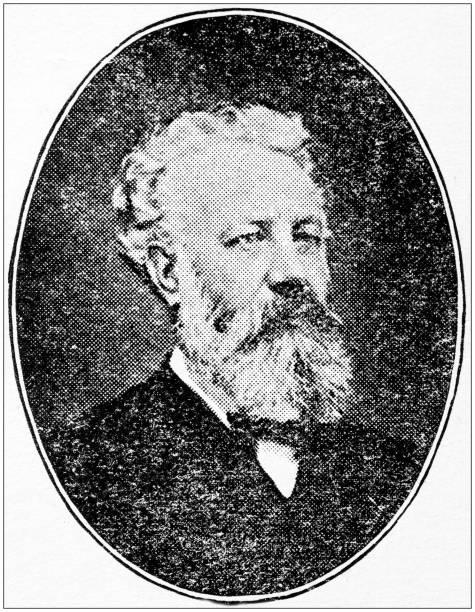
The Visionary Architect of Tomorrow: Jules Verne’s Blueprint for the Future
Long before the advent of the microchip, the splitting of the atom, or the successful launch of a liquid-fueled rocket, there was a French novelist who meticulously mapped out the trajectory of human technological progress. Jules Verne is frequently heralded not merely as a pioneer of the science fiction genre, but as the ultimate visionary who invented the future. His literary corpus, collectively known as the Voyages Extraordinaires, served as a profound bridge between the romanticism of nineteenth-century exploration and the hard realities of twentieth-century engineering.
Verne’s unique genius did not stem from mystical clairvoyance, but rather from an obsessive dedication to scientific plausibility. He spent countless hours in the reading rooms of the Bibliothèque Nationale de France, devouring the latest scientific journals, engineering patents, and geographical surveys. By extrapolating the nascent technologies of his era—such as early electromagnetism and rudimentary ballistics—Verne was able to construct highly detailed, mathematically grounded predictions of what humanity could achieve.
The Intersection of Hard Science and Literary Imagination
What separates Verne from other speculative writers of his time is his unwavering commitment to the scientific method within fiction. He actively consulted with contemporary scientists, mathematicians, and inventors, including his close friend Félix Tournachon (known as Nadar), a pioneer in early aviation and photography. This collaborative approach allowed Verne to embed precise calculations, geographical coordinates, and mechanical schematics directly into his prose, transforming his novels into veritable blueprints for future innovators.
- Extrapolative Engineering: Verne took existing, primitive prototypes (like early hand-cranked submersibles) and logically scaled them up using theoretical power sources.
- Mathematical Rigor: His works often feature pages of complex arithmetic, calculating everything from water pressure at extreme ocean depths to the precise escape velocity required to leave Earth’s atmosphere.
- Societal Impact Analysis: Beyond the machines themselves, Verne frequently analyzed how these advanced technologies would alter global commerce, warfare, and human philosophy.

Engineering the Nautilus: Submarine Technology in Twenty Thousand Leagues Under the Sea
When Twenty Thousand Leagues Under the Sea was published in 1870, the concept of a submarine was not entirely novel; however, existing submersibles were dangerous, claustrophobic, and severely limited in range. Verne’s introduction of the Nautilus, commanded by the enigmatic Captain Nemo, completely revolutionized the public and scientific perception of underwater navigation. The Nautilus was not merely a vessel; it was a fully self-sustaining underwater habitat, capable of circumnavigating the globe without ever needing to surface for provisions or fuel.
The true stroke of Verne’s genius in this novel was his selection of power. At a time when steam and coal were the undisputed kings of industry, Verne recognized their limitations for underwater travel, specifically regarding oxygen consumption and exhaust. Instead, he turned to a power source that was still in its infancy: electricity. Captain Nemo famously declares that electricity is the soul of his ship, utilizing it for propulsion, illumination, heating, and even underwater defense mechanisms.
The Mechanics of Captain Nemo’s Masterpiece
Verne’s detailed descriptions of the Nautilus’s internal workings provided a startlingly accurate preview of modern naval engineering. He described a dual-hull construction, which is a standard safety and structural feature in contemporary submarine design. Furthermore, he conceptualized a system of ballast tanks that could be flooded with seawater to descend and evacuated using powerful electric pumps to ascend—the exact mechanism utilized by modern submarines today.
The author also foresaw the psychological and physiological necessities of long-term deep-sea habitation. The Nautilus featured advanced air-purification systems, utilizing sodium compounds to scrub carbon dioxide from the atmosphere, an eerie precursor to the chemical scrubbers used in modern spacecraft and nuclear submarines. By grounding his fictional vessel in strict thermodynamic and hydrodynamic principles, Verne created a conceptual framework that would directly inspire generations of marine engineers, including Simon Lake, the inventor of the modern modern submarine, who credited his entire career to reading Verne’s masterpiece.

From Fiction to Reality: The Technical Specifications of Captain Nemo’s Vessel
To truly appreciate how Jules Verne’s submarine concept inspired modern technology, one must engage in a direct comparative analysis between the fictional Nautilus and the real-world vessels that eventually adopted its name. In 1954, the United States Navy launched the USS Nautilus (SSN-571), the world’s first operational nuclear-powered submarine. The parallels between Verne’s 1870 vision and the 1954 reality are nothing short of astounding.
Both vessels achieved unprecedented autonomy. While Captain Nemo relied on highly advanced, fictionalized sodium-mercury batteries extracted from seawater, the USS Nautilus utilized a controlled nuclear reactor. Despite the difference in the specific energy source, the fundamental principle remained identical: a propulsion system entirely independent of atmospheric oxygen, allowing for limitless underwater endurance.
Comparative Data Analysis: 1870 vs. 1954
The structural and operational similarities demonstrate that Verne was not just guessing; he was logically deducing the necessary requirements for deep-ocean supremacy. Below is a detailed comparison highlighting the alignment between Verne’s imagination and twentieth-century military engineering.
| Specification | Verne’s Fictional Nautilus (1870) | USS Nautilus SSN-571 (1954) |
|---|---|---|
| Primary Power Source | Advanced Electromagnetism (Sodium Batteries) | Nuclear Fission (S2W Naval Reactor) |
| Atmospheric Independence | Yes (Chemical CO2 scrubbers) | Yes (Electrolytic oxygen generators) |
| Hull Design | Double-hulled, streamlined for hydrodynamics | Double-hulled, optimized for submerged speed |
| Global Milestone | Traversed beneath the Antarctic ice shelf | First to cross the submerged North Pole (Operation Sunshine) |
This table illustrates how Verne’s conceptualization of underwater exploration transcended mere storytelling. By defining the operational parameters required for a true submarine—speed, self-sufficiency, and atmospheric independence—he effectively wrote the design brief that the US Navy would follow nearly a century later.

Defying Gravity: How Verne Anticipated Human Space Travel
While his underwater explorations captivated millions, it was Jules Verne’s foray into the cosmos that cemented his status as the ultimate time traveler of literature. In his 1865 novel, From the Earth to the Moon, Verne tackled a subject that was universally considered pure fantasy: human space travel. Yet, rather than relying on mystical anti-gravity devices or magical portals, Verne approached the problem as a strict exercise in ballistics, physics, and material science.
Verne’s narrative revolves around the Baltimore Gun Club, a group of post-Civil War artillery experts who decide to build a massive cannon, the Columbiad, to fire a manned projectile at the Moon. While the method of propulsion—a giant gun—would practically prove fatal to any human occupants due to the immense G-forces of acceleration, the underlying mathematics and logistical planning Verne presented were shockingly accurate.
The Mathematics of Escape Velocity
Verne consulted with his cousin, Henri Garcet, a mathematics professor, to calculate the exact velocity required for an object to escape Earth’s gravitational pull. The figure they arrived at was approximately 11.2 kilometers per second (about 25,000 miles per hour). Remarkably, this is the exact mathematical threshold known today as escape velocity. Verne understood that to overcome gravity, sheer kinetic energy was required, a principle that forms the bedrock of modern orbital mechanics.
- Material Selection: Verne chose aluminum for his space capsule. In 1865, aluminum was a rare and precious metal, but Verne correctly identified it as the ideal material for aerospace engineering due to its exceptional strength-to-weight ratio.
- Orbital Mechanics: The novel accurately describes the concept of weightlessness in space, a phenomenon that had never been experienced by humans at the time.
- Retro-Rockets: To slow the capsule’s descent upon returning to Earth, Verne conceptualized the use of explosive rockets firing in the opposite direction of travel, a direct precursor to the retro-rockets used in the Apollo and Soyuz programs.

The Columbiad Cannon and Apollo 11: A Comparative Analysis of Lunar Missions
The most chilling aspect of Verne’s foresight regarding space travel is not just his grasp of physics, but his astonishingly accurate predictions of the logistical and geographical realities of the 1969 Apollo 11 moon landing. When one places Verne’s 1865 novel side-by-side with the historical record of NASA’s lunar program, the coincidences move beyond mere chance and enter the realm of profound structural anticipation.
Verne recognized that to take maximum advantage of the Earth’s rotational velocity, a launch site must be located as close to the equator as possible. After a fictional bidding war between Texas and Florida, Verne’s protagonists construct their massive launch facility in Tampa Town, Florida—a mere 130 miles from where NASA would eventually build the Kennedy Space Center at Cape Canaveral.
Striking Parallels Between Fiction and Reality
The similarities extend far beyond geography. Verne’s narrative structure mirrors the Apollo missions in ways that still baffle historians and aerospace engineers today. He predicted the exact number of crew members, the dimensions of the spacecraft, and the precise method of the crew’s return to Earth.
Consider the following undeniable parallels between the Columbiad and Apollo 11: Both missions were launched from the state of Florida. Both missions carried exactly three astronauts. Both spacecraft were roughly the same size and weight (Verne’s projectile and the Apollo Command Module). Furthermore, after completing their lunar journey, Verne’s astronauts do not land on solid ground; they splash down in the Pacific Ocean, where they are recovered by a United States Navy vessel—the exact procedure utilized by NASA for the Apollo recovery missions. This level of granular foresight proves that Verne was actively calculating the most logical, scientifically sound path to the stars.

The Ultimate Time Traveler: Paris in the Twentieth Century and Urban Futurism
While Verne is most famous for his vehicles of exploration, his most startlingly accurate predictions regarding daily human life were hidden away for over a century. In 1863, Verne wrote a manuscript titled Paris in the Twentieth Century. His publisher, Pierre-Jules Hetzel, rejected it for being too pessimistic and unbelievable. The manuscript was locked in a safe and thought lost until its rediscovery and subsequent publication in 1994. Reading this novel today is a surreal experience, as it confirms Verne’s status as the ultimate time traveler.
Set in the year 1960, the novel depicts a highly mechanized, technologically saturated metropolis. Verne moved away from the untamed oceans and deep space to focus on urban futurism. He envisioned a society driven entirely by commerce, technology, and rapid communication, eerily mirroring the corporate-dominated landscapes of the modern era.
A Dystopian View of Technological Saturation
In this “lost” novel, Verne describes a sprawling Paris illuminated by brilliant electric streetlights, decades before Thomas Edison commercialized the incandescent bulb. He vividly details high-speed trains running on elevated tracks, powered by invisible forces (magnetism and compressed air). Most impressively, he describes city streets choked with autonomous carriages powered by internal combustion engines—a flawless prediction of the modern automobile traffic jam.
However, Verne’s foresight was not merely technological; it was deeply sociological. He predicted that the rise of absolute technological efficiency would lead to a decline in the humanities. In his 1960 Paris, poetry, literature, and art are marginalized, replaced by an obsession with applied sciences and financial markets. This nuanced critique of a hyper-industrialized society showcases Verne’s deep understanding of the human condition and the potential psychological costs of rapid technological advancement.

Networked World: Predictions of the Internet, Holograms, and Global Communications
Jules Verne’s ability to extrapolate the future extended into the realm of global communications, predicting the interconnected, high-speed information networks that define the 21st century. In a short story published in 1889 titled In the Year 2889 (often attributed to Jules and his son Michel Verne), the authors present a world that has shrunk due to instantaneous communication technologies.
The centerpiece of this communicative revolution is the Phonotelephote. Verne described this device as a system that allowed individuals to transmit both their voice and their image across vast distances simultaneously. In essence, Verne had conceptualized the modern video conference—predicting the likes of Zoom, Skype, and FaceTime over a century before the necessary digital infrastructure existed.
The Precursor to the 24-Hour News Cycle
Furthermore, Verne envisioned a dramatic shift in how humanity would consume information. He described the “Earth Chronicle,” a massive media empire that no longer printed newspapers. Instead, subscribers received their daily news spoken to them by reporters and scientists directly into their homes via a global network of wires and acoustic tubes. This is an undeniable conceptualization of the television news broadcast and the modern internet-based 24-hour news cycle.
- Holographic Projections: Verne wrote of atmospheric advertisements projected directly into the clouds, anticipating modern drone displays and holographic marketing.
- Electronic Synthesizers: He foresaw the creation of music through electronic instruments, predicting the rise of synthesizers and digital audio workstations.
- Global Data Networks: The concept of millions of interconnected devices sharing real-time data underpins his later works, showcasing a profound understanding of network theory long before the invention of the ARPANET.

The Enduring Legacy: How Verne’s Literature Continues to Inspire Modern Innovators
The true measure of Jules Verne’s impact is not found solely in the accuracy of his predictions, but in the tangible inspiration he provided to the architects of the modern world. Verne did not just guess the future; he actively shaped it by planting the seeds of possibility in the minds of young readers who would grow up to become world-changing scientists, engineers, and explorers.
The list of historical figures who explicitly cite Jules Verne as their primary inspiration is staggering. Igor Sikorsky, the inventor of the modern helicopter, was inspired by the flying machine in Verne’s Robur the Conqueror. Edwin Hubble, the astronomer who proved the universe is expanding, was driven to look at the stars after reading Verne’s lunar voyages. Admiral Richard Byrd, the legendary polar explorer, stated that Verne’s works were his guiding light into the unknown.
Bridging the Gap Between Imagination and Engineering
Verne’s ultimate legacy is the establishment of science fiction as a catalyst for science fact. By demanding rigorous scientific plausibility in his writing, he elevated the genre from mere fantasy to a legitimate sandbox for theoretical engineering. He taught humanity that the constraints of current technology are merely temporary roadblocks, easily bypassed by the combination of human ingenuity, bold imagination, and mathematical precision.
Today, as private aerospace companies build rockets to colonize Mars and deep-sea submersibles explore the Mariana Trench, they are operating within the conceptual universe that Jules Verne mapped out over 150 years ago. He remains the undisputed visionary who invented the future, proving that whatever one man is capable of imagining, other men will ultimately be capable of realizing.
Frequently Asked Questions (FAQ)
- Did Jules Verne actually invent any modern technologies himself?
- No, Jules Verne was not an inventor or an engineer by trade; he was a novelist and researcher. However, he was a meticulous conceptualizer. He read extensively about emerging scientific theories and early prototypes, using his imagination to logically scale them up. While he didn’t build the machines, his highly detailed, scientifically grounded descriptions provided the conceptual blueprints that directly inspired the actual inventors of submarines, helicopters, and spacecraft.
- How accurate were Verne’s calculations for space travel in ‘From the Earth to the Moon’?
- Verne’s calculations were astonishingly accurate for his time. With the help of his mathematician cousin, he correctly calculated the escape velocity required to leave Earth’s gravity (approximately 11.2 km/s). He also correctly identified Florida as an ideal launch site due to its proximity to the equator, predicted the use of aluminum for the spacecraft, and anticipated the use of retro-rockets. However, his propulsion method—a giant cannon—would have generated fatal G-forces for the human crew.
- What is the significance of the ‘Paris in the Twentieth Century’ manuscript?
- Written in 1863 but unpublished until 1994, this novel is highly significant because it proves Verne’s foresight extended beyond vehicles to everyday urban life. He accurately predicted gas-powered cars, fax machines, electric street lighting, high-speed rail, and the modern corporate culture. It reveals a more dystopian, philosophically critical side of Verne, warning against a society that values pure technological efficiency over art and human connection.
- How did the Nautilus in ‘Twenty Thousand Leagues Under the Sea’ differ from real submarines of the 1860s?
- In the 1860s, real submersibles were tiny, hand-cranked or steam-powered, incredibly dangerous, and could only stay underwater for brief periods. Verne’s Nautilus was revolutionary because it was massive, fully autonomous, and powered by electricity (which was barely understood at the time). He introduced the concepts of chemical air scrubbers, double-hull construction, and electric ballast pumps, all of which are standard in modern nuclear submarines today.
- Why is Jules Verne often called the “Father of Science Fiction”?
- Verne shares this title with H.G. Wells and Mary Shelley, but Verne is unique for establishing the “hard” science fiction subgenre. Unlike fantasy writers, Verne based his extraordinary voyages on rigorous scientific facts, mathematics, and geography. He created a new form of literature where the technological and scientific details were as important as the plot, effectively bridging the gap between romantic adventure and educational scientific literature.