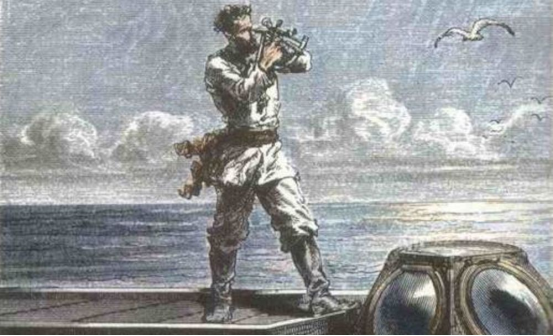
The Nautilus as a Metaphor for Power and Escape
Jules Verne’s seminal work, Twenty Thousand Leagues Under the Sea, has long been celebrated as a pioneering pillar of science fiction. However, peeling back the layers of its thrilling aquatic narrative reveals a profoundly complex exploration of power dynamics and the human desire for escapism. The submarine itself, the Nautilus, is not merely a vessel of technological marvel; it operates as a sovereign microcosm, entirely detached from the geopolitical constraints of the terrestrial world. Captain Nemo, the architect and absolute ruler of this underwater domain, utilizes the Nautilus as both an impenetrable fortress and an instrument of silent dominion. By severing ties with the land, Nemo effectively creates a new paradigm of power where traditional laws, borders, and societal hierarchies are rendered entirely obsolete.
Within the iron-clad walls of the Nautilus, power is centralized and absolute. Nemo’s authority is unquestioned by his fiercely loyal crew, presenting a stark contrast to the democratic or imperialistic structures of the 19th-century surface world. This environment forces readers to examine the dual nature of escape. On one hand, the submarine offers a utopian retreat from the oppressions of human civilization—a place where art, science, and intellect flourish undisturbed by the corruption of mankind. On the other hand, this isolated power structure inherently relies on exclusion and control, raising critical questions about whether true escape is ever genuinely attainable or if it merely results in the creation of a different kind of prison.
Captain Nemo’s Absolute Dominion
To understand the depth of the Nautilus as a metaphor, one must deeply analyze the psychological architecture of Captain Nemo. He is a man who has accumulated unparalleled wealth, scientific knowledge, and technological supremacy, yet he channels these assets entirely into sustaining his self-imposed exile. Nemo’s dominion is characterized by a paradox: he is a liberator of oppressed peoples (as seen in his covert financial support of terrestrial rebellions), yet he operates as an autocrat within his own realm. His power is derived directly from his mastery over the ocean, an untamable force that he has uniquely managed to harness. This mastery grants him a god-like status among his crew and his captives, showcasing how technological superiority can be leveraged to establish unassailable authority.
- Technological Supremacy as Authority: The Nautilus is powered by electricity, a nearly magical force at the time of the novel’s publication, symbolizing how advanced knowledge elevates Nemo above the rest of humanity.
- Economic Independence: By harvesting the ocean’s boundless resources—from deep-sea coal mines to sunken Spanish galleons—Nemo completely removes himself from the global capitalist economy, neutralizing one of society’s primary tools of control.
- Cultural Preservation: Nemo’s library, art collection, and pipe organ represent a curated preservation of human achievement, allowing him to dominate not just physically, but intellectually and culturally, dictating what elements of humanity are worth saving in his underwater sanctuary.

Exploring the Boundaries of Freedom and Revenge
The concepts of freedom and revenge are inextricably linked throughout the narrative arc of Twenty Thousand Leagues Under the Sea. Captain Nemo claims to have found absolute freedom beneath the waves, declaring that the sea does not belong to despots. Yet, his version of freedom is deeply compromised by his all-consuming thirst for vengeance. The ocean, while vast and seemingly limitless, becomes a theater for his retribution against the imperialistic nations that destroyed his family and his homeland. This dichotomy forces a philosophical interrogation: Can a man be truly free if his actions are perpetually dictated by the ghosts of his past and an insatiable need to inflict pain upon his enemies?
Verne meticulously illustrates the heavy toll that this brand of freedom exacts. Nemo’s acts of aggression—most notably the deliberate ramming and sinking of a warship—reveal the terrifying extreme of unchecked liberty. When an individual operates outside the boundaries of societal morality and international law, the line between righteous rebellion and monstrous terrorism blurs significantly. The novel suggests that freedom, when divorced from human empathy and ethical accountability, rapidly degenerates into tyranny. Nemo’s tragic trajectory serves as a profound cautionary tale about the destructive potential of allowing grief and anger to become the foundational pillars of one’s existence.
The Cost of Ultimate Liberation
The psychological burden of Nemo’s choices is palpable in the claustrophobic atmosphere that occasionally permeates the Nautilus. While the ocean offers physical boundlessness, Nemo’s mind remains tethered to the very humanity he claims to despise. His moments of deep melancholy, his emotional organ playing, and his tears over fallen crew members betray the fact that his liberation is an illusion. He has successfully escaped the physical jurisdiction of the surface world, but he remains a prisoner of his own trauma and moral contradictions.
Furthermore, this exploration of boundaries extends to the environmental and ethical implications of Nemo’s actions. He views himself as a protector of the ocean, often condemning the senseless slaughter of marine life by surface dwellers (such as the brutal hunting of whales). However, he also exploits the ocean’s resources with ruthless efficiency to fuel his war machine. This hypocrisy underscores the central theme that absolute freedom is a myth; every action, no matter how isolated, carries profound consequences that ripple through the interconnected web of life and morality.

Character Dynamics: Choice and Confinement
The brilliance of Verne’s narrative is profoundly amplified by the intricate interplay between Captain Nemo and his three involuntary guests: Professor Pierre Aronnax, his faithful servant Conseil, and the fiery Canadian harpooner Ned Land. These three characters are not merely passengers; they represent distinct philosophical paradigms and human responses to the concepts of captivity, choice, and the pursuit of knowledge. Thrust into an environment where their physical agency is stripped away, their contrasting reactions to life aboard the Nautilus serve as a brilliant study of human psychology under duress. The submarine functions as a crucible, testing their core values and forcing them to confront what they prioritize most in life.
Professor Aronnax embodies the insatiable intellectual curiosity of the scientific mind. For him, the confinement of the Nautilus is mitigated by the unprecedented access it provides to the mysteries of the deep sea. He is frequently paralyzed by the choice between escaping to reclaim his life on land and remaining aboard to document wonders no human has ever seen. Conversely, Ned Land represents the primal, visceral human need for physical liberty and autonomy. Unmoved by scientific discovery, Ned views the Nautilus purely as a steel cage and Nemo as a tyrannical jailer. His relentless plotting for escape highlights the indomitable nature of the human spirit when denied basic freedoms. Conseil, acting as the bridge between these extremes, offers a masterclass in stoic loyalty and adaptability, finding contentment not in his surroundings, but in his unwavering devotion to his master.
Multi-Dimensional Perspectives on Captivity
To fully grasp the narrative tension, we must dissect how each character’s background informs their experience of confinement. The dynamic between Aronnax and Ned Land is particularly crucial, as it mirrors the internal conflict many face between the pursuit of intellectual enlightenment and the fundamental desire for self-determination. Aronnax’s gradual seduction by Nemo’s world makes him complicit in his own captivity, a psychological phenomenon that creates a widening rift between him and the desperate harpooner.
| Character | Core Motivation | Philosophical Stance on Confinement | View of the Nautilus |
|---|---|---|---|
| Professor Aronnax | Scientific discovery and intellectual expansion. | Willing to trade physical freedom for unprecedented access to knowledge. | A miraculous floating laboratory and a once-in-a-lifetime opportunity. |
| Ned Land | Physical autonomy, survival, and a return to normalcy. | Rejects any form of captivity, regardless of the luxuries or wonders provided. | An oppressive steel prison managed by a madman. |
| Conseil | Duty, order, and unwavering loyalty to Aronnax. | Indifferent to physical location as long as he can serve his master and classify nature. | Simply a new environment in which to organize and categorize biological specimens. |

Beyond Adventure: The Depths of Human Nature
To categorize Twenty Thousand Leagues Under the Sea merely as an adventure novel is to do a profound disservice to Jules Verne’s visionary genius. The journey through the world’s oceans is, at its core, a metaphorical descent into the darkest and most unexplored trenches of human nature. The ocean serves as a vast, blank canvas upon which the complexities, contradictions, and profound existential dread of humanity are projected. As the Nautilus navigates through treacherous ice shelves, battles giant squid, and explores sunken continents, these external conflicts constantly mirror the internal turmoil of the characters aboard.
Verne uses the deep sea to strip away the superficial constructs of 19th-century society, forcing both the characters and the reader to confront raw, unfiltered humanity. In the abyss, wealth, social standing, and political affiliations are rendered meaningless. What remains is a stark examination of morality, the ethics of scientific advancement, and the terrifying potential of mankind when unmoored from societal constraints. The novel asks a chilling question: If humanity possesses the technological capability to conquer the ultimate frontiers, do we possess the moral fortitude to wield that power responsibly?
Technological Utopianism vs. Moral Decay
The Nautilus itself is the ultimate symbol of technological utopianism—a self-sustaining, clean, and infinitely powerful vessel that represents the pinnacle of human ingenuity. Yet, Verne masterfully juxtaposes this mechanical perfection with the moral decay of its creator. Nemo’s descent into ruthless violence demonstrates that scientific advancement without a grounding in humanistic ethics is a recipe for disaster. The novel serves as an early critique of the Industrial Revolution’s blind faith in progress, suggesting that our tools are only as noble as the intentions of those who wield them.
- The Illusion of a Perfect Society: Nemo attempts to create a flawless society within the Nautilus, free from terrestrial greed. However, this society requires absolute submission, proving that utopian visions often rely on authoritarian control.
- Nature as an Indifferent Judge: The ocean in Verne’s novel is neither benevolent nor malicious; it is entirely indifferent. It provides sustenance and wonder, but also threatens instant annihilation (such as the Maelstrom). This indifference highlights the fragility of human existence and the arrogance of attempting to conquer nature.
- The Legacy of Isolation: Ultimately, Nemo’s journey proves that isolation is not a sustainable cure for the ailments of humanity. By cutting himself off from the world, he loses his connection to the very empathy that makes life meaningful, transforming from a tragic victim into the very monster he sought to escape.
Frequently Asked Questions (FAQ)
- Q1: What does the Nautilus symbolize in Jules Verne’s narrative?
- The Nautilus is a multi-faceted symbol. On a technological level, it represents the pinnacle of human ingenuity and the potential of scientific advancement. Philosophically, it symbolizes absolute autonomy and escape from terrestrial laws, acting as a sovereign, floating nation. However, it also serves as a metaphor for a self-imposed prison, highlighting the isolating and claustrophobic nature of Captain Nemo’s obsessive quest for revenge and detachment from humanity.
- Q2: How does the novel explore the concept of “true freedom”?
- The novel presents a paradoxical view of freedom. Captain Nemo claims to have found ultimate freedom in the ocean, away from the despots of the land. Yet, his freedom is heavily compromised by his enslavement to his own grief and desire for vengeance. Through the contrasting perspectives of Nemo, Aronnax, and Ned Land, Verne suggests that true freedom cannot exist in a vacuum of isolation; it must be balanced with ethical responsibility and a connection to the broader human community.
- Q3: Why is the dynamic between Professor Aronnax and Ned Land so critical to the story?
- Aronnax and Ned Land represent the dual nature of the human condition. Aronnax is the intellect, willing to sacrifice his physical liberty for the sake of unparalleled scientific discovery and enlightenment. Ned Land is the physical body and spirit, driven by an unquenchable thirst for autonomy, fresh air, and self-determination. Their ongoing conflict over whether to stay on the Nautilus or escape creates the primary internal tension of the novel, reflecting the universal struggle between the pursuit of knowledge and the fundamental right to freedom.
- Q4: Is Captain Nemo a villain or a tragic hero?
- Captain Nemo is one of literature’s most quintessential anti-heroes, embodying elements of both a villain and a tragic hero. He is a man of immense culture, scientific brilliance, and deep empathy for the oppressed, funding rebellions against imperial powers. However, his methods are often brutal, and his willingness to murder in the name of revenge crosses the line into villainy. Verne deliberately crafts Nemo as morally ambiguous, forcing readers to grapple with the ethics of his actions and the deep-seated trauma that drives him.
- Q5: What environmental themes are present in Twenty Thousand Leagues Under the Sea?
- Long before the modern environmental movement, Verne integrated profound ecological themes into his work. Captain Nemo frequently acts as a fierce protector of the marine ecosystem, expressing deep disdain for the senseless overhunting and destruction of species by surface dwellers. The novel highlights the ocean as a fragile, interconnected web of life that deserves respect. However, it also presents the contradiction of Nemo exploiting these same resources for his survival, sparking early conversations about sustainability and humanity’s relationship with the natural world.