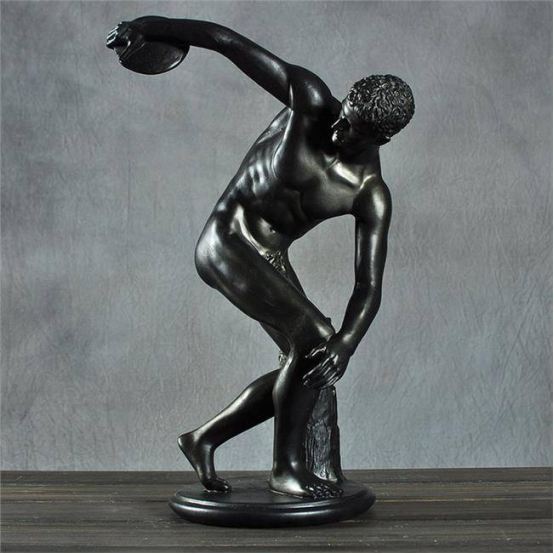
Sculpture is one of the most profound forms of human expression, transforming raw materials into three-dimensional narratives that endure through the ages. Unlike two-dimensional arts, sculpture occupies physical space, demanding an understanding of volume, weight, and perspective. This pillar page delves into the intricate relationship between human aesthetics, the physical properties of diverse mediums, and the specialized techniques used to create both relief and freestanding masterpieces.
Foundations of Human Aesthetics and Anatomical Structure
The human figure has remained the primary subject of sculpture for millennia. Achieving realism or even expressive abstraction requires a deep mastery of human aesthetics and internal structural logic. This begins with the skeletal framework, which provides the “armature” of the biological form, and extends to the muscular overlays that define movement and tension.
The Role of Proportions and the Golden Ratio
In classical sculpture, the concept of beauty is often tied to mathematical precision. Sculptors utilize specific ratios to ensure the head-to-body relationship feels natural. The Golden Ratio and the “Rule of Thirds” are applied to the face and torso to create a sense of harmony that resonates with the viewer’s innate perception of balance. Without these proportions, even a technically perfect carving can feel “uncanny” or structurally unsound.
Skeletal Integrity and Muscular Dynamics
A sculptor must think from the inside out. Understanding the skeletal system allows the artist to place joints correctly, ensuring that the weight of the figure is distributed realistically. Following the bone structure, the muscular system dictates the surface topography. Whether a figure is at rest or in motion, the sculptor must account for:
- Contraction and Extension: How muscles bulge or lengthen during movement.
- Tension Points: Areas where the skin pulls tight over bone, such as the collarbone or kneecaps.
- Subcutaneous Fat: How soft tissue softens the transition between muscle groups.
Contrapposto and the Illusion of Life
One of the most significant breakthroughs in sculptural aesthetics was the development of Contrapposto. This technique involves shifting the weight onto one leg, causing the hips and shoulders to tilt in opposite directions. This subtle “S-curve” breaks the rigidity of early statues, introducing a sense of potential movement and psychological depth to the cold stone or metal.

Comparative Analysis of Sculpture Mediums: Stone, Wood, and Metal
The choice of medium is not merely aesthetic; it dictates the tools used, the longevity of the work, and the physical limits of the composition. Each material possesses unique characteristics that an artist must harmonize with their creative vision.
Stone: The Subtractive Pursuit of Permanence
Stone sculpture, particularly using marble, granite, or limestone, is the ultimate test of patience and precision. It is a subtractive process, meaning material is removed and cannot be replaced.
- Marble: Favored for its translucency and fine grain, allowing for intricate detail in skin texture and drapery.
- Granite: Extremely hard and durable, requiring diamond-tipped tools; often used for monumental public works.
- Limestone: Softer and easier to carve, though more susceptible to weathering over centuries.
Wood: Organic Warmth and Grain Navigation
Wood provides a warmth and tactile quality that stone lacks. However, it presents the challenge of the grain. A sculptor must work with the direction of the wood fibers to prevent splitting. Different species offer varying benefits:
| Wood Type | Characteristics | Common Uses |
|---|---|---|
| Oak | Hard, durable, prominent grain | Large outdoor or religious sculptures |
| Basswood | Soft, fine grain, very easy to carve | Intricate figurines and prototypes |
| Walnut | Rich color, holds sharp edges well | High-end decorative art |
Metal: Tensile Strength and Additive Versatility
Metal sculpture, primarily bronze, steel, and copper, allows for expansive, gravity-defying compositions that would crumble in stone. Bronze casting is the most traditional method, utilizing the “lost-wax” process to create hollow, durable, and highly detailed replicas of clay originals. Modern welded steel sculpture allows for an additive approach, where pieces are joined together to create industrial or abstract forms.

Spatial Dynamics: Relief vs. Sculpture in the Round
The relationship between the sculpture and the viewer is defined by its spatial category. Sculptors must choose between a work that is integrated into a surface or one that stands independently in space.
The Art of Relief Sculpture
Relief sculpture is attached to a background plane, creating a bridge between painting and 3D art. It is categorized by the depth of the projection:
- Bas-Relief (Low Relief): The projection is slight. The focus is on line and subtle shadows, often seen on coins or temple walls.
- High Relief (Alto-Relievo): At least half of the form projects from the background. This creates deep shadows and a strong sense of volume.
- Sunken Relief: The image is carved into the surface rather than projecting from it, a technique famously used in Ancient Egyptian art.
Sculpture in the Round (Freestanding)
Sculpture in the round is designed to be viewed from all 360 degrees. This requires the artist to consider multiple viewpoints simultaneously. There is no “back” to the piece; every angle must be compositionally sound. This format demands a mastery of balance and center of gravity, ensuring the piece is structurally stable without the support of a wall.

Technical Craftsmanship and Creation Processes
The journey from a raw block of material to a finished sculpture involves several distinct technical stages. These processes are generally divided into additive and subtractive methodologies.
Modeling and Casting: The Additive Path
Modeling is the process of building up form using pliable materials like clay or wax. This is additive, allowing the artist to make mistakes and corrections easily. Once the model is complete, it is often converted into a permanent medium through casting.
- Mold Making: A negative impression is taken of the original model.
- Wax Poured: In the lost-wax method, a hollow wax replica is created.
- Investment: The wax is encased in a heat-resistant material.
- Burnout: The wax is melted out, leaving a cavity.
- Pouring: Molten metal is poured into the cavity.
Carving: The Subtractive Discipline
Carving is the most unforgiving technique. It requires the artist to visualize the finished form within the raw material. Tools such as points, tooth chisels, and rasps are used in a specific sequence to move from rough shaping to fine detailing. Polishing is the final stage, where abrasives are used to achieve the desired surface reflectivity, from matte to high-gloss.
Modern Assembly and Welding
Contemporary sculpture often moves away from monolithic blocks. Assemblage involves combining found objects or pre-fabricated components. Welding and forging allow artists to manipulate industrial metals, creating skeletal structures or massive abstract installations that interact with the environment in ways traditional stone never could.
Frequently Asked Questions (FAQ)
- Q1: What is the main difference between additive and subtractive sculpture?
- Subtractive sculpture involves removing material from a solid block (like carving stone or wood) and is generally permanent once a cut is made. Additive sculpture involves building up the form from nothing (like modeling clay or welding metal), allowing for more flexibility and revision during the creative process.
- Q2: Why is bronze such a popular material for outdoor sculptures?
- Bronze is an alloy of copper and tin that is incredibly durable and resistant to atmospheric corrosion. Over time, it develops a protective layer called a “patina,” which prevents further decay. Its high tensile strength also allows for complex poses that stone cannot support.
- Q3: How does a sculptor ensure a large stone statue doesn’t collapse?
- Sculptors use several techniques: ensuring the center of gravity is over the base, using “struts” (like a tree stump or a fold of cloth) to support thin areas like ankles, and carefully selecting stone without internal fissures or “fault lines.”
- Q4: Can relief sculpture tell a story better than sculpture in the round?
- Relief is often considered more “pictorial” because it can include background elements like landscapes and architecture, which are difficult to render in freestanding works. This makes relief ideal for narrative sequences, such as those found on the friezes of the Parthenon.
- Q5: What is an armature in sculpture?
- An armature is an internal support structure, usually made of wire or wood, used in additive sculpture. It acts like a skeleton to hold the weight of heavy modeling clay or wax, preventing the sculpture from sagging or collapsing before it is cast or dried.