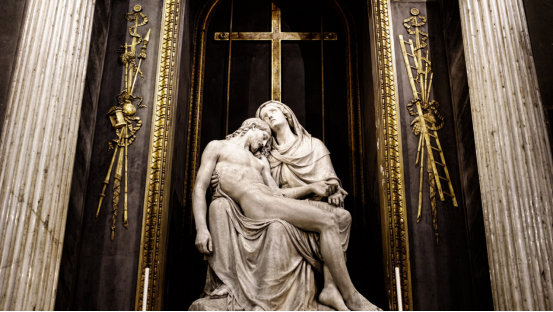
Sculpture is a silent yet powerful narrator of human history, culture, and belief. It transcends mere aesthetics, serving as a physical vessel for abstract ideas, deep emotions, and foundational myths. To truly appreciate a sculpture, one must learn to read its language—a language composed of symbols, gestures, and forms. This guide provides a thorough framework for interpreting sculptural art, from understanding the universal symbols that cross cultures to deciphering the specific iconographies of ancient civilizations and world religions. We will explore how artists manipulate form and material to breathe personality into their creations and how these three-dimensional works become cornerstones of cultural and spiritual identity.
The Foundation: Symbolism in Sculptural Art
Symbolism is the core of artistic communication, allowing a static object to convey complex ideas and narratives. In sculpture, a symbol can be an object, a gesture, a color, or even the material itself, each carrying layers of meaning that enrich the viewer’s experience. Understanding these symbols is the first step toward a deeper comprehension of the artwork’s purpose and message. The meaning can be direct and widely understood or subtle and specific to a particular culture or time period.
Universal vs. Cultural Symbols
Some symbols possess a near-universal meaning rooted in shared human experience. For example, a serpent can symbolize temptation or evil in a Christian context but represent rebirth and healing in others, as seen in the Rod of Asclepius from Greek mythology. A soaring eagle often represents freedom, power, and divinity across many cultures. In contrast, cultural symbols are specific to a society’s unique history, religion, and traditions. The lotus flower in Buddhist sculpture, for instance, symbolizes purity, enlightenment, and rebirth, a meaning that might be lost on those unfamiliar with the faith’s tenets. Similarly, the Ankh in ancient Egyptian art is a specific symbol for life that is deeply tied to its cultural origins.
Common Symbolic Motifs and Their Meanings
Artists across ages have employed a rich vocabulary of symbolic motifs. Recognizing these common elements can provide immediate insight into a sculpture’s theme. These motifs often fall into several categories:
- Animals: A lion often represents courage and royalty, a dove symbolizes peace and the holy spirit, and a dragon can mean either a malevolent force or a powerful, protective entity, depending on the culture.
- Objects: A skull or hourglass serves as a memento mori, a reminder of mortality. Keys can symbolize authority and access (as with St. Peter), while a broken chain represents liberation or a shattered bond.
- Plants and Flowers: An olive branch signifies peace, a laurel wreath denotes victory or honor, and a lily is often associated with purity and the Virgin Mary in Christian art.
- Gestures: A hand raised with the palm outward can signify blessing or protection. Clasped hands can mean unity or prayer. The specific hand gestures, or mudras, in Buddhist sculpture each have a precise spiritual meaning.
The Critical Role of Context in Interpretation
A symbol’s meaning is never fixed; it is profoundly shaped by its context. To interpret a sculpture accurately, one must consider several contextual layers. The historical context reveals the prevailing ideas and events of the period. The cultural context provides insight into the society’s myths, values, and social structures. Finally, the artist’s personal context—their life, beliefs, and other works—can offer clues to their specific intentions. Without this background research, a modern viewer might misinterpret a symbol based on contemporary associations, completely missing the artist’s original message.

Portraying Emotion and Personality in Stone and Bronze
Beyond conveying ideas through symbols, great sculpture brings characters to life by imbuing them with palpable emotions and distinct personalities. A sculptor is a master of non-verbal communication, using the human form as a canvas to express everything from divine serenity to mortal anguish. This is achieved through a meticulous manipulation of physical features and a deep understanding of human anatomy and psychology.
The Power of Facial Expressions
The face is the most direct conduit for emotion. A sculptor can convey a universe of feeling through subtle changes in facial muscles. A slight upturn of the lips can suggest a serene smile, while a furrowed brow and open mouth can depict agony or terror, as seen in the famous ancient Greek sculpture Laocoön and His Sons. The eyes are particularly crucial; a downward gaze can imply humility or sorrow, while a direct, wide-eyed stare can communicate intensity, surprise, or divine authority. Even the hollowing of cheeks or the clenching of a jaw can transform a placid face into a mask of suffering or determination.
Body Language and Posture as Narrative Tools
The entire body tells a story. A figure’s posture and gestures are fundamental to defining its personality and emotional state. Consider the difference between a figure standing tall with its chest out, conveying confidence and power (like Michelangelo’s David), and one that is hunched over, communicating despair or submission. The tension in the muscles, the angle of the limbs, and the distribution of weight all contribute to the narrative. A gentle, flowing S-curve posture (contrapposto) can create a sense of relaxation and naturalism, while rigid, angular lines might suggest conflict or tension.
The Influence of Material and Texture
The choice of material and how it is finished plays a significant role in shaping a character’s personality. The smooth, polished surface of marble can lend a figure an ethereal, idealized quality, perfect for depicting gods or saints. In contrast, the rough, textured surface of bronze or unpolished stone can create a sense of ruggedness, earthiness, or emotional turmoil. A sculptor might deliberately leave tool marks visible to give a work a raw, immediate energy, or polish a surface to a high sheen to reflect light and create a sense of perfection and otherworldliness.

Sculpture as a Conduit for Faith and Religion
Throughout history, sculpture has been inextricably linked with religion and spirituality. As a tangible representation of the divine, it makes abstract beliefs concrete and accessible to worshippers. Religious sculpture serves multiple functions: it educates the illiterate, provides a focus for devotion, and reinforces the core tenets of a faith, acting as a powerful bond for cultural and religious communities.
Depicting Deities and Divine Beings
One of sculpture’s primary religious roles is to give form to gods, goddesses, and other holy figures. These depictions are not mere portraits but are carefully constructed images meant to convey the specific attributes of the deity. For example, Hindu sculptures of Shiva often show him with multiple arms, each holding a symbolic object representing his cosmic powers of creation and destruction. Christian sculptures of Christ on the cross are designed to evoke empathy and reflect on his sacrifice. These physical embodiments allow believers to form a more personal and intimate connection with the divine figures they worship.
Narrating Sacred Stories and Myths
Before widespread literacy, sculpture was a primary medium for storytelling. The intricate carvings on the facades of Gothic cathedrals, for example, depict scenes from the Bible, acting as a “Bible in stone” for the congregation. Similarly, the temple reliefs at Angkor Wat in Cambodia narrate epic Hindu myths, such as the Churning of the Ocean of Milk. These sculptural narratives serve to educate followers about their religious history and mythology, preserving these sacred stories for future generations and making them a constant, visible presence in the community’s life.
The Role of Sculpture in Ritual and Worship
Religious sculptures are often active participants in rituals and worship, not just passive objects of admiration. They can be devotional icons that are prayed to, adorned with offerings, or carried in processions during religious festivals. In many cultures, these sculptures are believed to be imbued with the spirit of the deity they represent, making them a sacred focal point for the community’s spiritual practices. The act of creating the sculpture itself can be a form of religious devotion, governed by strict rules and rituals to ensure the final object is worthy of its sacred purpose.

Decoding Myths and Legends in Ancient Sculpture
Ancient sculptures are time capsules that offer direct insight into the belief systems and cultural narratives of past civilizations. However, understanding them requires more than just aesthetic appreciation; it demands a form of art-historical detective work. To decode these works, one must immerse oneself in the myths, legends, and societal structures of the culture that produced them.
A Step-by-Step Guide to Interpretation
Interpreting ancient sculptures is a systematic process. The key is to gather as much contextual information as possible before drawing conclusions.
- Identify the Subject: Begin by trying to identify the main figures. Are they gods, heroes, mortals, or mythical creatures? Look for identifying attributes (iconography), such as Zeus’s thunderbolt, Athena’s helmet and shield, or Hercules’s club and lionskin.
- Analyze the Narrative: Determine what story is being told. Is it a known scene from mythology, a historical event, or a depiction of a daily ritual? The interaction between figures, their gestures, and their expressions all provide clues.
- Research the Cultural Context: Investigate the mythology and religion of the civilization. Reading primary texts like Homer’s Iliad for Greek sculpture or the Book of the Dead for Egyptian art is essential.
- Consider the Original Location: Where was the sculpture originally placed? A sculpture from a temple will have a different meaning than one from a private home or a public square. Its function—whether for worship, propaganda, or commemoration—is tied to its location.
Case Study: Symbolism in Greco-Roman Sculpture
Greco-Roman sculpture is deeply rooted in mythology. The gods of Olympus were depicted with human forms and emotions, but each had specific symbols to ensure they were recognizable. For example, Poseidon is almost always shown with his trident, and Apollo with a lyre or a bow. Sculptures often depicted scenes from epic poems, such as the Trojan War or the Labors of Hercules. Understanding these stories is crucial to appreciating the drama, tension, and meaning captured in the artwork.
Case Study: Understanding Egyptian Hieratic Sculpture
Ancient Egyptian sculpture was governed by a strict set of conventions and religious beliefs, primarily centered on the afterlife. The rigid, frontal poses of pharaohs were not due to a lack of skill but were a deliberate choice to represent their eternal, unchanging nature. Symbols like the crook and flail represented their dual role as shepherd and judge of their people. The scale of figures was also symbolic; pharaohs and gods were depicted as much larger than commoners to signify their superior status in the cosmic order. Every element was part of a complex symbolic system designed to ensure order (maat) and eternal life.

Advanced Techniques for Analyzing Sculptural Meaning
For those wishing to move beyond a basic understanding, several advanced analytical techniques can unlock even deeper layers of meaning within a sculpture. This involves a holistic approach that combines visual analysis with rigorous historical and cultural research, treating the artwork as a complex document that reflects the world in which it was created.
Researching the Artist and Historical Period
A deep dive into the artist’s life, influences, and body of work can provide invaluable insights. Was the artist working under a powerful patron with a specific agenda? Were they part of a larger artistic movement with a defined philosophy? Understanding the political, social, and technological landscape of the historical period is equally vital. For instance, the development of new tools or the discovery of ancient artworks (as occurred during the Renaissance) could dramatically influence a sculptor’s style and subject matter. This research helps to situate the artwork within its proper context, preventing anachronistic interpretations.
Analyzing Composition, Form, and Gaze
The formal elements of a sculpture are a key part of its message. Composition—the arrangement of figures and elements—can create feelings of harmony, chaos, stability, or movement. Analyze the use of lines: are they flowing and curved, or sharp and jagged? Consider the use of negative space—the empty areas around and within the sculpture—which can be just as expressive as the solid form. Furthermore, pay close attention to the gaze of the figures. Where are they looking? A figure looking directly at the viewer creates a personal connection, while figures interacting with each other draw the viewer into their internal narrative. A gaze directed towards the heavens can signify a connection to the divine.
Cross-Referencing with Literature and Historical Texts
Sculpture does not exist in a vacuum. It is often in dialogue with the literature, poetry, philosophy, and historical records of its time. To fully grasp a mythological scene in a Renaissance sculpture, one might read Ovid’s Metamorphoses, a text that was a primary source for many artists of the period. To understand a political monument, one should read historical accounts of the event or person it commemorates. This cross-referencing enriches the interpretation by revealing the intellectual and cultural currents that shaped the artwork, allowing you to understand the sculpture as its contemporaries would have.
Frequently Asked Questions (FAQ)
- Q1: What is the most common type of symbolism in sculpture?
- While it varies greatly by culture, some of the most common types of symbolism involve religious and mythological iconography. Figures like the cross in Christianity, the lotus in Buddhism, and attributes of gods like Zeus’s thunderbolt are widespread. Additionally, universal symbols related to life and death, such as flowers to represent beauty and skulls to represent mortality, appear across many different artistic traditions.
- Q2: How can I tell what emotion a sculpture is trying to convey without prior knowledge?
- You can begin by observing the sculpture’s body language and facial expression, just as you would with a person. Look at the posture: is it open and confident or closed and defensive? Examine the face for clues: a furrowed brow, a downturned mouth, or wide eyes. Also, consider the overall composition. Dynamic, diagonal lines often create a sense of action and tension, while stable, vertical lines can convey calmness and authority.
- Q3: Why is sculpture so important in many world religions?
- Sculpture makes the intangible tangible. It gives a physical form to deities, spirits, and abstract spiritual concepts, which helps believers connect more deeply with their faith. It also serves as a powerful educational tool, narrating sacred stories and teachings to a broad audience, including those who could not read. Finally, these sculptures often become central to religious rituals, acting as focal points for prayer, offerings, and community worship.
- Q4: What is the first step to take when trying to understand an ancient sculpture?
- The first step is observation and identification. Before any research, simply look closely at the artwork. Identify the main figures, the objects they hold, the clothes they wear, and the action taking place. This initial visual analysis will give you a set of key elements (e.g., “a bearded man holding a trident” or “a woman with a helmet and a spear”) that you can then use as a starting point for your research into the specific mythology or history of that culture.
- Q5: Can the meaning of a symbol in a sculpture change over time?
- Absolutely. A symbol’s meaning is not static and can evolve significantly. A famous example is the swastika, an ancient symbol of good fortune and well-being in many Eastern cultures that was co-opted in the 20th century and is now irrevocably associated with Nazism in the Western world. When analyzing a sculpture, it is crucial to research what a symbol meant in the specific time and place the artwork was created, rather than applying its modern-day meaning.