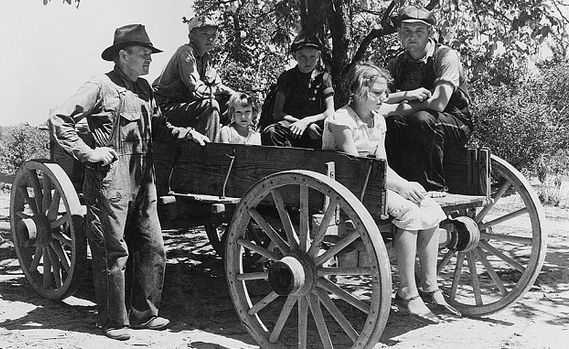
Southern Gothic literature stands as a unique subgenre of the American Gothic, defined not merely by its setting in the American South, but by its preoccupation with the grotesque, the decaying, and the deeply repressed. It is a literary tradition that transforms the regional landscape into a psychological map where the ghosts of the past—slavery, defeat in the Civil War, and the collapse of the plantation economy—haunt the living. Writers like William Faulkner, Flannery O’Connor, and Carson McCullers do not simply tell stories; they architect worlds where physical deformity reflects moral decay, and where the silence of the landscape is often more deafening than the dialogue of its inhabitants.
Foundations of Southern Gothic Aesthetics
The aesthetics of Southern Gothic literature are built upon a foundation of ruined grandeur and social paralysis. Unlike traditional Gothic fiction, which relies on castles and supernatural entities, Southern Gothic utilizes the “broken” elements of the South—dilapidated mansions, overgrown plantations, and characters who are spiritually or physically “off-kilter.” This aesthetic choice serves to highlight the dissonance between the idealized myth of the “Old South” and the harsh, often violent reality of the modern era.
The Role of the Grotesque
In this genre, the grotesque is a central pillar. It refers to characters who evoke both empathy and disgust, often possessing physical or mental abnormalities that serve as metaphors for larger social failings. These characters are not monsters in the traditional sense; rather, they are “humanized” by their suffering. For instance, a character’s missing limb or twisted spine often acts as a visual manifestation of their internal spiritual struggle or the “scars” left by a rigid and unforgiving social hierarchy.
Atmospheric Decay and Haunted Landscapes
The setting in Southern Gothic is never neutral. The humidity, the heat, and the encroaching wilderness represent a force of nature that is slowly reclaiming the remnants of human civilization. This atmospheric decay creates a sense of claustrophobia, suggesting that the characters are trapped by their environment and their history. The landscape itself becomes a “ghost,” a persistent reminder of what has been lost and the price paid for those losses.

Loneliness and Fragmentation in Faulkner’s As I Lay Dying
William Faulkner’s 1930 masterpiece, As I Lay Dying, serves as a quintessential study of existential loneliness and the struggle for individual identity within a dysfunctional family unit. The novel follows the Bundren family as they transport the corpse of their matriarch, Addie Bundren, to her ancestral burial ground in Jefferson. What begins as a dutiful journey quickly devolves into a harrowing odyssey of fire, flood, and psychological disintegration.
The Multi-Perspective Narrative Structure
Faulkner employs a stream-of-consciousness technique, utilizing 59 chapters narrated by 15 different characters. This structure is vital to the theme of loneliness. Although the characters are physically traveling together, their internal monologues reveal a profound lack of communication and mutual understanding. Each character is trapped within the “prison” of their own mind, viewing the journey through a lens of personal grievance, desire, or madness.
- Darl Bundren: The most frequent narrator, Darl possesses a clairvoyant-like ability to see into the thoughts of others, yet this very sensitivity leads to his eventual alienation and institutionalization. His loneliness is intellectual and spiritual; he sees too much in a world that prefers blindness.
- Addie Bundren: Even in death, Addie’s voice emerges to critique the futility of words. She views language as a “shape to fill a lack,” arguing that true experience exists only in the “doing.” Her section highlights the ultimate loneliness: the realization that one can never truly be known by others.
- Jewel Bundren: Jewel expresses his grief through violent action and his devotion to his horse, showcasing a “wordless” loneliness that contrasts sharply with Darl’s verbal fluidity.
The Physicality of Struggle
The struggle in As I Lay Dying is both metaphorical and brutally physical. The family faces the external threats of a flooded river and a barn fire, which mirror their internal turmoil. The decaying body of Addie, which becomes increasingly offensive as the journey progresses, symbolizes the burden of the past. The Bundrens are literally dragging their history behind them, unable to escape the stench of death and the weight of familial obligation.

Scars and Moral Decay: The Grotesque in Flannery O’Connor
Flannery O’Connor’s contribution to the Southern Gothic tradition is marked by her use of violent grace and the “grotesque” as a means of spiritual revelation. For O’Connor, a devout Catholic, the “scars” of her characters were often the only things that could shock them out of their moral complacency and lead them toward a moment of truth.
Physical Deformity as Spiritual Mirror
O’Connor frequently utilized characters with physical disabilities—such as the wooden leg of Hulga Hopewell in “Good Country People” or the “shriveled” nature of the grandmother in “A Good Man is Hard to Find.” These physical traits are not meant to be mocked; instead, they serve as outward signs of inward states. The loss of Hulga’s wooden leg, for example, represents the stripping away of her intellectual pride, leaving her vulnerable and open to a reality she had previously denied.
The Intersection of Violence and Grace
In O’Connor’s world, grace is rarely peaceful. It is often delivered through a violent encounter or a devastating realization. This “dark aesthetic” suggests that in a fallen world, humans are so blinded by their own ego and social constructs that only a catastrophic event (a “scarring” event) can force them to see the divine or the absolute truth. Her stories are populated by “prophets” and “misfits” who act as catalysts for this painful transformation.

Carson McCullers and the Architecture of Spiritual Isolation
While Faulkner focused on the weight of history and O’Connor on the necessity of grace, Carson McCullers explored the “spiritual isolation” of the individual. Her work, particularly The Heart is a Lonely Hunter, examines the inherent difficulty of human connection in a world divided by race, class, and personal obsession.
The Silent Center: John Singer
In McCullers’ work, characters often gravitate toward a central figure who they believe understands them, only to find that this figure is just as isolated as they are. John Singer, a deaf-mute, becomes the “confessor” for several disparate individuals in a small Southern town. Each character projects their own needs and ideologies onto Singer, creating a false sense of connection. This highlight’s McCullers’ belief that loneliness is the fundamental human condition, and our attempts to bridge the gap between ourselves and others are often based on illusions.
The Outcast and the Misfit
McCullers’ characters are often “misfits” in a social sense—adolescent girls who don’t fit the mold of Southern womanhood, black doctors struggling against systemic racism, or radical socialists. Their social scars are as prominent as their psychological ones. By focusing on these marginalized voices, McCullers exposes the fractures in the Southern social fabric and the profound loneliness of those who exist on its fringes.

The Ghostly Presence of the Past in Southern Fiction
A defining characteristic of Southern Gothic is the idea that “the past is never dead. It’s not even past,” as Faulkner famously wrote. The “ghosts” in these stories are rarely literal spirits; rather, they are the persistent memories and consequences of historical trauma that continue to shape the present.
The Burden of Heritage
Characters in Southern Gothic are often defined by their lineage. Whether it is the declining aristocratic status of the Compson family in The Sound and the Fury or the generational poverty of the Bundrens, the heritage of the South acts as a weight that prevents progress. This obsession with ancestry and “blood” creates a sense of predestination, where characters feel they are merely playing out roles established by their ancestors.
Social Scars and Racial Tension
The most pervasive “ghost” in the Southern Gothic tradition is the legacy of slavery and the ongoing reality of racial injustice. This history leaves unhealed scars on the landscape and the collective psyche. Writers use the Gothic mode to confront these issues indirectly, using symbols of decay and violence to reflect the inherent instability of a society built on oppression. The “dark aesthetics” of the genre provide a language to discuss the “unspeakable” aspects of Southern history.

Synthesizing the Lament: The Struggle for Meaning
The “lament” of Southern literature is a mourning for a lost sense of wholeness and a recognition of the fragmentation of the modern soul. Through the lens of Southern Gothic, we see a world where characters are constantly struggling to find meaning in the face of suffering, isolation, and death.
The Persistence of Struggle
In As I Lay Dying, the struggle is for a “proper” burial, a symbolic attempt to bring order to the chaos of life. In the works of O’Connor and McCullers, the struggle is for recognition, connection, or salvation. These struggles are often futile or lead to tragic ends, yet the act of struggling itself is what defines the characters’ humanity. The “darkness” of the aesthetics does not necessarily imply a lack of hope, but rather a refusal to accept easy or superficial answers.
Comparative Analysis of Southern Gothic Themes
To better understand the nuances between these authors, we can examine their approach to key themes:
| Theme | William Faulkner | Flannery O’Connor | Carson McCullers |
|---|---|---|---|
| Source of Loneliness | Historical weight and subjective isolation. | Spiritual alienation from God. | Inherent human condition and social marginalization. |
| Use of the Grotesque | To show psychological disintegration. | To shock the soul into spiritual awareness. | To highlight the vulnerability of the outcast. |
| The Past | An inescapable burden that dictates the present. | A source of moral failure that requires grace. | A backdrop for personal and social isolation. |
Frequently Asked Questions (FAQ)
- What defines the “Southern Gothic” style in literature?
- Southern Gothic is defined by its use of the grotesque, a focus on decaying settings, and an exploration of the social and psychological “scars” of the American South. It often features characters who are physically or mentally “broken” and deals with themes of loneliness, violence, and the haunting presence of the past.
- Why is “As I Lay Dying” considered a Southern Gothic novel?
- It fits the genre due to its focus on a decaying corpse, the physical and mental hardships of a marginalized family, and its exploration of the isolation and “madness” that can result from deep-seated familial and social pressures in the rural South.
- How do Flannery O’Connor’s religious beliefs influence her dark aesthetics?
- O’Connor believed that modern people were “blind” to spiritual reality. She used the “grotesque” and violent plot points to “shock” her characters (and readers) out of their complacency, viewing these moments of trauma as opportunities for “divine grace” to enter a broken life.
- What is the significance of “scars” in these literary works?
- Scars serve as physical manifestations of internal or historical trauma. They represent the “unhealed” aspects of the South—such as the legacy of slavery or personal grief—and remind the characters and the reader that the past cannot be easily erased or forgotten.
- How does Carson McCullers’ approach to loneliness differ from Faulkner’s?
- While Faulkner often links loneliness to the weight of history and the failure of language, McCullers views loneliness as a fundamental, almost biological, part of being human. Her focus is more on the “spiritual isolation” and the desperate, often failed, attempts individuals make to connect with one another.