In the rich soil of 19th-century New England, a philosophical movement sprouted that would grow to define the very soul of American literature. This movement, Transcendentalism, was more than a literary style; it was a radical declaration of intellectual independence, championing intuition, individualism, and a profound, spiritual connection to the natural world. Its roots, fed by German idealism and Eastern religions, broke through the rigid topsoil of Puritan tradition and Enlightenment rationalism. This guide traces the enduring legacy of this powerful idea, following its vine from the foundational works of Emerson and Thoreau as it winds through the American literary landscape, ultimately blossoming into the robust ecological consciousness that characterizes much of modern nature writing.
We will explore the core principles that gave Transcendentalism its revolutionary power and examine how these tenets were not confined to their era but were instead seeds that germinated in the minds of subsequent generations. From the preservationist zeal of John Muir to the ethical frameworks of Aldo Leopold and the complex spiritual inquiries of modern authors, the influence is undeniable. This is the story of how a belief in the divinity of the individual and nature evolved into a comprehensive philosophy for living in harmony with our planet.
The Foundations: Core Tenets of Transcendentalism
At its heart, Transcendentalism was a rebellion against the intellectual and spiritual conformity of the time. It proposed that the divine spark, or what Ralph Waldo Emerson called the “Oversoul,” resides within every individual and throughout all of nature. This belief fundamentally shifted the source of authority from established institutions like the church and government to the private consciousness of the individual, making personal experience the ultimate spiritual guide.
Ralph Waldo Emerson and the Oversoul
Ralph Waldo Emerson is widely considered the father of the Transcendentalist movement. In his seminal 1836 essay, “Nature,” he laid out the philosophical groundwork, arguing that nature is a direct conduit to the divine. He proposed that by immersing oneself in the natural world, one could transcend the limitations of the physical senses and connect with a universal spirit. This “Oversoul” is an all-encompassing entity that unites humanity, nature, and God. For Emerson, the world was not a static creation to be studied but a living, breathing scripture waiting to be read through intuition and personal reflection. His call for an original American intellectual culture, free from European dominance, resonated deeply and set the stage for a new kind of literature.
Henry David Thoreau: Simplicity and Civil Disobedience
If Emerson was the movement’s philosopher, Henry David Thoreau was its most dedicated practitioner. He took Emerson’s abstract ideas and put them to a real-world test during his two-year experiment living at Walden Pond. His resulting book, Walden; or, Life in the Woods, is a masterwork of American literature that serves as a practical guide to the Transcendentalist ethos. Thoreau advocated for a life of “simplicity, simplicity, simplicity,” believing that by stripping away non-essential material possessions and societal expectations, one could discover life’s true meaning. His meticulous observations of the flora and fauna around Walden Pond were not just scientific; they were spiritual meditations, demonstrating how to find profound truths in the minute details of the natural world. His essay “Civil Disobedience,” born from his refusal to pay a poll tax supporting the Mexican-American War, extended the principle of self-reliance into the political sphere, arguing for the moral duty of the individual to resist unjust laws.
The Primacy of Individual Intuition over Dogma
A cornerstone of Transcendentalist thought is the unwavering trust in individual intuition. The movement rejected the idea that truth could only be found in historical texts, religious doctrines, or empirical science. Instead, they believed that every person possessed an innate, intuitive understanding of right and wrong, beauty, and truth. This radical self-reliance was a call to look inward for guidance rather than outward to society. It empowered individuals to forge their own spiritual and intellectual paths, leading to a flowering of unique artistic and personal expressions.

The Transcendentalist Impact on Classic American Literature
The ideas radiating from Concord, Massachusetts, did not remain isolated. They permeated the national consciousness and had a profound, transformative effect on other major writers of the American Renaissance, even those who did not fully subscribe to the movement’s optimism. Transcendentalism provided a new vocabulary and a new set of themes—individualism, nature, and social critique—that became central to the developing American literary identity.
Shaping the American Literary Identity
Before Transcendentalism, American literature often looked to European models for inspiration. Emerson’s 1837 address, “The American Scholar,” was a powerful call to arms for a new, distinctly American cultural identity. He urged writers and thinkers to draw inspiration from their own lives and their own landscapes. This declaration of intellectual independence inspired a generation of authors to explore American themes with newfound confidence, creating a body of work that was uniquely of its place and time.
Influence on Walt Whitman’s Democratic Vistas
No writer embraced the Transcendentalist spirit more fully than Walt Whitman. His collection of poetry, Leaves of Grass, is a direct and exuberant response to Emerson’s call. Whitman’s celebration of the individual, his democratic embrace of all people and professions, and his ecstatic, near-pantheistic view of nature are pure Transcendentalism. His use of free verse broke from traditional poetic forms, mirroring the movement’s rejection of established structures. Whitman saw the divine in the ordinary and the interconnectedness of all beings, effectively translating the “Oversoul” into a sprawling, democratic, and quintessentially American poetic vision.
Echoes in the Works of Hawthorne and Melville
While authors like Nathaniel Hawthorne and Herman Melville are often categorized as “Dark Romantics” for their skepticism of Transcendentalism’s inherent optimism, their work is undeniably in dialogue with it. They engaged with the same core questions of individualism, sin, and the mysterious forces of nature but arrived at darker conclusions. Hawthorne’s The Scarlet Letter explores the crushing weight of societal judgment on the individual, a stark contrast to Emersonian self-reliance. Similarly, Melville’s Moby-Dick presents a vision of nature not as a benevolent teacher but as a terrifying, unknowable, and potentially malevolent force. Their works serve as a crucial counterpoint, adding depth and complexity to the literary conversations of the era.

From Transcendentalism to Ecological Consciousness
The Transcendentalist reverence for nature was not merely aesthetic; it was deeply spiritual and philosophical. This foundation proved to be incredibly fertile ground for the development of modern environmental and ecological thought. The idea that nature held intrinsic value, independent of its utility to humans, was a radical concept that later writers and activists would build upon to forge a powerful conservation movement.
John Muir: The Transition to Preservationism
John Muir, the famed naturalist and founder of the Sierra Club, serves as a critical bridge between Transcendentalism and the modern environmental movement. Deeply influenced by the writings of Emerson and Thoreau, Muir took their spiritual appreciation for nature and translated it into a call for political action. Where Thoreau sought personal salvation in the woods, Muir sought the salvation of the woods themselves. He argued passionately for the preservation of wilderness areas like Yosemite, not as resources to be managed, but as sacred temples to be protected. His writings blend scientific observation with ecstatic, spiritual language that echoes Emerson, framing the fight for preservation as a moral and spiritual imperative.
Aldo Leopold’s Land Ethic: A Philosophical Evolution
Decades later, ecologist and writer Aldo Leopold further evolved this thinking with his concept of the “Land Ethic,” articulated in his posthumously published masterpiece, A Sand County Almanac. Leopold extended the ethical community to include what he called “the land”—soils, waters, plants, and animals. He argued that humans should see themselves not as conquerors of the land but as “plain members and citizens” of the biotic community. This biocentric viewpoint is a direct philosophical descendant of the Transcendentalist idea of the Oversoul, which posits an interconnected web of all existence. Leopold provided a scientific and ethical framework for what the Transcendentalists had understood intuitively: that the health of the whole system is paramount.
The Concept of “Wildness” as a Spiritual Necessity
Thoreau famously wrote, “in Wildness is the preservation of the World.” This was not just a call to protect forests but a statement about the human soul. For Thoreau and later ecological thinkers like Edward Abbey and Gary Snyder, wildness represents a force of freedom, untamed creativity, and authenticity that stands in opposition to the homogenizing and deadening effects of industrial civilization. This belief posits that contact with the wild is essential for human psychological and spiritual well-being. It is a direct continuation of the Transcendentalist search for truth outside the confines of established society, locating it in the untamed landscapes of both the external world and the internal self.

Modern and Contemporary Echoes of Transcendentalist Thought
The influence of Transcendentalism did not wane with the turn of the 20th century. Its core ideas of anti-materialism, the search for spiritual truth, and the critique of conformity have continued to resonate with successive generations of American writers, adapting to new social and historical contexts while retaining their essential power.
The Beat Generation: Kerouac and Snyder’s Search for Spiritual Truth
The Beat Generation of the 1950s can be seen as a mid-century revival of the Transcendentalist spirit. Writers like Jack Kerouac and Allen Ginsberg rejected the materialism and social conformity of postwar America, embarking on their own quests for spiritual enlightenment. Their “on the road” ethos was a modern version of Thoreau’s retreat to Walden, seeking truth through direct experience, personal freedom, and a rejection of societal norms. Poet Gary Snyder, in particular, explicitly connected Beat sensibilities with ecological consciousness and Eastern philosophy, creating a body of work that is a clear continuation of the lineage running from Thoreau through Muir.
Postmodern Engagements: The Case of John Updike
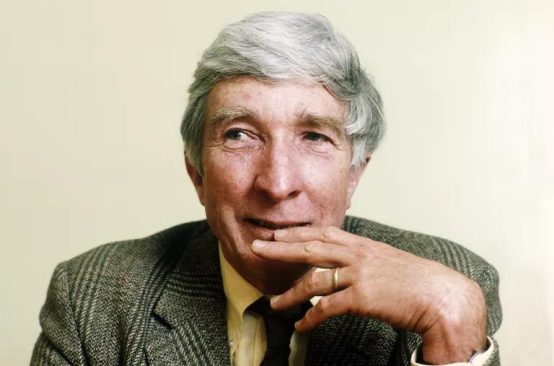
Even writers not typically associated with nature writing engaged with the legacy of Transcendentalism. John Updike, a keen observer of suburban American life, often explored themes of faith, doubt, and the search for meaning in a secular world. While his settings were far from the wilderness of Walden Pond, his characters often grapple with a sense of spiritual yearning and a feeling of being disconnected from something essential—a modern echo of the Transcendentalist quest for connection to the Oversoul. His work demonstrates how the movement’s core questions about individual spirituality and its place in the universe persisted, even amidst the anxieties and complexities of postmodern life.
Contemporary Nature Writers: Annie Dillard and Barry Lopez
In contemporary literature, the Transcendentalist flame burns brightly in the work of nature writers who blend scientific observation with profound philosophical and spiritual inquiry. Annie Dillard’s Pilgrim at Tinker Creek is a modern-day Walden, a meticulous and often startling meditation on the beauty and brutality of the natural world that seeks to find hints of the divine. Barry Lopez, in works like Arctic Dreams, explored the relationship between human cultures and their landscapes with deep respect and a sense of wonder. These writers continue the tradition of seeing nature not just as a backdrop for human drama but as an active, mysterious, and essential presence that teaches us what it means to be human.
Frequently Asked Questions (FAQ)
- What is the core difference between Transcendentalism and Romanticism?
- While Transcendentalism is a branch of American Romanticism, its key distinction lies in its specific philosophical source and focus. Romanticism broadly emphasized emotion, individualism, and the beauty of nature. Transcendentalism built on this with a more defined spiritual system, heavily influenced by German Idealism and Eastern religions, centered on the concept of the Oversoul—an ultimate unity of the individual, God, and nature. It placed a stronger emphasis on self-reliance and intuition as a direct path to divine truth, beyond just emotional experience.
- How did Transcendentalism influence American politics?
- The movement’s radical focus on individual conscience had significant political implications. Henry David Thoreau’s essay “Civil Disobedience” is the most famous example. He argued that individuals have a moral duty to disobey unjust laws, a principle that directly influenced major figures of nonviolent resistance like Mahatma Gandhi and Martin Luther King Jr. The movement’s inherent individualism and skepticism of large institutions also fueled abolitionist and women’s rights movements in the 19th century.
- Was Transcendentalism a religion?
- No, it was not an organized religion with set doctrines or rituals. It is more accurately described as a philosophical and spiritual movement. While many of its proponents, like Emerson, began as Unitarian ministers, they ultimately rejected the formalities of organized religion. They believed in a personal, direct experience of the divine, accessible to anyone through nature and personal intuition, without the need for an intermediary church or priest.
- Besides Emerson and Thoreau, who were other important Transcendentalist figures?
- Other key figures made significant contributions to the movement. Margaret Fuller was a pioneering feminist, journalist, and author whose book Woman in the Nineteenth Century is a foundational text of American feminism. Amos Bronson Alcott was an innovative educator who founded the experimental Temple School. Orestes Brownson was a prominent intellectual and editor who explored the intersection of Transcendentalism, social reform, and Catholicism. These and others formed a vibrant intellectual community centered in Concord, Massachusetts.
- Why is the connection to nature so central to Transcendentalist thought?
- For the Transcendentalists, nature was not simply a beautiful setting; it was the primary manifestation of the divine. They believed that the Oversoul, or God, was immanent in the natural world. Therefore, by closely observing and immersing oneself in nature—a leaf, a pond, a star—one could bypass the corrupting influences of society and experience a direct, unmediated connection with the spiritual source of all life. Nature was their church, their scripture, and their greatest teacher.