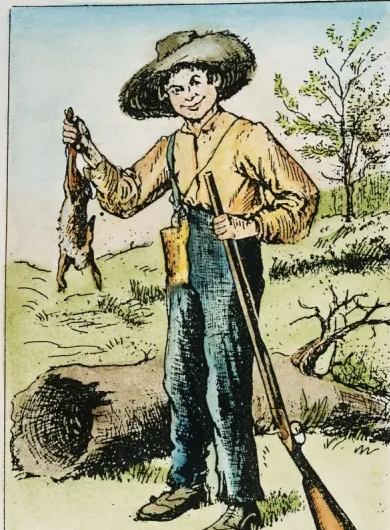
Classic American literature serves as a powerful mirror, reflecting the nation’s deepest anxieties, soaring ambitions, and complex moral landscapes. Through the enduring stories of authors like Mark Twain, Nathaniel Hawthorne, F. Scott Fitzgerald, and Ernest Hemingway, we can trace the evolution of the American identity. These works are not mere historical artifacts; they are profound explorations of the human condition, tackling timeless themes of freedom, societal hypocrisy, the elusive nature of success, and the quiet dignity found in struggle. This guide will deconstruct the core thematic pillars of four seminal American novels, revealing how they collectively narrate the story of a nation and its people.
From the untamed currents of the Mississippi to the rigid social structures of Puritan New England and the dazzling, hollow parties of the Jazz Age, these narratives question the very foundations of society. They challenge us to consider what it truly means to be free, to grapple with the public and private consequences of sin, and to confront the often-bitter reality behind the glittering promise of the American Dream. By examining these works in depth, we uncover a rich tapestry of symbolism, character development, and philosophical inquiry that continues to resonate with readers today.
The Quest for Freedom: Huckleberry Finn’s Moral Odyssey
Mark Twain’s *Adventures of Huckleberry Finn* is fundamentally a story about the search for freedom, not just from physical bondage, but from the suffocating constraints of a “sivilized” society built on prejudice and hypocrisy. The novel’s protagonist, Huck, embarks on a journey that forces him to unlearn the corrupt values of the world he was raised in and develop his own moral compass.
Escaping “Sivilization”: The Rejection of Societal Norms
From the very beginning, Huck feels trapped by the conventions imposed upon him by the Widow Douglas and Miss Watson. He despises the regular schedules, formal clothing, and religious doctrines that represent societal order. His escape from their home, and later from his abusive father, Pap, is an explicit rejection of these structures. This desire to escape is not merely youthful rebellion; it is a deep-seated need for an authentic existence, one that is not governed by the arbitrary and often cruel rules of the civilized world.
The Mississippi River as a Symbol of Liberation and Peril
The Mississippi River is the central symbol of the novel, representing a path to freedom for both Huck and the runaway slave, Jim. On their raft, they create a small, egalitarian society, free from the racial and social hierarchies of the shore. The river is a place of peace, reflection, and genuine human connection. However, the river is also a source of danger and unpredictability, mirroring the perilous nature of their journey. It carries them into the heart of the deeply flawed South, forcing them to confront the very dangers they seek to escape.
A Controversial Friendship: Huck and Jim’s Bond
The heart of the novel is the evolving relationship between Huck and Jim. Initially, Huck sees Jim through the racist lens of his society. Yet, as they navigate the river together, Huck comes to see Jim as a father figure, a friend, and a fellow human being deserving of freedom and respect. The novel’s climax occurs when Huck decides to tear up the letter that would betray Jim, declaring, “All right, then, I’ll go to hell.” This moment signifies his ultimate break from societal morality and the birth of his own conscience, choosing personal loyalty over what he has been taught is right.

Sin, Hypocrisy, and Redemption in The Scarlet Letter
Nathaniel Hawthorne’s *The Scarlet Letter* transports the reader to the rigid, theocratic world of 17th-century Puritan Boston to explore the complex nature of sin, guilt, and social judgment. The novel critiques the unforgiving nature of a society that punishes public sin while ignoring the private torment of hypocrisy.
The Public vs. Private Self in Puritan New England
The central conflict revolves around the stark contrast between public persona and private reality. Hester Prynne is forced to wear her sin of adultery openly in the form of a scarlet “A,” making her a public spectacle and an outcast. In contrast, the Reverend Arthur Dimmesdale, her secret lover, conceals his sin and is revered as a saint. His internal guilt, however, physically and spiritually destroys him, suggesting that hidden sin is far more corrosive than that which is openly acknowledged. Hawthorne uses this dynamic to expose the profound hypocrisy at the heart of the Puritan community.
The Shifting Symbolism of the Scarlet ‘A’
The scarlet letter “A” is one of the most powerful symbols in American literature. Initially, it stands for “Adultery,” a mark of shame and damnation. However, as Hester lives a life of quiet charity and dignity, its meaning begins to transform in the eyes of the community. For some, it comes to mean “Able,” a testament to her strength and resilience. For Hester herself, it becomes a part of her identity, a painful teacher that gives her a unique perspective on human frailty. This evolution demonstrates that the meaning of sin and identity can be redefined through individual action and strength of character.
A Tale of Three Sinners: Hester, Dimmesdale, and Chillingworth
The novel examines sin through its three central characters. Hester’s sin is one of passion, and through her public penance, she achieves a form of redemption. Dimmesdale’s sin is one of cowardice and hypocrisy, leading to his agonizing downfall. Roger Chillingworth, Hester’s estranged husband, commits what Hawthorne presents as the most grievous sin: the cold, calculated violation of the human heart through his relentless pursuit of revenge against Dimmesdale. This comparison suggests that sins of malice are far worse than sins of passion.

The Great Gatsby and the Corrosion of the American Dream
F. Scott Fitzgerald’s *The Great Gatsby* is a searing critique of the American Dream as it existed in the Roaring Twenties. The novel reveals a society obsessed with wealth, status, and pleasure, ultimately exposing the dream as an illusion corrupted by materialism and class immobility.
Old Money vs. New Money: The Illusion of Social Mobility
The novel starkly contrasts the “old money” of East Egg, represented by Tom and Daisy Buchanan, with the “new money” of West Egg, epitomized by Jay Gatsby. The Buchanans possess an inherited, effortless sense of superiority and are careless with their power, while Gatsby earned his fortune through illicit means in a desperate attempt to win Daisy’s love and acceptance into her world. Despite his immense wealth and lavish parties, Gatsby is never truly accepted by the established aristocracy, demonstrating that the promise of social mobility, a core tenet of the American Dream, is largely a myth. The rigid class structure remains impenetrable.
Key Symbols: The Green Light and the Eyes of God
Fitzgerald employs powerful symbols to convey his themes. The green light at the end of Daisy’s dock represents Gatsby’s unattainable dream—a future with Daisy and the past he longs to repeat. It symbolizes a generalized hope that is always just out of reach. In stark contrast, the eyes of Doctor T. J. Eckleburg, a fading billboard overlooking the Valley of Ashes, function as the eyes of a passive, absent God. They witness the moral decay, social inequality, and tragic events of the novel without intervening, suggesting a world devoid of moral accountability.
Fitzgerald’s Prophecy: The Hollowness of Materialism
Through Gatsby’s tragic story, Fitzgerald predicted the spiritual and moral emptiness that would follow the hedonism of the Jazz Age. Gatsby believes that wealth can rewrite the past and buy happiness, but his dream ultimately crumbles, leading to his isolation and death. His sparsely attended funeral is a final, damning indictment of the superficial relationships and moral hollowness of the era. The novel serves as a timeless warning about the danger of pursuing a dream that is based on illusion and material possessions rather than genuine human connection.

Endurance and Dignity: The Philosophy of The Old Man and the Sea
Ernest Hemingway’s novella *The Old Man and the Sea* is a masterful, minimalist exploration of human endurance, dignity, and the nature of victory and defeat. Through the simple story of an old fisherman’s epic battle with a giant marlin, Hemingway presents a profound philosophy on how one should face life’s struggles.
Man Against Nature: The Epic Struggle with the Marlin
The core of the story is the grueling, multi-day struggle between the aging fisherman, Santiago, and the massive marlin. This is not a battle of malice, but one of mutual respect. Santiago comes to see the marlin as a noble and worthy adversary, a brother in the natural world. This conflict represents the universal struggle of humanity against the powerful, indifferent forces of nature. Santiago’s persistence, skill, and deep connection to his craft showcase a profound respect for the natural world, even as he seeks to conquer a part of it.
Defining Victory in Defeat: Santiago’s Stoicism
Although Santiago succeeds in catching the marlin, he loses it to sharks on the journey home, returning to the harbor with only a skeleton. In a material sense, he is defeated. However, Hemingway redefines victory through Santiago’s stoic philosophy. Santiago is “destroyed but not defeated.” His victory lies not in the prize, but in the struggle itself—in his unwavering determination, his refusal to give up, and the grace under pressure he exhibits. He proves his strength and worth to himself, which is the only victory that truly matters.
The Sharks as a Metaphor for Life’s Destructive Forces
If the marlin represents a noble challenge, the sharks represent the mindless, destructive forces of the world. They are not worthy opponents; they are scavengers that tear apart Santiago’s hard-won prize. They symbolize the critics, the misfortunes, and the harsh realities that can destroy our achievements. Santiago fights them not with hope of winning, but simply because it is his duty to fight. This struggle against insurmountable odds encapsulates the novella’s central theme: true dignity is found in continuing the fight, regardless of the outcome.

Comparative Analysis: Unifying Threads in the American Narrative
While each of these novels tells a unique story, they are interwoven with common threads that form a larger conversation about the American experience. By examining them together, we can identify a persistent tension between the individual and the collective, the dream and the reality.
The Individual Versus Society
A central theme across all four works is the conflict between the individual’s conscience or ambition and the oppressive force of society. Huck Finn must defy the entire social structure of the South to save his friend. Hester Prynne must forge her own identity in the face of a community that has branded her a sinner. Jay Gatsby’s individual dream is ultimately crushed by the immovable barriers of an entrenched class system. Even Santiago, alone at sea, is driven by the need to prove his worth within the social context of his fishing village. These stories champion the individual spirit while acknowledging the immense power of societal judgment.
The Search for an Authentic Self
Each protagonist is on a quest for a form of authenticity. Huck seeks a life free from hypocrisy, Santiago seeks to reaffirm his identity as a fisherman, and Hester redefines her own identity beyond her sin. Gatsby’s tragedy is perhaps that his search is for an inauthentic self—a persona built of wealth designed to attract Daisy—which is why his dream is doomed to fail. These novels suggest that the most important journey is the internal one, the struggle to define oneself on one’s own terms.
Critiques of Social and Economic Structures
From Twain’s condemnation of racism to Fitzgerald’s dissection of classism and Hawthorne’s critique of religious intolerance, these novels are powerful social commentaries. They expose the flaws in the systems that govern human lives, whether it be the institution of slavery, the rigidity of Puritan law, or the moral vacuum created by extreme wealth. They challenge the reader to look beyond the surface of societal norms and question the true meaning of justice, morality, and success.
Frequently Asked Questions (FAQ)
- Q1: Why are these classic American novels still relevant today?
- These novels remain relevant because they explore timeless and universal human themes: the struggle for freedom, the pain of social alienation, the quest for identity, and the confrontation with mortality. The societal issues they critique, such as racism, social hypocrisy, and the corrupting influence of wealth, are still deeply pertinent in contemporary society, making these stories powerful tools for understanding our own world.
- Q2: What is the “American Dream” as depicted in these books?
- These books present a complex and often critical view of the American Dream. In *The Great Gatsby*, it is portrayed as a beautiful but ultimately hollow illusion, corrupted by materialism and class prejudice. In *Huckleberry Finn*, the dream is one of personal freedom and escape from a corrupt society, rather than material success. Collectively, they suggest the “dream” is a deeply personal and often contested concept, far more complicated than the simple pursuit of wealth.
- Q3: How do these authors use symbolism to convey their themes?
- Symbolism is crucial in all four novels. Twain uses the Mississippi River to symbolize freedom and escape. Hawthorne uses the scarlet “A” to represent the shifting nature of sin and identity. Fitzgerald’s green light symbolizes unattainable dreams and hope. Hemingway uses the marlin to symbolize a noble struggle and the sharks to represent destructive, meaningless opposition. These symbols add layers of meaning and allow the authors to explore abstract concepts in a concrete way.
- Q4: What role does nature play in these American literary classics?
- Nature plays a significant and varied role. In *Huckleberry Finn* and *The Old Man and the Sea*, nature is a space of liberation and truth, a realm separate from the corruption of human society where individuals can prove their true character. For Huck, the river is a sanctuary; for Santiago, the sea is an arena of existential struggle. In *The Scarlet Letter* and *The Great Gatsby*, the natural world is more of a backdrop, but elements like the dark forest or the waters of the Long Island Sound often reflect the characters’ internal turmoil and moral ambiguity.