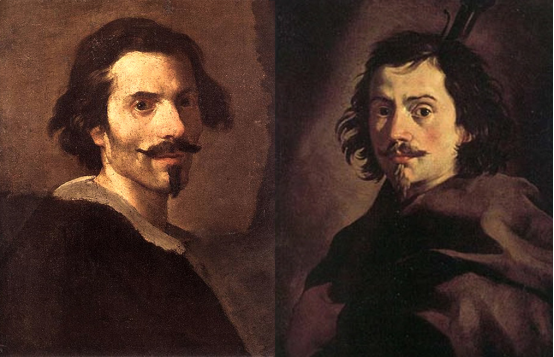
Seventeenth-century Rome was the stage for the flourishing of Baroque art, and the names of these two talented architects, Bernini and Borromini, are undoubtedly the most dazzling figures in this period of art history. Jack Morrissey’s “Genius in Design: Bernini, Borromini, and the Rivalry that Changed Rome” centers on the artistic competition between these two, presenting readers with a picture of Baroque architecture brimming with tension and creativity. As many readers of popular history books experience, I often oscillated between the “confidence of familiarity” and the “shock of encountering new knowledge” while reading this book. This feeling of sometimes feeling like a scholar and sometimes like a “layman” precisely demonstrates the unique value of this book: it not only sorts out the key threads in the history of Baroque architecture, but also inspires readers to think deeply about artistic competition and mutual influence.
Competition: From collaboration to confrontation
The core narrative thread of Genius in Design is the complex rivalry between Bernini and Borromini. Morrissey doesn’t simply define their relationship as “antagonistic,” but instead reveals their early collaborative roots—for example, the little-known detail that Borromini assisted Bernini in the construction of the “Throne of St. Peter” in St. Peter’s Basilica. This early collaboration not only allows readers to see the tacit understanding between the two geniuses but also highlights the fierce and dramatic rivalry that would later unfold. Over time, as the two began competing for the same architectural commissions, their initial partnership gradually gave way to intense competition, culminating in Borromini’s public criticism of the “instability” of Bernini’s design for St. Peter’s bell tower. This fierce academic questioning caused a stir in the art world at the time and marked the moment when the two men’s relationship completely deteriorated.
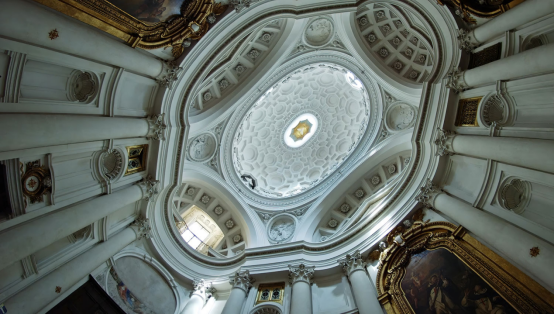
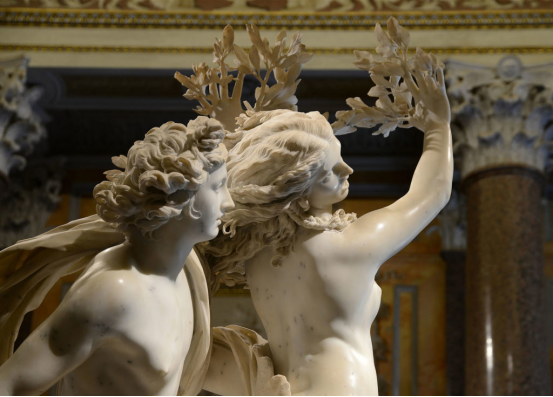
Morrissey’s depiction of this rivalry avoids a black-and-white judgment, but rather objectively presents the differences between the two men’s artistic stances and personalities. Bernini’s works are often full of passion and dynamism, and he excels at creating a dramatic atmosphere with sculptural tension; Borromini, on the other hand, focuses more on the logic and geometric beauty of architectural structure, and his designs are imbued with rigorous rational thinking. This difference in artistic philosophy made their competition not only a conflict of interests in “commissions” but also a clash of “artistic expression paths.” For example, when dealing with religious buildings, Bernini tended to use ornate decoration and dynamic composition to inspire emotional resonance in believers, while Borromini conveyed the solemnity and sacredness of religion through precise spatial proportions and structural innovations. It was precisely this difference that made their competition a significant driving force behind the diversified development of the Roman Baroque architectural style in the 17th century.
Unexpected Discovery: The Interactions Behind the Imagery of “Weapons”
During the reading, the details mentioned in Morrissey’s book not only confirmed some known conclusions in art history, but also inspired new thinking about the “mutual influence between the two” – the most thought-provoking of which was the echo of the anthropomorphic image of “outstretched arms” (that is, the concept of “weapons”) in the architecture of the two. Morrissey quoted Borromini’s description of his design for the Oratorio dei Filippini (1637-1650): In his treatise “Opus Architectonicum,” Borromini explicitly stated that the design of the church’s facade was based on the “human figure,” with “outstretched arms as if embracing everyone who enters.” This image was subdivided into five parts: “chest, arm, forearm,” closely integrating architectural structure with human form.
This passage immediately reminded me of Bernini’s design for St. Peter’s Square (1656-1667). As Howard Hibbard points out, Bernini himself likened the square’s colonnades to “the open arms of a church welcoming the faithful.” This anthropomorphic interpretation bears a striking resemblance to Borromini’s description of his own church. Even more noteworthy is the timing: Borromini’s Chapel of San Filippo Neri was completed six years before Bernini’s St. Peter’s Square, and Borromini’s manuscript, Opus Architectonicum, which elaborates on the concept of “arms,” is dated precisely 1656—the year Bernini began designing St. Peter’s Square. This chronological coincidence is difficult to explain as mere chance. Considering the intense rivalry between the two, a more plausible hypothesis is that Bernini, perhaps exposed to Borromini’s treatise or through exchanges in the art world, became acquainted with the “open arms” design concept and incorporated it into the design of St. Peter’s Square, thus “responding to and surpassing” his rival’s ideas in his own way.
While Morrissey mentions in his book that Bernini’s La Scala Royal Theatre may have been influenced by the colonnades of Borromini’s Palazzo Padova, the association of “weaponry” imagery undoubtedly adds another important element to the mutual influence between the two artists. This discovery also reminds readers that artistic competition is not simply a win-lose situation, but a process of mutual inspiration and achievement through confrontation. Even rivals as fierce as Bernini and Borromini could inadvertently absorb the essence of each other’s creativity and incorporate it into their own works. This “symbiosis in competition” is a key law of art history.
The value of reading: expanding cognition between the “known” and the “unknown”
For readers familiar with Baroque art history, Genius in Design may contain some “repetitive information”—for example, the book’s discussion of the architectural history of St. Peter’s Basilica may be boring for readers who already know this history. However, it is precisely this interweaving of “familiarity and unfamiliarity” that constitutes the book’s unique charm: just when you think you have mastered sufficient knowledge, Morrissey always throws in new details or perspectives, making you realize that “on a subject, there is always more to learn.” This oscillation between “scholarly feeling” and “ignorance” not only does not dampen reading interest, but instead inspires a deeper desire for exploration—for example, after seeing the two authors’ use of “weapon” imagery, readers will be unable to help but consult more related manuscripts and research to further verify their conjectures.
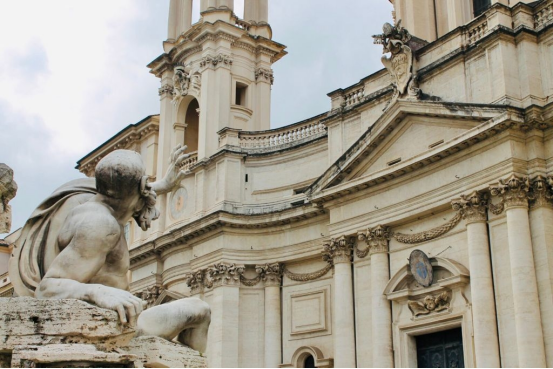
At the same time, as a “popular history book,” this book avoids the obscurity of academic works. Instead, it uses popular language and clear logic to clearly organize the complex history of architecture and the relationships between individuals. It is not only suitable for art history enthusiasts, but also allows ordinary readers to appreciate the charm of Baroque architecture and the creativity behind artistic competition. Through specific architectural examples—from the dispute over the bell tower of St. Peter’s Basilica, to the stylistic echoes between the colonnades of Palazzo Spada and the Teatro Regio at La Scala, to the cross-disciplinary connection of “weapon” imagery—Morrissey allows readers to understand the core characteristics of Baroque architecture through vivid stories and how two geniuses used their designs to “transform Rome.”
Conclusion: The Baroque legend forged by competition
After reading Genius in Design, Bernini and Borromini are no longer just cold names in art history textbooks, but two flesh-and-blood creators brimming with passion and obsession. Their rivalry may have been fraught with tension, but it also invisibly advanced artistic progress; their works may have differed in style, but together they shaped the splendor of 17th-century Roman Baroque architecture. The book also sparks reflections on the interplay of “weapon” imagery, highlighting the fact that artistic development is never isolated; even competitors can draw inspiration from each other’s creativity, ultimately creating a shared legacy.
For every reader who loves art history, this book offers a rare dialogue—a conversation with two Baroque geniuses, a conversation with that era of competition and creativity, and even more, a conversation with one’s own inner desire to explore the “unknown.” It reminds us that in the world of art, the “known” is only the starting point, while the “unknown” is the eternal pursuit.