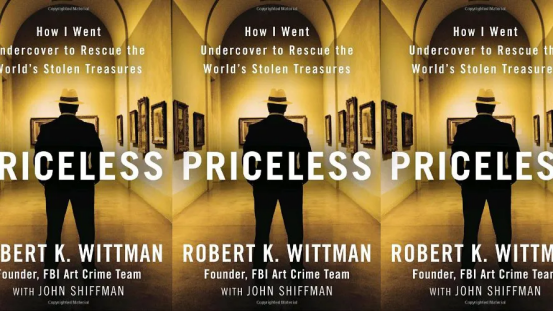
In many art books, we often encounter in-depth analyses by art historians and critics offering insightful observations on the brushwork, composition, and meaning of works. However, “Priceless: How I Went Undercover to Rescue the World’s Stolen Treasures” breaks with traditional art appreciation frameworks, offering a radically different perspective, leading readers into the “other side” of artworks. Author Robert K. Wittman, a former undercover FBI agent, shares his personal experiences infiltrating the dark world of art crime to rescue stolen artworks and historical artifacts. Both through his thrilling plot and his unique perspective on “art as an object,” Wittman offers a fresh perspective.
Unique Perspective: Pragmatic Observation to Break the Mystification of Art
The most striking aspect of Priceless Treasures is Wittman’s pragmatic perspective on art. Unlike academic research that often mystifies and spiritualizes artworks, Wittman consistently approaches the physical properties of artworks, focusing on their existence as physical objects. Rather than dwelling on the symbolism or profound cultural interpretations behind paintings, he views art as an “object”—something that can be touched, moved, and even stolen. For him, the value of a work of art lies not only in its cultural connotations or spiritual symbolism, but also in its physical presence: the material of the canvas, the details of the carvings, the aging of the paint, and even the smallest wear and tear can all hold crucial clues to finding lost artifacts.
This perspective does not devalue art, but rather emphasizes the centrality of physical properties in the conservation and preservation of artworks. In Wittmann’s eyes, art is not only a symbol of culture but also a unique physical entity. He reminds us that while a work of art is imbued with spiritual power, it is first and foremost an object, requiring careful care and protection. In this respect, his perspective complements traditional interpretations of art, offering us a more comprehensive perspective on art conservation.
Wonderful Case: A Rescue Story of Both Tension and Heartwarming
Based on true experiences, Priceless boasts a plot comparable to that of a fictional detective novel. Wittman, working undercover, delves into the dark world of art crime, where each rescue operation is fraught with uncertainty and danger. The book not only covers numerous cases of stolen artwork rescues but also touches on the recovery of important historical artifacts, including the original Bill of Rights. These cases are more diverse than expected, demonstrating the vastness and complexity of the field of cultural heritage preservation.
The case of Norman Rockwell’s “Spirit of ’76” (1976) is particularly haunting. The painting was stolen from a gallery in 1978 and only resurfaced in the late 1990s. Wittman became deeply involved in the case after 9/11, deftly framing the unfolding story within the context of the times. Following 9/11, patriotism surged in the United States, and the image of the Twin Towers in “Spirit of ’76” became a symbol of this sentiment. The recovery of the painting was more than just a work of art rescue; it became a public relations initiative deeply connected to national sentiment.
Wittman uses plain language to recreate the tense plot and details of the undercover process: the psychological game with the suspect, the complex communication with officials from various countries, and the anxiety and perseverance when the clues were suddenly interrupted. These descriptions make the reader feel as if they are there firsthand, and they can feel both the danger of art crime and the strength of those who quietly dedicate themselves to protecting cultural heritage.
Reader value: appeal across regions and fields
Priceless has captivated not only art crime enthusiasts but also a readership far exceeding expectations. For those fascinated by art crime, the book’s real-life cases, the professional investigation process, and the tension of undercover operations provide an immersive reading experience. For American readers, the historical artifact recovery cases covered in the book, such as the original copy of the Bill of Rights and a Rockwell work, will undoubtedly resonate with their culture and strengthen their appreciation for their local cultural heritage. For readers interested in European art, the book’s examples of European artwork rescues will also satisfy their curiosity about international cooperation and the cross-border recovery of art crimes.
More importantly, this book offers a more accessible approach to art for the general public. Without complex art theory, it uses real-life stories to illustrate that art preservation isn’t just a topic for academics, but a cause that concerns everyone. Every stolen artwork is a carrier of history; its loss represents a loss of cultural memory, while every successful recovery safeguards human civilization.
The dual meaning of art protection
“Priceless” shows us that protecting art isn’t just about preserving the spiritual value behind a work; it’s also about protecting its physical existence. While not a traditional art practitioner, Wittman, as an undercover agent, has participated in the preservation of artworks, contributing a unique strength to the protection of cultural heritage. This book teaches us that art isn’t just a spiritual symbol to be interpreted; it also requires concrete protection and preservation.
Priceless is undoubtedly a masterpiece worthy of reading for every art lover and cultural heritage protector. It demonstrates that preserving art requires both art historians interpreting its spiritual value and individuals like Wittman, who protect its physical presence through practical action. For all readers concerned with cultural heritage preservation, this book is not only moving but also provides a deeper understanding of the true meaning of “art is priceless.”