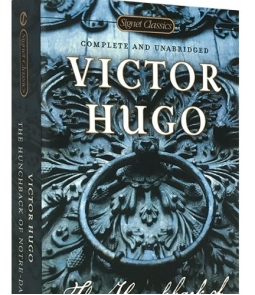
Rereading “The Hunchback of Notre Dame” recently reminded me of the first time I read it as a student. I was attracted by the ups and downs of the plot at that time. Now I read it again and found that there are more things worth pondering in Victor Hugo’s works. This novel published in 1831 is not only a representative work of romantic literature, but also an important text for studying medieval Parisian society.
Background
When Hugo wrote Notre Dame de Paris, France was in a period of social change. In the early 19th century, the industrialization process accelerated and many medieval buildings were facing the crisis of demolition. Hugo hoped to arouse people’s attention to ancient buildings through novels. The detailed description of Notre Dame de Paris in the book was his declaration to protect historical and cultural heritage. After the publication of this work, it did arouse social attention to the protection of ancient buildings and indirectly promoted the restoration project of Notre Dame de Paris.
“Good and evil coexist, light and darkness.”
The story revolves around Notre Dame de Paris in the 15th century, with the core characters including the gypsy girl Esmeralda, the hunchback Quasimodo and the archdeacon Claude Frollo. With her beautiful dancing and kind heart, Esmeralda has become the focus of the streets of Paris. Even the archdeacon of Notre Dame de Paris can’t stop thinking about her.
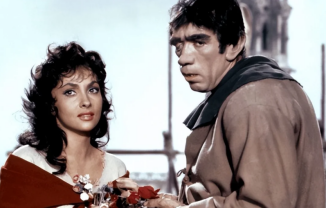
Quasimodo is the bell ringer of Notre Dame de Paris. He is despised by others because of his deformity. Only Archdeacon Frollo adopts him. Although he looks ugly, he has a pure love for Esmeralda. When Esmeralda is falsely accused of murdering Phoebus, Quasimodo hides her in Notre Dame for refuge, showing selfless protection. In sharp contrast is Archdeacon Claude Frollo. He appears to be righteous, but in fact he is devoured by desire. He covets Esmeralda’s beauty, and when his courtship fails, he frames her, and eventually goes to destruction in jealousy and hatred.
“Man is a rope tied between animals and supermen, a rope above the abyss. It is dangerous to walk on it, and it is also dangerous to stop halfway, but it is this danger that makes us learn to be brave.”
Esmeralda is the embodiment of beauty and kindness. She not only has a charming appearance, but also a heart of gold. She sympathizes with the weak and bravely rescues Quasimodo who is tied to the pillar of shame; she treats love sincerely and has a deep love for Phoebus. However, in that dark society, her beauty and kindness became her death warrant. She was framed, regarded as a heretic by the church, and eventually ended her young life on the gallows.
Hugo used a lot of contrast techniques in “Notre Dame de Paris” to show beauty and ugliness, good and evil, love and hate vividly. This contrast is not only reflected in the characters, but also in the description of the social environment. The magnificent building of Notre Dame de Paris symbolizes the authority and holiness of religion, but under its shadow, countless sins and sufferings are hidden.
Reading suggestions
In general, “Notre Dame de Paris” is a classic worth reading repeatedly. Whether you are attracted by the romantic plot or want to explore society and human nature in depth, you can find resonance in the book. If you have a unique reading experience, please share it in the comment area, and let’s explore the charm of this literary masterpiece together.