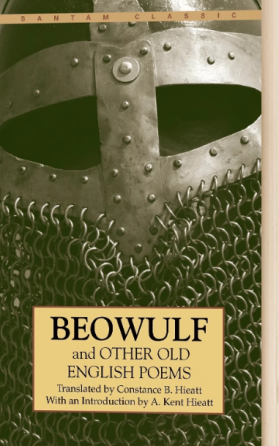
Recently, I was exploring ancient literature and came across Beowulf, the first of the four great epics of medieval Europe. Most people probably know this name because they have seen the movie of the same name.
Plot Summary
A long time ago, there was a brave warrior named Beowulf in southern Sweden. In Denmark, King Hrothgar’s Herot Hall was always harassed by the demon Grendel. Every night, Grendel rushed in to kill people, and the warriors suffered heavy casualties. When Beowulf heard about it, he brought his warriors across the ocean to help. He did not take any weapons, but directly twisted Grendel’s arm with his bare hands, and the demon died of his injuries.
Before the celebration , Grendel’s mother came to avenge her son. She sneaked into the hall and killed several important people. Beowulf chased the demon mother to her lair under the deep lake and killed her. Beowulf, who had made great achievements, returned to his country and became king. For fifty years, the country was peaceful and prosperous.
When Beowulf was old, the fire-breathing dragon guarding the treasure began to destroy the village because the golden cup was stolen. Beowulf led his men to fight the dragon, but at the critical moment, everyone else was scared away, and only the young warrior Wiglaf stayed to help.
In the end, Beowulf tried his best and killed the dragon, but he also sacrificed himself and wrote the most remarkable story of the Getters with his life.
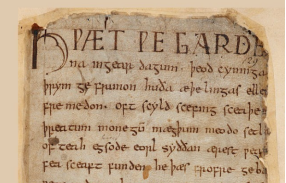
Cultural Connotation
The poem revolves around three fights, killing monsters and stabbing dragons, which constitute the main narrative line. It uses about 150,000 words to tell the heroic deeds of the hero Beowulf, allowing us to appreciate the true and illusory, wonderful and bizarre heroic stories on the European continent more than a thousand years ago. Of course, we will admire Beowulf’s spirit of facing the ups and downs of fate with a spirit of not hesitating to die, just as the saying goes, “The death of a hero is his poem into immortality.” In my opinion, this work tells more than just a heroic story, but conveys to us a kind of heroism and chivalry. Tolkien, the author of “The Lord of the Rings”, commented on it: “It glimpses the mysteries of the universe and carries the eternal thinking of mankind about its destiny and pursuit.”