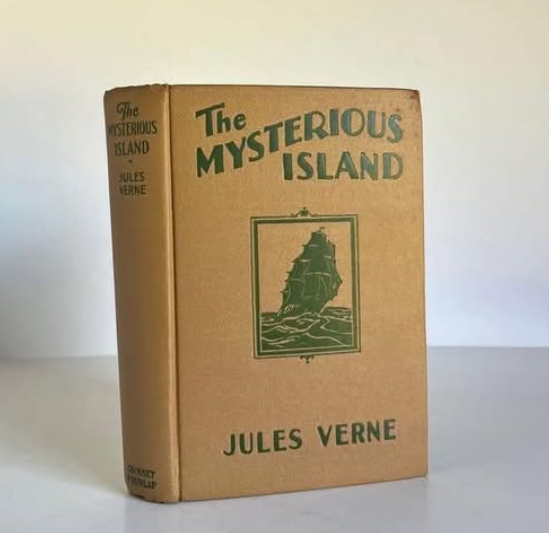
Jules Verne’s The Mysterious Island stands as a monumental achievement in nineteenth-century literature, serving simultaneously as a gripping tale of survival and a profound philosophical treatise on human civilization. For generations of readers, the journey to Lincoln Island has represented a rite of passage. However, a deeper textual analysis reveals that the novel offers two distinctly different experiences depending on the reader’s stage of life. When combined with Verne’s intricate utopian blueprints, the narrative transcends mere science fiction, evolving into a prophetic commentary on humanity’s relationship with technology, nature, and societal engineering. This comprehensive analysis dissects the multi-layered brilliance of Verne’s masterpiece, exploring both the psychological impact of the reading experience and the sociological weight of his utopian vision.
The Dual Experience of Arriving at Lincoln Island
Reading The Mysterious Island is rarely a singular event in a literary enthusiast’s life. It is often a text revisited, and upon a second arrival in adulthood, the island reveals itself not just as a playground of survival, but as a complex socio-economic laboratory. The contrast between these two reading experiences highlights Verne’s genius in crafting a narrative that operates flawlessly on multiple intellectual frequencies.
Childhood Wonder: The Ultimate Survival Adventure
For a young reader, the novel is the quintessential Robinsonade. The escape from Richmond via a hijacked hydrogen balloon amidst a raging storm is a visceral thrill. The initial struggle for survival—starting with absolutely nothing but the clothes on their backs and a single grain of wheat—captures the boundless imagination of youth. The focus remains heavily on the mechanics of survival: the creation of fire without matches, the forging of iron, the manufacturing of nitroglycerin, and the domestication of the island’s flora and fauna.
In this youthful reading, characters like the brilliant engineer Cyrus Smith (or Harding, depending on the translation), the loyal sailor Pencroff, the journalist Gideon Spilett, the devoted Neb, and the young Herbert represent archetypal heroes. They are infallible, resourceful, and morally absolute. The island itself is viewed as a vast, benevolent puzzle waiting to be solved by human ingenuity, while the unseen presence of Captain Nemo serves as a magical guardian angel, adding a layer of thrilling mystery to the wilderness.
Adult Realization: Uncovering the Societal Blueprint
Returning to the shores of Lincoln Island as an adult strips away the sheer romanticism of the adventure, replacing it with a stark recognition of Verne’s underlying ideological frameworks. The adult reader recognizes that the castaways are not merely surviving; they are systematically conquering and colonizing the natural world. Their actions reflect the zenith of nineteenth-century Western industrial optimism and imperialistic entitlement.
To fully grasp this dichotomy, we must examine the shifting paradigms of the reading experience across several dimensions of the narrative:
| Narrative Element | Childhood Perspective | Adulthood Perspective |
|---|---|---|
| Cyrus Smith | The ultimate hero and omniscient problem-solver. | The archetypal technocrat and philosopher-king enforcing a rigid hierarchy. |
| Nature/The Island | A wild playground providing resources for survival. | A passive subject to be exploited, industrialized, and subdued by humanity. |
| Captain Nemo | A magical savior providing timely miraculous interventions. | A tragic, disillusioned anti-hero representing the failures of violent revolution. |
| The Colony’s Progress | Exciting milestones of building a comfortable home. | A microcosm of capitalist industrialization and colonial expansion. |
This adult perspective does not diminish the novel’s brilliance; rather, it amplifies it. Verne effectively uses the guise of a boys’ adventure story to smuggle in complex debates about the morality of industrialization, the necessity of social order, and the ultimate destiny of human scientific pursuit.

The Utopian Conception: A Dream of Scientific Harmony
At its core, The Mysterious Island is a utopian novel, but one grounded heavily in the practical application of applied sciences rather than abstract political philosophy. Verne’s vision of utopia is not a magical paradise where food falls from trees, but a highly organized, labor-intensive society where human intellect perfectly interfaces with natural resources to create abundance and harmony.
Engineering a Microcosm of Human Civilization
Unlike traditional utopian literature that relies on magical realism or divine intervention, Verne’s utopia is built brick by brick, formula by formula. The island serves as a blank canvas upon which the castaways reconstruct thousands of years of human technological evolution in a mere matter of months. This rapid acceleration of progress is Verne’s ultimate love letter to the Scientific Revolution.
The utopian society of Lincoln Island is sustained by several unshakeable pillars of nineteenth-century ideology:
- Absolute Meritocracy: Leadership is not determined by wealth or birthright, but by intellectual capability and practical utility. Cyrus Smith leads because he possesses the scientific knowledge necessary to keep the group alive.
- The Dignity of Labor: There is no idle class on Lincoln Island. Every character, regardless of their background in the United States, engages in grueling physical and mental labor. Work is elevated to a moral imperative.
- Unwavering Solidarity: Unlike William Golding’s Lord of the Flies, which posits that humans revert to savagery in isolation, Verne argues that rational, civilized men will naturally form a harmonious, cooperative society devoid of greed or internal conflict.
- Technological Dominion: The environment is viewed strictly through a utilitarian lens. A waterfall is not just beautiful; it is potential kinetic energy for a mill. A mineral deposit is not part of the landscape; it is the foundation for an electrical telegraph system.
Through these pillars, Verne constructs a dream of what society could be if stripped of political corruption, economic inequality, and historical grievances. The castaways do not just survive; they thrive, creating a miniature republic that functions with the precision of a well-oiled steam engine.
Cyrus Smith as the Archetypal Philosopher-King
In Plato’s Republic, the ideal society is ruled by a philosopher-king. In Verne’s industrial utopia, this role is fulfilled by the engineer. Cyrus Smith represents the pinnacle of Enlightenment thinking—a man devoid of irrational passions, driven entirely by logic, mathematics, and an encyclopedic knowledge of the natural sciences. He is the secular priest of Verne’s world, translating the laws of physics and chemistry into salvation for his flock.
However, an in-depth analysis reveals the inherent fragility of this utopian model. The society is overly dependent on a single, infallible leader. Without Smith’s encyclopedic mind, the colony would immediately regress to a primitive state. This dependency subtly questions the sustainability of a technocratic utopia, hinting that a society built entirely on the intellect of a few is constantly teetering on the edge of collapse.
Prophecy or Warning: The Limits of Industrial Conquest
While the first two-thirds of the novel celebrate the triumph of human engineering, the final act serves as a profound, almost apocalyptic prophecy. Verne, often hailed as a visionary who predicted submarines, space travel, and helicopters, also possessed a deep-seated anxiety about the ultimate consequences of unchecked industrialization.
Colonial Undertones and Environmental Mastery
The systematic taming of Lincoln Island is a microcosm of nineteenth-century colonialism. The castaways rename the geographical features after American politicians and landmarks, effectively erasing the island’s wild identity and claiming it for Western civilization. They exterminate predatory beasts, alter waterways, and exploit every available mineral. While presented as a triumph of survival, a modern reading cannot ignore the hubris involved in this total environmental subjugation.
Verne subtly prophesies the ecological anxieties of the modern era. The colonists believe they have mastered the island, but they are entirely blind to the geological forces brewing beneath their feet. Their telegraph wires, brick kilns, and agricultural terraces are ultimately meaningless in the face of planetary power.
The Inevitable Collapse: Nature’s Final Word
The destruction of Lincoln Island by a volcanic eruption is the most crucial thematic element of the novel. Just as the colonists achieve absolute utopian perfection—having eradicated the pirate threat, established a comfortable estate, and mapped every inch of their domain—the island literally explodes beneath them. All their industrial achievements, their carefully constructed infrastructure, and their technological marvels are vaporized in an instant.
This is not merely a dramatic plot device to force a rescue; it is Verne’s ultimate philosophical statement. It serves as a stark warning against the arrogance of the Anthropocene. No matter how advanced human technology becomes, and no matter how perfectly a society is engineered, humanity remains entirely at the mercy of the natural world. The utopian dream is violently shattered, leaving the castaways exactly as they arrived: clinging to a bare rock, entirely dependent on external salvation.
The Enduring Legacy of Jules Verne’s Masterpiece
The synthesis of these themes—the transition from childhood adventure to adult critique, and the delicate balance between utopian dreams and prophetic warnings—cements The Mysterious Island as a foundational text of modern science fiction. Verne did not merely write a story about surviving on a deserted island; he wrote a comprehensive manual on the construction, psychology, and inevitable vulnerability of human civilization.
By contrasting the boundless optimism of engineering with the terrifying supremacy of nature, Verne left behind a legacy that continues to resonate. As modern society grapples with the realities of climate change, artificial intelligence, and the ethical limits of technological progress, the lessons embedded in the soil of Lincoln Island remain more relevant than ever. The novel demands that we ask ourselves: Are we merely building temporary technological castles on the slopes of an active volcano?
Frequently Asked Questions (FAQ)
- Q1: Why is The Mysterious Island considered a utopian novel?
- It is considered a utopian novel because it depicts a group of rational, civilized individuals building an ideal society from scratch. Free from the corruption, poverty, and political strife of the outside world, the castaways establish a perfectly egalitarian community based on meritocracy, scientific progress, mutual respect, and the dignity of hard labor.
- Q2: How does the reading experience of the novel change from childhood to adulthood?
- In childhood, the novel is primarily experienced as a thrilling survival adventure, focusing on the ingenuity of creating fire, forging tools, and exploring a wild landscape. In adulthood, readers often recognize the deeper socio-political themes, such as the novel’s endorsement of nineteenth-century industrial colonialism, the rigid technocratic hierarchy led by Cyrus Smith, and the philosophical implications of man’s dominance over nature.
- Q3: What role does Captain Nemo play in the overarching theme of the novel?
- Captain Nemo acts as a bridge between Verne’s earlier work, Twenty Thousand Leagues Under the Sea, and this novel. Thematically, he represents the failures of violent rebellion and isolationism. As a dying, disillusioned genius, his secret interventions allow the colonists to survive, but his ultimate demise alongside the island signifies the end of the romantic, anti-heroic era, making way for the pragmatic, community-driven industrialism represented by Cyrus Smith.
- Q4: What is Jules Verne’s ultimate message regarding technology and nature?
- While Verne celebrates human intellect and technological progress throughout the novel, the explosive climax serves as a stark warning. The volcanic destruction of Lincoln Island demonstrates that despite humanity’s greatest engineering achievements and societal perfection, nature remains the ultimate, uncontrollable sovereign. It is a cautionary tale against the hubris of believing humans can permanently conquer the natural world.