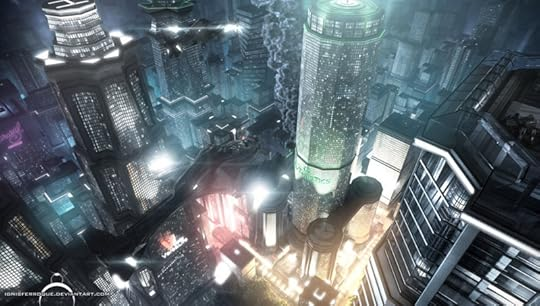
The Origins of Cyberspace: A Consensual Hallucination
Long before the World Wide Web became an omnipresent reality, William Gibson fundamentally altered the trajectory of modern technological thought. In his seminal 1984 novel, Neuromancer, Gibson introduced the world to “cyberspace,” famously defining it as a “consensual hallucination experienced daily by billions of legitimate operators.” This was not merely a backdrop for a science fiction narrative; it was a profound philosophical proposition about how humanity would eventually interact with abstract data. By framing digital space as a shared illusion, Gibson anticipated the psychological and sociological frameworks that govern our modern internet.
The brilliance of the consensus illusion lies in its spatial metaphor. Data, inherently formless and invisible, required a geography to be navigable by the human mind. Gibson provided this geography. He envisioned a matrix where corporate data banks appeared as massive, glowing ziggurats and neon grids stretching into infinity. This visualization allowed readers—and later, actual software engineers and UI designers—to conceptualize the internet not as a series of connected wires, but as a destination, a parallel dimension of human existence.
The Matrix as a Reflection of Human Consciousness
In Gibson’s early Sprawl trilogy, cyberspace is intrinsically linked to human consciousness. The “decking” process, where hackers physically wire their nervous systems into the console, eliminates the barrier between the biological mind and the digital realm. This visceral connection highlights a critical theme: the digital world is a human construct, entirely dependent on human perception to exist. It is a mirror reflecting the desires, greed, and complexities of the physical world it seeks to transcend.
To understand the depth of this concept, we must examine the specific mechanics Gibson proposed for this digital interaction. These mechanics were startlingly prescient regarding how we currently interface with complex algorithms and massive data sets.
- Visualizing Abstraction: Gibson predicted that raw data would be translated into geometric shapes and colors, a precursor to modern data visualization tools and virtual reality interfaces.
- The Disembodiment of the User: The concept of leaving the “meat” (the physical body) behind to roam the digital ether foreshadowed modern internet escapism and the creation of digital avatars.
- Corporate Hegemony in Digital Space: The largest structures in Gibson’s matrix belonged to multinational mega-corporations, accurately predicting the centralization of the modern internet by tech giants.
These elements combined to create a prophetic vision of a world where the most valuable real estate was entirely virtual, yet governed by the same ruthless capitalistic principles as the physical world.

Predicting the Architecture of Digital Space Before the Web
The architectural genius of Gibson’s cyberspace lies in its structural predictions made in an era dominated by rudimentary command-line interfaces and isolated mainframes. When Gibson was writing Neuromancer on a manual typewriter, the concept of a globally interconnected, graphically represented network was practically non-existent outside of specialized military and academic circles. Yet, he managed to outline the very foundational architecture of what would become the digital age.
Gibson’s architecture was not merely technical; it was deeply socio-economic. The spatial arrangements within the matrix were dictated by power, wealth, and access. Ice (Intrusion Countermeasures Electronics) served as the digital walls and fortresses, protecting the proprietary data of the elite. This anticipated the modern cybersecurity landscape, where firewalls, encryption, and digital perimeters define the boundaries of corporate and state power.
From Concept to Reality: The Evolution of the Interface
The transition from Gibson’s fictional matrix to the reality of the World Wide Web involved a shift from pure virtual reality to the hypertext-based system developed by Tim Berners-Lee. However, the underlying spatial logic remained intact. We “visit” websites, we build “homepages,” and we navigate through “domains.” The linguistic legacy of Gibson’s spatial metaphors continues to dictate how we talk about and understand the internet today.
Consider the structural parallels between Gibson’s vision and modern digital ecosystems. The architecture he described was fundamentally decentralized in its infrastructure but highly centralized in its power dynamics, a paradox that perfectly describes the current state of Web 2.0 and the emerging Web3 landscape.
| Gibson’s Cyberspace Concept | Modern Technological Equivalent | Socio-Economic Impact |
|---|---|---|
| The Matrix (Consensual Hallucination) | The Internet / The Metaverse | Creation of a parallel digital economy and shared global culture. |
| Black ICE (Lethal Countermeasures) | Advanced Cybersecurity / Ransomware | The weaponization of code and the rise of the cybersecurity industry. |
| Constructs (Digitized Personalities) | AI Chatbots / Deepfakes / Digital Twins | Blurring the lines between human consciousness and algorithmic mimicry. |
This architectural foresight demonstrates that Gibson was not merely guessing at future technologies; he was extrapolating the logical extremes of human behavior when introduced to a limitless, unregulated digital frontier.

The Evolution of Globalization in Gibson’s Urban Landscapes
Moving beyond the digital realm, William Gibson’s physical settings serve as masterful critiques of globalization. His urban landscapes—from the Sprawl (the Boston-Atlanta Metropolitan Axis) to the edge-city environments of his later works—trace a distinct evolution in how transnational capitalism reshapes geography. Globalization, in Gibson’s narratives, is not a unifying force of global harmony, but a flattening mechanism that homogenizes culture while simultaneously deepening economic stratification.
In his early works, globalization is depicted through hyper-urbanization. Cities meld into massive, continuous megalopolises where national borders become irrelevant, superseded by the borders of corporate campuses. The concept of the “Rim of the World” emerges here—the peripheral zones where the discarded remnants of hyper-capitalism accumulate, creating vibrant, chaotic subcultures that thrive in the shadows of corporate monoliths.
The Sprawl vs. The Bridge: Shifting Urban Paradigms
The transition from the Sprawl trilogy to the Bridge trilogy marks a significant shift in Gibson’s portrayal of globalization. While the Sprawl was characterized by its immense, oppressive scale and high-tech gloss, the Bridge (set on a post-earthquake, squatter-occupied San Francisco Bay Bridge) represents a different kind of globalism: one of systemic collapse and grassroots repurposing. The Bridge is a micro-nation, a physical manifestation of the internet’s early, anarchic bulletin board systems, built from the detritus of a globalized economy.
This evolution highlights Gibson’s understanding that globalization is a dynamic process. It creates gleaming corporate centers, but it also inevitably creates “Jackson Street” equivalents—marginalized zones that are simultaneously left behind by the global economy and deeply connected to it through illicit trade, scavenging, and technological repurposing.
- The Erosion of the Nation-State: Gibson accurately predicted a world where multinational corporations wield more geopolitical power than traditional governments, dictating laws, economies, and even military actions.
- Cultural Homogenization and Resistance: While global brands dominate the skylines, underground cultures actively subvert and remix these global influences to create hyper-local identities.
- The Geography of Inequality: Globalization in Gibson’s worlds manifests physically. The wealthy live in orbital habitats or fortified enclaves, while the poor inhabit the toxic, overcrowded rims of the world.
Through these urban landscapes, Gibson provides a spatial map of late-stage capitalism, illustrating how global forces physically carve up cities and dictate the lived realities of their inhabitants.

Borderless Capitalism and the Rim of the World
The concept of “borderless capitalism” is a central pillar of Gibson’s world-building. In his narratives, capital flows like water, bypassing traditional regulatory structures and national boundaries with ease. This fluid movement of wealth creates a unique geopolitical landscape where the “Rim of the World” is no longer a distant geographical location, but an ever-present socio-economic condition existing alongside centers of extreme wealth.
Gibson’s exploration of borderless capitalism is most acutely felt in the lives of his protagonists—often hustlers, couriers, and marginalized tech-savants who navigate the interstitial spaces of this global economy. They operate in the gray markets, the unregulated zones where the true mechanisms of global trade are laid bare. These characters are the friction in a system designed to be frictionless.
The Commodification of Everything
A defining characteristic of Gibson’s borderless capitalism is the relentless commodification of all aspects of human existence. Information, biological material, memories, and even subcultures are mined for profit. The transnational corporations in his works do not just sell products; they engineer desires and monopolize the very building blocks of reality.
This relentless drive for commodification leads to the creation of disposable environments and disposable people. The rim of the world is populated by those who have outlived their utility to the corporate machine, forced to survive by hacking, stealing, or repurposing the discarded technology of their oppressors.
To fully grasp the mechanics of this borderless system, we must examine how Gibson portrays the supply chains of the future. These are not merely logistical networks; they are arteries of power. The control of physical logistics, combined with the mastery of digital data flows, allows corporate entities to achieve a level of dominance that renders traditional political resistance almost entirely obsolete. The only effective resistance in Gibson’s world comes from those who understand how to manipulate the system from within its blind spots.

The Ghost of Objectivity: Brands and Memory in Zero History
With the advent of the Blue Ant trilogy—comprising Pattern Recognition, Spook Country, and Zero History—William Gibson pivoted from the distant, dystopian future to a hyper-focused examination of the immediate present. In Zero History, the battleground shifts from the neon-lit matrix to the subtle, esoteric world of fashion, marketing, and the post-internet consumer landscape. Here, Gibson introduces “the ghost of objectivity,” a concept reflecting the loss of concrete reality in a world oversaturated by brand narratives and manufactured desires.
In Zero History, Hubertus Bigend, the enigmatic founder of the viral marketing agency Blue Ant, seeks to uncover the creator of an obscure, hyper-authentic denim brand known as Gabriel Hounds. This search is not about the clothing itself, but about what the clothing represents: a rare instance of pure, uncommodified history and craftsmanship in an era where everything is a copy of a copy. The “ghost of objectivity” haunts a society that has lost touch with the material reality of its own production.
The Weight of History in the Weave
Gibson masterfully uses clothing as a vessel for memory and historical conflict. In the novel, garments are not mere aesthetic choices; they are encoded with deep socio-political histories. The Gabriel Hounds denim, woven on antique looms, carries the physical memory of an older, more objective era of manufacturing, standing in stark contrast to the hollow, mass-produced fast fashion of the modern world.
This thematic exploration delves into how brands hijack historical narratives to manufacture authenticity. The post-internet era, as Gibson defines it, is characterized by a relentless mining of the past. Subcultures and historical artifacts are stripped of their original context and repackaged as premium consumer goods. The quest in Zero History is ultimately a quest for a reality that has not yet been compromised by the marketing machine.
- The Fetishization of Authenticity: In a digitally saturated world, physical authenticity becomes the ultimate luxury commodity, sought after by agencies like Blue Ant to be weaponized for marketing.
- Brands as Artificial Intelligences: Gibson posits that modern mega-brands function much like the autonomous AIs of his earlier works—self-sustaining entities that manipulate human behavior to ensure their own survival.
- The Post-Internet Condition: The internet is no longer a separate space to visit; it has bled into the physical world, turning every object, garment, and street corner into a node of data collection and brand positioning.
Through this lens, Zero History reveals that the true power in the modern world lies not in controlling the flow of digital data, but in controlling the narrative and historical memory embedded within physical objects.

Clothing as Conflict and Identity in the Post-Internet Era
The final layer of Gibson’s analysis in Zero History is the explicit connection between clothing, military history, and modern conflict. The novel deeply explores the lineage of military garments—specifically the MA-1 bomber jacket and tactical wear—and how their transition into civilian fashion represents a subtle, ongoing militarization of everyday life. Clothing becomes a form of armor, and fashion becomes a theater of asymmetrical warfare.
Gibson points out that the functional design of military gear is born out of objective necessity: survival in combat. However, when these designs are co-opted by high fashion and streetwear, they lose their objective utility and become pure signifiers. The wearer is projecting an aura of danger, readiness, and tactical superiority without actually participating in physical combat. This is the ultimate manifestation of the post-internet era, where the aesthetic of conflict is divorced from the reality of violence.
The Militarization of the Civilian Wardrobe
The obsession with tactical gear in the novel reflects a broader societal anxiety. In a world characterized by invisible threats—economic instability, cyber warfare, pervasive surveillance—citizens subconsciously armor themselves. The clothing they choose is a psychological defense mechanism, a way of asserting control and resilience in an increasingly unpredictable global environment.
This phenomenon is intricately tied to the concept of the “ghost of objectivity.” The original military garments had an objective purpose. Their civilian replicas are haunted by this purpose, carrying the memory of conflict into boardrooms, coffee shops, and city streets. The clothing acts as a bridge between the overt violence of traditional warfare and the covert, psychological violence of late-stage capitalism.
To summarize Gibson’s profound insights across these eras, we can observe a distinct trajectory. He began by warning us about the dangers of losing ourselves in the digital ether. He then mapped the physical inequalities created by borderless global capitalism. Finally, he arrived at the chilling realization that the digital and physical worlds have fully merged, and the new battleground is the human mind, fought not with guns or code, but with the subtle manipulation of desire, memory, and the very clothes on our backs.
Frequently Asked Questions (FAQ)
- What did William Gibson mean by “cyberspace as a consensual hallucination”?
- In Neuromancer, Gibson defined cyberspace as a “consensual hallucination” to describe a shared, imaginary digital geography created by computer networks. It implies that the digital world only exists because users collectively agree to interact with its visual and spatial metaphors, translating abstract data into a navigable, almost physical reality.
- How does Gibson’s portrayal of globalization differ between the Sprawl and Bridge trilogies?
- The Sprawl trilogy portrays globalization as a top-down, hyper-corporate dominance where massive megalopolises erase national borders. In contrast, the Bridge trilogy views globalization from the bottom up, focusing on marginalized communities living in the discarded spaces (like the San Francisco Bay Bridge) who repurpose global technology to create their own micro-societies and economies.
- What is the “ghost of objectivity” in Zero History?
- The “ghost of objectivity” refers to the loss of authentic, material reality in a hyper-consumerist, post-internet society. It describes how modern products are often hollow copies stripped of context, while rare, historically rooted items (like the Gabriel Hounds denim) are haunted by a genuine, objective utility and craftsmanship that modern marketing desperately tries to capture and commodify.
- Why does Gibson focus so heavily on military clothing in his later works?
- Gibson uses military clothing, such as tactical gear and the MA-1 bomber jacket, to symbolize the militarization of civilian life and the psychological anxieties of the modern era. He explores how the functional, objective design of combat gear is co-opted by fashion to project an illusion of control, readiness, and resilience in an unpredictable, post-internet world.
- What does the term “post-internet era” mean in the context of Gibson’s writing?
- In Gibson’s later works, the “post-internet era” does not mean the internet has ended, but rather that it has become so ubiquitous it is no longer a separate destination. The digital world has completely bled into physical reality, meaning every physical object, brand, and social interaction is deeply intertwined with digital data, surveillance, and global networks.