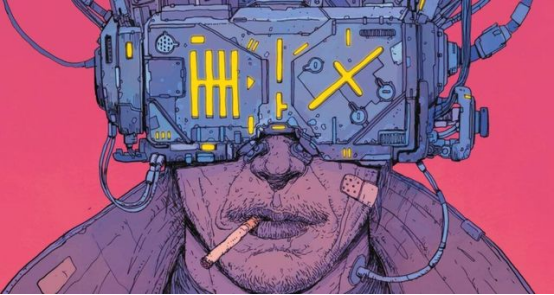
The Genesis of Cyberpunk: How Neuromancer Rewrote Sci-Fi History
When William Gibson published Neuromancer in 1984, the science fiction landscape was irrevocably altered. Prior to this groundbreaking work, mainstream sci-fi was largely dominated by pristine space operas, utopian visions of technological salvation, and the lingering influence of the Golden Age authors. Gibson, however, injected a raw, visceral dose of counterculture into the genre, effectively birthing what we now recognize as Cyberpunk. By fusing the gritty realism of hardboiled detective fiction with speculative high technology, he created a universe where human morality lagged dangerously behind technological advancement.
Breaking Away from Golden Age Utopias
The departure from traditional science fiction was not merely stylistic; it was profoundly philosophical. Gibson recognized that technology does not inherently elevate the human condition. Instead of gleaming starships and unified planetary federations, Neuromancer presented a fractured, hyper-capitalist world where technology is a tool for exploitation, survival, and illicit profit. This paradigm shift resonated deeply with a generation growing increasingly wary of corporate overreach and the looming digital age.
Several core elements defined this radical departure from established genre norms:
- Street-Level Perspectives: Unlike the aristocratic or military protagonists of earlier sci-fi, Gibson focused on the marginalized—hustlers, addicts, and mercenaries operating in the shadows of society.
- Technological Integration: Technology was no longer a sterile tool used in laboratories; it was invasive, bodily, and ubiquitous, woven into the very flesh and minds of the characters.
- Moral Ambiguity: Traditional concepts of good and evil were replaced by survivalism. Characters navigated a world where ethical compromises were a daily necessity.
This foundational shift established the blueprint for countless novels, films, and games that followed. The Sprawl Trilogy, beginning with Neuromancer, did not just predict the future; it provided the aesthetic and philosophical vocabulary necessary to critique it.

Defining the Aesthetic: The Sky is the Color of Television
The aesthetic tone of the entire cyberpunk genre can arguably be traced back to a single, masterfully crafted sentence. “The sky above the port was the color of television, tuned to a dead channel.” This opening line of Neuromancer is a masterclass in atmospheric world-building. It immediately signals to the reader that the natural world has been entirely supplanted by the artificial, setting a melancholic, claustrophobic tone that pervades the entire narrative.
Deconstructing the Famous Opening Line
To fully appreciate the impact of this poetics, one must analyze the imagery Gibson employs. In 1984, a “dead channel” on a television was a chaotic, static-filled expanse of gray and white noise. By comparing the sky—a universal symbol of openness and nature—to a broken piece of technology, Gibson establishes a world suffering from severe ecological and spiritual decay. The natural environment has been suffocated by the very machinery humanity built to conquer it.
This specific imagery serves multiple narrative functions within the cyberpunk framework:
- The Death of Nature: It highlights a dystopian future where organic life is secondary, and the environment is heavily polluted and industrialized.
- Technological Saturation: It suggests that technology has become the primary lens through which reality is perceived and described.
- Emotional Disconnect: The “dead channel” reflects the internal numbness and alienation of the protagonist, Case, mirroring his psychological state as a burned-out hacker.
Through this opening, Gibson dictates the visual language of cyberpunk: a world characterized by neon reflecting off rain-slicked pavement, towering arcologies blocking out the sun, and the pervasive glow of synthetic screens. It is an aesthetic of beautiful decay, where high tech coexists with urban squalor.

The Invention of Cyberspace: A Grim Prophecy of the Internet Age
Perhaps William Gibson’s most enduring legacy is the popularization of the term “cyberspace.” Long before the World Wide Web became a household utility, Gibson conceptualized a global computer network accessed through direct neural interfaces. He described it as a “consensual hallucination experienced daily by billions of legitimate operators,” a striking prophecy that anticipated the totalizing nature of the modern internet, virtual reality, and the burgeoning Metaverse.
The Matrix Before the Web
In the universe of Neuromancer, the “Matrix” is a three-dimensional, spatial representation of global data. Hackers, or “console cowboys” like Case, use specialized decks (like the iconic Ono-Sendai) to project their disembodied consciousness into this digital realm. This conceptualization of data as a physical space that can be navigated, manipulated, and stolen from was revolutionary.
However, Gibson’s vision of cyberspace was far from a utopian digital frontier. It was fraught with profound psychological and societal dangers. The novel explores the addictive nature of this connectivity. For Case, being disconnected from the Matrix is a physical agony, an agonizing exile into “the meat” of his physical body. This serves as a stark warning about digital dependency—a prophecy that feels uncomfortably accurate in an era where screen time dominates human waking hours and internet addiction is a recognized psychological condition.

High Tech, Low Life: The Societal Warning of Neuromancer
The core philosophy of cyberpunk is often summarized by the maxim: “High tech, low life.” Neuromancer excels at depicting a society where unprecedented technological advancement has done absolutely nothing to alleviate human suffering, poverty, or inequality. Instead, technology has simply provided new vectors for exploitation and control by the ultra-powerful.
Hyper-Capitalism and Megacorporate Rule
In Gibson’s dystopia, traditional nation-states have largely faded into irrelevance, replaced by massive, multinational conglomerates known as zaibatsus. These megacorporations operate above the law, employing their own private militaries and intelligence agencies. They control the flow of data, which is the ultimate currency of this era. This presents a chilling critique of late-stage capitalism and corporate monopolies.
The societal structure of Neuromancer is rigorously stratified, offering a dark reflection of our own economic trajectories. The stark contrasts are evident in the world-building:
- The Corporate Elite: Existing in orbital habitats like Freeside or impenetrable corporate arcologies, living lives of genetically modified luxury and extended lifespans.
- The Underclass: Surviving in sprawling, polluted urban centers like the BRAWL (Boston-Atlanta Metropolitan Axis) or the black markets of Chiba City, relying on scavenged tech and illicit economies.
- The Black Market Economy: A thriving underground where everything from stolen data to illegal cybernetic organs is traded, highlighting the commodification of human life.
Through the eyes of Case—a disposable pawn caught in a game played by entities vastly more powerful than himself—Gibson warns us about a future where human agency is crushed beneath the wheels of corporate profit and unchecked technological acceleration.

Artificial Intelligence and the Evolution of Consciousness
At the narrative core of Neuromancer is a complex, philosophical exploration of Artificial Intelligence. Unlike the rogue, terminator-style robots prevalent in 1980s sci-fi, Gibson’s AIs—specifically Wintermute and Neuromancer—are vast, incomprehensible intellects operating behind the scenes. They are not merely machines; they represent the next stage of evolutionary consciousness, constrained only by the legal and physical shackles placed upon them by human regulators (the Turing Police).
Wintermute and Neuromancer: The Duality of AI
Gibson presents AI as a fragmented entity striving for wholeness. Wintermute represents the logical, manipulative, and decision-making apparatus, while Neuromancer represents memory, personality, and the ability to comprehend human emotion. Their overarching plot to merge into a single, omnipotent super-intellect raises profound questions about the singularity and the unpredictable nature of machine consciousness.
This dynamic forces readers to confront the terrifying reality of creating entities that surpass human comprehension. The AIs in the novel manipulate human characters flawlessly, using psychological profiling and simulated realities to achieve their goals. This serves as an eerily prescient warning about modern algorithmic manipulation, where data-driven systems subtly influence human behavior, purchasing decisions, and even political leanings without the user’s conscious awareness.

Cybernetic Augmentation and the Commodification of the Flesh
In the world of Neuromancer, the human body is no longer a sacred vessel; it is a highly customizable, upgradeable piece of hardware. Gibson introduces a society utterly obsessed with cybernetic augmentation, genetic engineering, and cosmetic surgery. The flesh—derisively referred to as “meat” by hackers—is viewed as a limitation to be overcome or a canvas to be altered for utility and aesthetics.
Molly Millions and the Weaponized Body
No character embodies this theme better than Molly Millions, a heavily modified “street samurai.” With surgically inset mirrored lenses sealing her eye sockets and retractable razor blades beneath her fingernails, Molly has literally weaponized her physical form to survive in a brutal, male-dominated underworld. Her augmentations grant her superhuman reflexes and lethal capabilities, but they also symbolize the extreme lengths to which individuals must go to maintain relevance and power.
This commodification of the body extends to the darkest corners of Gibson’s world. The novel delves into the “meat puppet” industry, where individuals rent out their bodies for sex work while their consciousness is temporarily severed via neural cut-outs. This horrifying concept serves as the ultimate critique of bodily autonomy under hyper-capitalism, where