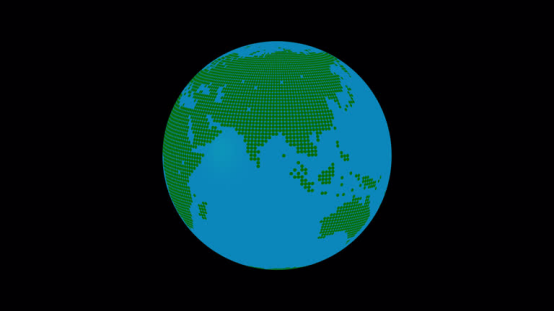
Literature serves as the ultimate laboratory for the human condition. By examining the works of visionaries like Miguel de Cervantes, Gabriel García Márquez, and Albert Camus, we gain more than just stories; we acquire a multi-dimensional map of our own psychology and social structures. This pillar page synthesizes the core themes of ten monumental works to provide an exhaustive look at how literature defines what it means to be human in a world often caught between harsh reality and lofty ideals.
The Boundaries of Perception: Perception and the Limits of Knowledge
One of the most fundamental aspects of the human experience is the limitation of our own perspective. How we see the world defines our reality, but as literature often illustrates, our vision is frequently obstructed by our “dimensionality” or our internal biases.
Flatland and the Cognitive Trap
Edwin Abbott’s Flatland serves as a profound mathematical allegory for cognitive limitations. In a world of two dimensions, the inhabitants cannot even conceive of “upward” or “depth.” This mirrors the human tendency to dismiss ideas that lie outside our immediate sensory experience or ideological framework. When the Square is introduced to the third dimension, his struggle is not just physical but existential. This highlights the Cognitive Dissonance we face when confronted with truths that shatter our established worldviews.
Don Quixote: The Clash of Ideals and Reality
Where Flatland deals with physical dimensions, Cervantes’ Don Quixote deals with the dimensions of the soul. Quixote’s “madness” is essentially a refusal to accept a mundane, cynical reality. He chooses to see giants where there are windmills, and noble ladies where there are peasant girls. This represents the eternal human struggle: do we adapt to the world as it is, or do we insist on the world as it should be? The tension between Quixotic Idealism and Sanchosian Pragmatism is the bedrock of modern psychological characterization.

The Crucible of the Soul: Forging Will Through Suffering
Human nature is often best revealed not in moments of comfort, but in the depths of despair. Literature provides a template for how the human spirit can be tempered, much like steel, through the heat of adversity.
How the Steel Was Tempered: The Power of Faith
Nikolai Ostrovsky’s semi-autobiographical work, How the Steel Was Tempered, explores the absolute limit of human endurance. Pavel Korchagin’s journey from a young revolutionary to a man broken physically but unyielding spiritually demonstrates that Willpower is the ultimate human currency. The “steel” in the title is a metaphor for the soul that has been hardened by the fire of revolution and personal tragedy. It suggests that a life dedicated to a “Great Cause” can transcend physical suffering.
The Plague: Finding Meaning in Absurdity
In contrast to the political faith of Ostrovsky, Albert Camus’ The Plague examines resilience in the face of an indifferent, “absurd” universe. When the city of Oran is struck by pestilence, the characters react in ways that mirror our own responses to global crises. Dr. Rieux represents the Ethic of Service—doing one’s duty not because of a hope for divine reward, but because it is the only decent thing to do. The plague acts as a mirror, exposing the “light and shadow” of humanity: the heroism of the few and the panic or apathy of the many.

Social Stratification and the Hypocrisy of the Collective
Literature often acts as a scathing critique of the structures we build to organize ourselves. The “civilized” world is frequently revealed to be a mask for deeper cruelties and class-based prejudices.
Ball of Fat: The Price of Kindness
Guy de Maupassant’s Ball of Fat (Boule de Suif) is a devastating look at the hypocrisy of the upper classes. During the Franco-Prussian War, a group of “respectable” citizens and a prostitute are trapped together. While the prostitute, Elizabeth Rousset, shows genuine patriotism and kindness, the “pillars of society” manipulate her for their own convenience. Once she has served their purpose, they treat her with renewed disdain. This story illustrates a dark truth of human nature: Social Morality is often a performance used to protect the interests of the powerful at the expense of the vulnerable.
The Great Gatsby: The Decay of the American Dream
F. Scott Fitzgerald’s The Great Gatsby shifts the focus to the 1920s American landscape, where class is defined by “old money” versus “new money.” Jay Gatsby’s tragic pursuit of Daisy Buchanan is not just a love story; it is a failed attempt to cross a social barrier that is invisible yet impenetrable. The novel exposes the Disillusionment inherent in a society that promises upward mobility but rewards only those born into privilege. Gatsby’s “green light” is the ultimate symbol of the unattainable dream that keeps humanity striving while moving backward into the past.

The Inevitability of Loneliness and the Cycle of Time
Two of the most profound themes in literature are the passage of time and the essential isolation of the individual. These themes find their most vibrant expression in the works of Latin American masters.
One Hundred Years of Solitude: The Buendía Curse
Gabriel García Márquez’s One Hundred Years of Solitude uses magical realism to chart the rise and fall of the Buendía family in the town of Macondo. The “solitude” mentioned in the title is a hereditary condition—a failure to love or to connect that leads to the family’s ultimate destruction. The Cyclical Nature of History is a key theme; names, mistakes, and tragedies repeat across generations, suggesting that humanity is often doomed to relive its past unless it can break the cycle of isolation.
Love in the Time of Cholera: Obsession and Endurance
In Love in the Time of Cholera, Márquez explores a different facet of time: its relationship with obsession. Florentino Ariza’s wait of “fifty-three years, seven months, and eleven days and nights” for Fermina Daza redefines our understanding of romantic devotion. The novel posits that love is a form of Disease, similar to cholera, that can consume a life. It challenges the notion that love is only for the young, showing that the fire of passion can burn just as brightly, if not more fiercely, in the twilight of life.

Sacrifice, Rebellion, and the Search for Justice
The final pillar of our analysis looks at how individuals confront systemic injustice, whether through the chaos of revolution or the isolation of the deep sea.
A Tale of Two Cities: Redemption Through Sacrifice
Charles Dickens’ A Tale of Two Cities presents the French Revolution as a force of both liberation and mindless terror. Amidst the “best of times and the worst of times,” the character of Sydney Carton provides one of literature’s most powerful examples of Altruistic Sacrifice. His decision to take another man’s place on the guillotine is a profound act of redemption, suggesting that individual love and sacrifice can provide a moral anchor even when the world is descending into collective madness.
Twenty Thousand Leagues Under the Sea: The Anti-Colonial Metaphor
Jules Verne’s Twenty Thousand Leagues Under the Sea is often read as a simple adventure, but Captain Nemo is a deeply complex figure of Rebellion. Nemo’s rejection of “civilization” and his refuge in the depths of the ocean are acts of defiance against the colonial powers of his day. The Nautilus is not just a submarine; it is a sovereign state for the disenfranchised. Nemo represents the dark side of the quest for justice—when the victim of oppression becomes a judge and executioner of the world above.

Comparative Analysis of Literary Themes
To better understand how these masterpieces interact, we can categorize their primary focus on the human experience.
| Work | Core Theme | Human Nature Aspect | Primary Conflict |
|---|---|---|---|
| Flatland | Cognition | Intellectual Blindness | Dimension vs. Perception |
| Don Quixote | Idealism | Imagination vs. Reality | Knightly Honor vs. Mundane Truth |
| The Plague | Resilience | Solidarity in Crisis | Human Will vs. Indifferent Nature |
| The Great Gatsby | Disillusionment | Class and Ambition | The Past vs. The Future |
| A Tale of Two Cities | Sacrifice | Redemption | Individual Love vs. Social Chaos |

Synthesizing the Global Literary Perspective
When we look at these ten works together, a clear picture emerges. Human nature is a complex tapestry of contradictions. We are capable of the highest forms of sacrifice (Sydney Carton) and the lowest forms of hypocrisy (the travelers in Ball of Fat). We are trapped by our physical and mental dimensions (Flatland), yet we possess an imagination that can transform a windmill into a giant (Don Quixote).
Furthermore, literature teaches us that our struggle is universal. Whether it is the Buendías in Macondo or Dr. Rieux in Oran, the quest for meaning, the pain of loneliness, and the desire for justice remain constant across geography and time. These stories serve as Mirrors, forcing us to look at the light and shadow within ourselves and our societies.

Frequently Asked Questions (FAQ)
- Q1: Why is “Flatland” considered a commentary on human nature?
- Flatland uses mathematical dimensions as a metaphor for social and intellectual hierarchy. It illustrates how humans often treat those with “different perspectives” as heretics and how difficult it is for us to perceive truths that lie beyond our immediate experience.
- Q2: How does “The Plague” relate to modern societal crises?
- Camus’ work explores the “absurdity” of life. In modern crises, like pandemics or climate change, the novel teaches that “decency” and “doing one’s job” are the most effective forms of resistance against despair and chaos.
- Q3: What is the significance of “Solitude” in Gabriel García Márquez’s work?
- Solitude in Macondo represents a lack of empathy and a failure to break away from the ego. It suggests that without genuine connection and the ability to learn from the past, individuals and societies are doomed to repeat their failures in a cyclical fashion.
- Q4: Is Don Quixote a hero or a madman?
- Cervantes intentionally leaves this open. Quixote is a hero because he upholds noble values in a cynical world, but he is a madman because he loses touch with reality. This duality represents the human struggle to balance our ideals with the practical requirements of life.
- Q5: What does Captain Nemo represent in the context of anti-colonialism?
- Captain Nemo represents the “Scientific Rebel.” He uses technology to escape the reach of oppressive empires. His character explores the moral complexity of seeking justice through isolation and violent retribution.