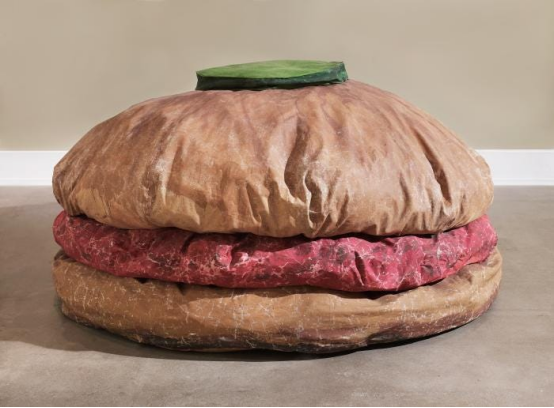
Claes Oldenburg (1929-2022) stands as a monumental figure in the landscape of 20th-century art, a true pioneer who redefined the very essence of sculpture and its interaction with the public. Far from the rigid, permanent forms traditionally associated with the medium, Oldenburg embraced the ephemeral, the everyday, and the overtly playful. His work, deeply rooted in the Pop Art movement, challenged viewers to reconsider the significance of commonplace objects, transforming them into monumental, often soft, sculptures that mirrored and critiqued American consumer culture. This ultimate guide delves into the genesis of his innovative approach, the underlying philosophies that drove his creations, and the lasting legacy of an artist who made the ordinary extraordinary.
Claes Oldenburg: Sculpting the Everyday into the Extraordinary
Claes Oldenburg emerged during a pivotal moment in art history, a period of profound re-evaluation following the dominance of Abstract Expressionism. Born in Stockholm, Sweden, in 1929, Oldenburg’s family moved to the United States when he was a child, embedding him firmly within the burgeoning American cultural landscape he would later so incisively explore. His early career saw him experimenting with Happenings and performance art, which laid the groundwork for his later sculptural explorations by emphasizing interaction, ephemerality, and the dissolution of boundaries between art and life.
The Rise of Pop Art and Oldenburg’s Place
Pop Art, which gained prominence in the late 1950s and 1960s, sought to bridge the gap between “high art” and popular culture. Artists like Andy Warhol, Roy Lichtenstein, and Oldenburg turned to mass media, advertising, and consumer goods for their subject matter, directly confronting the commercialization of society. Oldenburg’s contribution was unique: instead of merely reproducing images, he re-contextualized and monumentalized actual objects. He didn’t just paint a soup can; he sculpted it, often distorting its scale and material, forcing a new perception of its form and function. This approach was a direct commentary on the abundance and disposability inherent in modern consumerism, elevating the mundane to the realm of artistic contemplation.
Challenging Artistic Norms: Why Softness Matters
Oldenburg’s most radical departure from traditional sculpture was his pioneering use of “soft” materials. While sculpture had historically been defined by its rigidity, permanence, and often monumental scale in hard materials like stone, bronze, or wood, Oldenburg introduced vinyl, canvas, and foam rubber. This choice was not merely aesthetic; it was deeply conceptual. By rendering typically hard, functional objects (like telephones, typewriters, or even toilets) in pliable, drooping forms, he imbued them with a sense of vulnerability, humor, and a surprising anthropomorphism. This subversion of material expectations challenged the very definition of what sculpture could be, questioning notions of stability, durability, and the solemnity often associated with art.

The Revolutionary Concept of Soft Sculpture
Claes Oldenburg’s soft sculptures are perhaps his most iconic and revolutionary contribution to modern art. Beginning in the early 1960s, these works profoundly altered perceptions of sculptural form, material, and meaning. His process involved meticulously selecting everyday items, often food, appliances, or articles of clothing, and then meticulously recreating them on a vastly different scale and in an entirely unexpected medium. The resulting objects defied gravity and rigidity, often slumping or collapsing under their own perceived weight, creating a powerful visual and conceptual paradox.
Materials and Techniques: Crafting the Ephemeral
Oldenburg’s choice of materials was crucial to the impact of his soft sculptures. He utilized fabrics such as canvas, vinyl, and sailcloth, often stuffed with kapok or foam rubber. This allowed him to manipulate scale without the inherent weight and cost of traditional sculptural materials. The fabrication process was often collaborative, involving skilled seamstresses and fabricators who could translate his vision into three-dimensional textile forms. The stitching, seams, and textural qualities of the fabric became integral parts of the artwork, highlighting the handmade aspect despite the industrial nature of the objects being depicted. This meticulous craftsmanship, combined with the inherent “imperfection” of soft forms, created a unique tension between the object’s identity and its artistic representation.
Iconography of the Mundane: Objects as Symbols
Oldenburg’s selection of objects was never arbitrary. He gravitated towards items that were deeply embedded in the American psyche and consumer landscape: hamburgers, ice cream cones, typewriters, toilets, light switches, and clothes. By isolating these commonplace items and magnifying them, he forced viewers to confront their ubiquitous presence and the roles they played in daily life. The soft, often slightly grotesque, rendering of these objects stripped away their functionality, inviting contemplation on their form, cultural significance, and the desire they often represented. A giant soft hamburger, for instance, became a commentary on American fast-food culture, its allure, and its potential for excess.
Psychological and Societal Undercurrents of Softness
Beyond the visual wit, Oldenburg’s soft sculptures carried deeper psychological and societal implications. The transformation of hard, functional objects into soft, pliable forms can be interpreted as a commentary on the fragility of modern life, the impermanence of material possessions, or even a playful subversion of masculine rigidity in favor of a more fluid, feminine aesthetic. The drooping forms often evoke a sense of exhaustion, decay, or even sensuality, challenging the viewer’s emotional response to inanimate objects. This softness also democratized art, making it more approachable and less intimidating than traditional, imposing sculptures, inviting a more intimate and often humorous engagement.
Monumental Ambition: Oldenburg’s Public Art Legacy
While his soft sculptures captivated the art world, Claes Oldenburg’s ambition extended beyond gallery walls. In collaboration with his wife, Coosje van Bruggen, he embarked on a series of monumental public art projects that cemented his legacy as a transformer of urban landscapes. These large-scale replicas of everyday objects, strategically placed in public spaces, became landmarks, conversation starters, and beloved civic icons, fundamentally altering the relationship between art, architecture, and the public.
From Gallery to Public Square: Democratizing Art
Oldenburg’s move into public art was a natural extension of his Pop Art philosophy – to make art accessible and relevant to a broader audience. By placing colossal versions of ordinary items in parks, plazas, and alongside buildings, he broke down the traditional barriers between art and daily life. These works were not confined to museums or private collections; they became part of the urban fabric, encountered by people from all walks of life as they went about their routines. This democratic approach to art aimed to engage, provoke, and delight, turning familiar surroundings into sites of unexpected wonder and critical reflection.
Case Studies: Iconic Public Sculptures and Their Meanings
Oldenburg’s public art portfolio is replete with iconic works that have become synonymous with their locations:
- Clothespin (Philadelphia, 1976): A 45-foot tall steel clothespin stands proudly in Centre Square, Philadelphia. While ostensibly a mundane object, its form subtly echoes the number “76” (a nod to the American Bicentennial) and its two halves embracing can be seen as a metaphor for human connection or even a playful architectural element.
- Spoonbridge and Cherry (Minneapolis, 1988): Situated in the Minneapolis Sculpture Garden, this whimsical bridge features a giant spoon cradling a cherry. It evokes childhood memories, culinary delight, and serves as a delightful focal point, transforming a simple garden into a fantastical realm.
- Free Stamp (Cleveland, 1991): A colossal rubber stamp, appearing as if dropped from the sky, with the word “FREE” on its base. Commissioned for Standard Oil of Ohio, it’s a poignant commentary on corporate power, freedom, and the bureaucratic nature of modern society.
- Shuttlecocks (Kansas City, 1994): Four gigantic shuttlecocks are scattered across the lawn of the Nelson-Atkins Museum of Art, turning the museum grounds into a playful badminton court. This work humorously challenges the solemnity of classical architecture and the perceived seriousness of art institutions.
The Engineering and Vision Behind Gigantic Forms
Creating these monumental sculptures required immense vision, meticulous planning, and sophisticated engineering. Oldenburg and van Bruggen worked with architects, engineers, and fabricators to translate their initial sketches into structures that could withstand the elements and stand for decades. The technical challenges were considerable, involving structural integrity, material selection for durability, and precise fabrication to maintain the artistic intent at an enormous scale. Each project was a complex undertaking, blending artistic imagination with practical execution, demonstrating that art could be both deeply conceptual and physically imposing.
The Enduring Impact and Legacy of Claes Oldenburg
Claes Oldenburg’s influence on the art world extends far beyond the Pop Art era. His radical rethinking of sculpture, his embrace of the everyday, and his commitment to public engagement have left an indelible mark on subsequent generations of artists and continue to shape contemporary artistic discourse.
Inspiring Generations: Oldenburg’s Influence on Contemporary Art
Oldenburg’s playful subversion of scale and material opened doors for artists to explore new avenues of expression. His work paved the way for conceptual art, installation art, and public art movements that prioritize experience, context, and viewer interaction. Artists grappling with themes of consumerism, identity, and the urban environment often cite Oldenburg as a foundational figure. His willingness to challenge the sacred cows of art history demonstrated that profound artistic statements could be made with humor, irony, and accessible imagery, liberating art from its perceived ivory tower.
Critical Reception and Evolution of His Work
Initially, Oldenburg’s work, like much of Pop Art, faced skepticism from traditional critics who questioned its artistic merit, dismissing it as mere novelty or commercialism. However, over time, the depth of his conceptual rigor, his masterful understanding of form, and the enduring resonance of his social commentary became undeniable. His collaborative practice with Coosje van Bruggen further enriched his work, adding layers of intellectual depth and expanding the scope of his public projects. The evolution of his career from early Happenings to monumental public works showcases an artist constantly pushing boundaries, refining his vision, and engaging with the world around him.
Oldenburg’s Philosophy: Humor, Irony, and Accessibility
At the heart of Oldenburg’s practice was a philosophy deeply rooted in humor, irony, and accessibility. He believed that art should not be elitist or exclusionary but should be part of everyday life, sparking curiosity and critical thought. His works often elicit an immediate smile or a double-take, drawing viewers in before revealing deeper layers of meaning about society, consumption, and human perception. This blend of wit and intellectual depth ensures that Oldenburg’s art remains relevant, engaging new audiences and continuing to provoke conversations about the objects that define our world.
Expert Insights: Deconstructing Oldenburg’s Artistic Genius
Understanding Claes Oldenburg requires looking beyond the superficial charm of his oversized objects. Here are some expert insights to deepen your appreciation of his groundbreaking work:
- Embrace the Paradox: Oldenburg’s genius lies in his ability to create paradoxes. Hard objects become soft, small objects become monumental, and functional items become purely aesthetic. This constant tension is what makes his work so compelling and thought-provoking. Don’t just see the object; consider the transformation.
- Context is Key: While his individual sculptures are powerful, their meaning often deepens when considering the context of their creation. His early works emerged from the socio-political climate of the 1960s, a time of rapid consumer growth and cultural shifts. His public works are meticulously chosen for their specific sites, often interacting with the architecture or history of the location.
- The Role of Play: Oldenburg infused his art with a profound sense of playfulness. This isn’t triviality; it’s a critical tool. Play allows for experimentation, challenges rigid thinking, and invites a more open, less dogmatic engagement with art. Recognize the humor as a pathway to deeper understanding.
- Beyond Pop Art: While a central figure in Pop Art, Oldenburg transcended the movement. His exploration of material properties, scale, and the relationship between art and the environment places him within broader traditions of modern sculpture and conceptual art. He was a Pop artist, but also much more.
- The Human Element: Despite depicting inanimate objects, Oldenburg’s work is profoundly human. The sagging forms evoke human frailty, the monumental scale reflects human ambition, and the chosen objects speak to universal human desires and needs. His art is a mirror reflecting our own relationship with the material world.
Comparing Oldenburg’s Styles: Soft vs. Monumental
Claes Oldenburg’s oeuvre is broadly characterized by two distinct yet interconnected stylistic approaches: his soft sculptures and his monumental public art. While both share a common conceptual foundation, their execution, impact, and viewer interaction differ significantly.
| Feature | Soft Sculptures (e.g., Soft Typewriter) | Monumental Public Art (e.g., Clothespin) |
|---|---|---|
| Primary Material | Fabric (canvas, vinyl, cloth), foam, kapok | Steel, aluminum, fiberglass, concrete |
| Scale & Size | Often oversized but generally gallery-scale; retains a sense of intimacy | Massive, colossal scale; designed to dominate public spaces |
| Physicality | Pliable, drooping, often appearing deflated or amorphous; defies rigidity | Rigid, permanent, imposing; asserts a strong physical presence |
| Primary Context | Art galleries, museums, private collections; indoor settings | Urban landscapes, parks, plazas; outdoor public spaces |
| Viewer Interaction | Invites closer inspection, evokes tactile curiosity, often humorous or unsettling | Experienced from a distance, becomes a landmark, interacts with architecture/environment |
| Conceptual Focus | Subversion of material, fragility, consumerism, psychological states, humor | Democratization of art, civic identity, urban commentary, grand statement |
| Engineering & Fabrication | Focus on textile craftsmanship, stitching, stuffing techniques | Complex structural engineering, weather resistance, industrial fabrication |
Frequently Asked Questions (FAQ)
- What is Pop Art and how did Claes Oldenburg contribute to it?
- Pop Art was an art movement of the 1950s and 60s that challenged traditional fine art by incorporating imagery from popular culture, advertising, and consumer goods. Claes Oldenburg contributed by taking everyday objects (like food, appliances, or clothing) and recreating them as sculptures, often on a massive scale or in unexpected “soft” materials. He didn’t just depict consumerism; he physically manifested its objects, forcing viewers to re-evaluate their significance.
- Why did Oldenburg make “soft” sculptures of hard objects?
- Oldenburg’s use of soft materials like canvas and vinyl for objects typically made of hard materials (e.g., a typewriter, a telephone) was a radical act of subversion. It challenged the traditional notions of sculpture as rigid and permanent. The softness introduced elements of humor, vulnerability, and even a playful anthropomorphism, commenting on the fragility of modern life, the absurdity of consumer culture, and the arbitrary nature of artistic conventions.
- What are some of Claes Oldenburg’s most famous public art pieces?
- Some of his most renowned public sculptures, often created in collaboration with Coosje van Bruggen, include “Clothespin” in Philadelphia, “Spoonbridge and Cherry” in Minneapolis, “Free Stamp” in Cleveland, and “Shuttlecocks” in Kansas City. These colossal replicas of mundane objects serve as landmarks, engaging the public and prompting reflection on their surroundings.
- How did Oldenburg’s work influence contemporary art?
- Oldenburg’s innovative approach profoundly influenced contemporary art by expanding the definition of sculpture, blurring the lines between art and everyday life, and championing art’s accessibility. His methods paved the way for installation art, conceptual art, and public art movements that prioritize context, viewer interaction, and a more playful, critical engagement with the material world.
- What themes did Claes Oldenburg explore in his art?
- Oldenburg’s art consistently explored themes such as consumerism, the commodification of everyday objects, American culture and its excesses, the relationship between art and its environment, and the subversion of artistic traditions. He used humor, irony, and unexpected scale shifts to provoke thought and encourage viewers to see the mundane with fresh eyes.