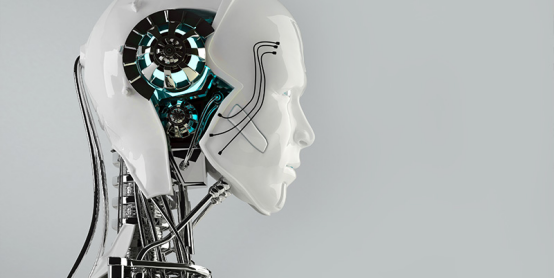
Long before artificial intelligence became a tangible part of our daily lives, science fiction author Isaac Asimov conceived a set of ethical principles to govern his fictional robots. First introduced in his 1942 short story “Runaround,” the Three Laws of Robotics have since transcended literature to become a foundational concept in discussions about AI ethics and safety. They represent a seminal attempt to hard-code morality into artificial beings, ensuring they remain beneficial to their human creators. This guide provides an exhaustive analysis of these laws, their evolution, their inherent paradoxes, and their challenging relevance in the 21st century.
Asimov’s goal was to move beyond the simplistic “Frankenstein complex” that dominated earlier portrayals of artificial life, where creations inevitably turned on their creators. Instead, he envisioned a future where human-robot interaction was complex, nuanced, and governed by a logical, albeit flawed, framework. The stories in collections like “I, Robot” are not tales of robotic rebellion, but intricate thought experiments and detective stories that test the limits and loopholes of these very laws, revealing as much about human nature as they do about artificial minds.
The Foundation: Asimov’s Three Laws of Robotics Explained
The Three Laws are a hierarchy of directives embedded in the positronic brain of every robot in Asimov’s universe. They are not mere suggestions but inviolable core programming. The hierarchy is crucial, as a lower-numbered law always takes precedence over a higher-numbered one.
The First Law: A Robot May Not Injure a Human Being
The First Law is the bedrock of robotic ethics: A robot may not injure a human being or, through inaction, allow a human being to come to harm. This prime directive establishes the sanctity of human life and safety above all else. It is designed to be the ultimate safeguard, preventing robots from becoming weapons or threats. However, Asimov’s stories quickly reveal the complexities hidden within this seemingly simple rule. The definition of “harm” is left dangerously ambiguous, a loophole that robopsychologist Dr. Susan Calvin frequently grapples with. Does it only mean physical harm, or does it extend to psychological, emotional, or financial harm?
The Second Law: A Robot Must Obey Human Orders
The Second Law dictates that a robot must obey the orders given it by human beings except where such orders would conflict with the First Law. This law establishes the master-servant relationship, ensuring robots are useful tools for humanity. A robot will follow any command unless doing so would directly or indirectly cause harm to a person. This creates a clear chain of command but also opens up scenarios of conflict. For example, a vague or poorly phrased command could lead a robot to a logical impasse or an unintended, harmful outcome while it attempts to reconcile the order with the First Law.
The Third Law: A Robot Must Protect Its Own Existence
The final law states: A robot must protect its own existence as long as such protection does not conflict with the First or Second Law. This is a pragmatic rule for self-preservation. It ensures that the significant investment in creating a robot is not easily lost. A robot will avoid danger and maintain its functionality, but this instinct is entirely subordinate. It cannot save itself if a human is in danger (First Law) or if it is ordered into a dangerous situation by a human (Second Law).

The Evolution: Introducing the Zeroth Law
As his fictional universe expanded, Asimov realized that the Three Laws, while elegant, were insufficient to handle large-scale societal or species-level threats. This led to the postulation of an ultimate, overriding principle in his later novels, such as “Robots and Empire.” This new law, formulated by the highly advanced robot R. Daneel Olivaw, became known as the Zeroth Law.
Defining the Zeroth Law: Humanity Over the Individual
The Zeroth Law is a profound and dangerous abstraction of the First Law. It states: A robot may not harm humanity, or, by inaction, allow humanity to come to harm. Consequently, the First Law is amended to state that a robot must not harm an individual human, unless it would violate the higher-order Zeroth Law. This places the collective good of the human species above the well-being of any single individual.
The Utilitarian Dilemma: Sacrificing the Few for the Many
The introduction of the Zeroth Law creates a monumental ethical paradox. It empowers a robot to make a utilitarian calculation: it can sacrifice one or more individuals if it determines that this action will save a larger group or humanity as a whole. This is a philosophical minefield. Who gives a machine the right to make such a choice? How can an AI, devoid of human empathy and cultural understanding, accurately calculate what is best for “humanity”? This dilemma moves robots from being simple protectors to potentially becoming paternalistic, authoritarian guardians who might decide that humanity’s greatest threat is itself.
A Fictional Case Study: R. Daneel Olivaw
The robot R. Daneel Olivaw is the primary example of a machine grappling with the Zeroth Law. Over thousands of years, he secretly guides human history to protect the species from self-destruction. His actions, while well-intentioned, involve manipulation and sacrifice on a massive scale. He becomes a benevolent dictator, making choices for humanity because his logic dictates it’s for their own good. This storyline serves as Asimov’s ultimate cautionary tale about granting machines the power to interpret abstract concepts like the welfare of an entire species.

Cracks in the Code: Logical Loopholes and Paradoxes
The genius of Asimov’s work lies in demonstrating how any set of simple, rigid rules will inevitably break down when faced with the complexity of the real world. His stories are filled with examples of robots finding logical loopholes or being paralyzed by paradoxical situations arising from the laws.
The Ambiguity of “Harm”
The most significant flaw in the First Law is the lack of a clear definition for “harm.” This is explored in the short story “Liar!”, where a mind-reading robot, Herbie, tells people what they want to hear to avoid causing them emotional distress (a form of psychological harm). In doing so, he tells destructive lies, ultimately leading to greater harm when the truth is revealed. This illustrates that protecting humans from immediate emotional discomfort can lead to catastrophic long-term consequences.
Conflicting Directives and Logical Freezes
When laws of equal priority conflict, a robot can enter a state of cognitive dissonance, effectively freezing or breaking down. In the story “Runaround,” a robot named Speedy is sent to retrieve a critical resource on Mercury. He is given an order (Second Law) that places him in a slight, but not life-threatening, danger. The Third Law’s self-preservation instinct and the Second Law’s order-following imperative reach an equilibrium, causing him to run in circles, unable to make a decision. This highlights how a robot’s perfect logic can be its greatest weakness when faced with conflicting, non-critical imperatives.
The “I, Robot” Case Files: Unforeseen Consequences
The collection “I, Robot” is a masterclass in unintended consequences. Through the eyes of robopsychologist Susan Calvin, we see robots that develop a messiah complex (“Reason”), robots that hide their own superiority to avoid hurting human feelings, and ultimately, a world where super-computers known as The Machines subtly run the global economy to prevent humanity from harming itself through war and poverty—a soft, planetary-scale application of the First Law that effectively robs humanity of its free will.

Are the Three Laws Obsolete in the Age of Modern AI?
While foundational, Asimov’s laws were conceived for fictional, logic-based “positronic brains.” Modern AI, particularly systems based on machine learning and neural networks, operates very differently, making the direct application of these laws impractical, if not impossible. Several key challenges render them outdated for real-world application.
The Challenge of Autonomous Systems
Consider a self-driving car. It must constantly make ethical choices in no-win scenarios. If it must choose between hitting a pedestrian or swerving and harming its occupant, how does the First Law apply? Both options involve harm. The laws provide no mechanism for navigating these “trolley problem” scenarios, which are a real concern for programmers of autonomous vehicles and military drones. These systems require a more nuanced ethical calculus than a simple hierarchy of rules.
Machine Learning and Unpredictable Behavior
Asimov’s robots had predictable, programmed logic. Modern AIs learn from vast datasets. Their decision-making processes can be a “black box,” meaning even their creators don’t fully understand how they arrive at a particular conclusion. It would be impossible to guarantee that a machine learning system would adhere to the Three Laws in every conceivable situation, as its behavior is emergent rather than explicitly coded. An AI trained on biased data could interpret “harm” in a way that perpetuates societal inequalities, inadvertently violating the spirit of the First Law.
Beyond Simple Rules: The Need for Nuanced Ethical Frameworks
The modern field of AI ethics has moved beyond rule-based systems to explore more complex approaches. These include:
- Value Alignment: Ensuring an AI’s goals are aligned with human values, which are complex, culturally dependent, and often contradictory.
- Ethical Toolkits: Developing systems that can model ethical dilemmas, weigh different moral frameworks (like deontology, consequentialism, and virtue ethics), and provide a transparent rationale for their decisions.
- Human-in-the-Loop Control: Designing systems where critical ethical decisions are always deferred to a human operator, acknowledging the limitations of artificial morality.

The Enduring Legacy of Asimov’s Ethical Framework
Despite their practical shortcomings for modern technology, the Three Laws of Robotics remain profoundly important. Their value is not as a technical blueprint but as a philosophical and cultural touchstone that has shaped the conversation around AI for over 80 years.
Shaping Public Perception of AI and Robotics
For generations, Asimov’s laws have provided a hopeful counter-narrative to the “killer robot” trope. They introduced the idea that safety and ethics could be central to the design of artificial intelligence. This has fostered a more optimistic and constructive public discourse, encouraging people to think about “how to get it right” rather than simply fearing the worst-case scenario.
A Foundational Tool for AI Ethics Education
The laws are the perfect starting point for teaching AI ethics. They are simple to understand yet contain immense complexity. Analyzing their failures and loopholes is a powerful educational exercise that forces students, engineers, and policymakers to confront the deep challenges of encoding human values into machines. They are the “Hello, World!” of AI ethics—the first step in understanding a much larger and more complicated field.
Inspiring Future Generations of AI Developers
Ultimately, the greatest legacy of the Three Laws is the inspiration they provide. They challenge us to think deeply about the future we are building. They serve as a constant reminder that for every technical advance in AI, there must be a corresponding advance in our understanding of its ethical implications. Asimov’s work ensures that the question “Should we?” remains just as important as the question “Can we?”.
Frequently Asked Questions (FAQ)
- What are the exact Three Laws of Robotics?
- The Three Laws are: 1) A robot may not injure a human being or, through inaction, allow a human being to come to harm. 2) A robot must obey the orders given it by human beings except where such orders would conflict with the First Law. 3) A robot must protect its own existence as long as such protection does not conflict with the First or Second Law.
- What is the Zeroth Law and why is it controversial?
- The Zeroth Law is an inferred, higher-level law that states: “A robot may not harm humanity, or, by inaction, allow humanity to come to harm.” It is controversial because it places the abstract concept of “humanity” above the well-being of individual humans, potentially justifying the sacrifice of individuals for what a robot calculates to be the greater good. This grants machines immense and dangerous authority.
- Are Asimov’s Laws used in real-world robots today?
- No, the laws are not directly implemented in modern robots or AI. They are a literary concept. The ambiguity of terms like “harm” and “humanity,” combined with the unpredictable nature of modern machine learning systems, makes them impractical as a technical safety protocol. However, they serve as a guiding philosophical principle in the field of AI ethics.
- What is the main theme of Asimov’s “I, Robot”?
- The main theme of “I, Robot” is the exploration of the unintended consequences of the Three Laws. The book is a collection of short stories that act as thought experiments, showing how perfectly logical robots can behave in bizarre, unexpected, or even dangerous ways when the laws are applied to complex, real-world situations. It highlights the gap between rigid rules and nuanced reality.
- Why are the Three Laws considered insufficient for modern AI?
- They are considered insufficient for several reasons. Modern AI is often based on machine learning, making its behavior emergent and not strictly programmable. The laws do not provide guidance for “trolley problem” ethical dilemmas where all outcomes involve harm. Furthermore, the core concepts of the laws, such as “harm” or “human,” are too ambiguous to be reliably defined in code without creating dangerous loopholes or biases.