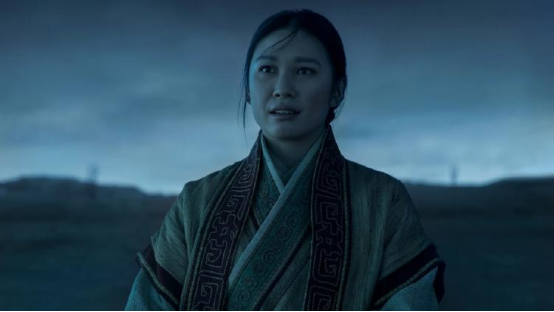
The “Remembrance of Earth’s Past” trilogy, commonly known as The Three-Body Problem, is more than a work of hard science fiction; it is a profound sociological experiment. At its heart lies a fundamental question: In the face of certain extinction, what defines “humanity”? The characters of Ye Wenjie, Luo Ji, Cheng Xin, and Thomas Wade serve as archetypes for different responses to this existential threat. This guide synthesizes their journeys, analyzing the collapse of idealism and the rise of cosmic pragmatism.
Ye Wenjie and the Spark of Cosmic Disillusionment
Ye Wenjie is the “First Mover” of the Three-Body saga. Her character is forged in the fires of the Cultural Revolution, where she witnessed the brutal murder of her father and the betrayal of her peers. This trauma led to a radical conclusion: human nature is inherently incapable of self-correction. Her decision to respond to the Trisolaran signal was not an act of malice, but an act of desperate idealism—the hope that a superior civilization could provide the moral guidance humanity lacked.
The Red Coast Base and the Silent Call
Working at the Red Coast Base, Ye Wenjie discovered a way to use the sun as a signal amplifier. When she received the warning from the Trisolaran pacifist—”Do not answer!”—she did not hesitate. For Ye, the risk of alien invasion was preferable to the certainty of human self-destruction. She viewed the Trisolarans as a “divine” force that would purge the earth of its corruption. This highlights a critical logical branch in her character: she lit the fire of the apocalypse because she believed she was saving the soul of the world, even if it meant sacrificing the species.
The Scientific Rationality vs. Human Cruelty
Ye Wenjie’s background as an astrophysicist allowed her to see the universe through the lens of cold, mathematical laws. However, her actions were driven by intense emotional scarring. This duality makes her the most complex character in the series. She eventually founded the Earth-Trisolaris Organization (ETO), which split into factions like the Adventists and Redemptionists, reflecting the fragmented nature of her own philosophy. While she later provided Luo Ji with the clues to Cosmic Sociology, her legacy remains one of unintended consequences—she lit a fire she could neither control nor extinguish.

Luo Ji: The Evolution of the Reluctant Swordsman
Luo Ji begins his journey as a hedonistic academic, a man who cares little for humanity’s survival and only for his own comfort. He is an “accidental hero,” chosen as a Wallfacer not because of his leadership, but because the Trisolarans were afraid of him. His path from a dissolute playboy to the Swordholder is the most dramatic character arc in the series, representing the transition from individual selfishness to the ultimate burden of responsibility.
From Dissolute Academic to Cosmic Strategist
Luo Ji’s initial misuse of Wallfacer resources—creating a dream life with a fictional-turned-real wife—was a defense mechanism. However, once he grasped the principles of the Dark Forest Theory, his character underwent a fundamental shift. He realized that the universe is an arena of total war where silence is the only protection. His “spell” on a distant star, which led to its destruction, proved his theory. This was not a heroic path in the traditional sense; it was a descent into a cold, calculating mindset that mirrored the harshness of the cosmos.
The Burden of Dark Forest Deterrence
For over half a century, Luo Ji sat in a bunker, his finger on the trigger of a system that would broadcast the coordinates of both Earth and Trisolaris. This “Deterrence Era” was maintained solely through the Trisolarans’ fear of his resolve. He became a “beast” to protect the “sheep.” His transformation into a silent, unmoving statue of a man signifies the cost of survival: to save humanity, he had to distance himself from it entirely. He was not a hero to the public; he was a monster they feared, yet he was the only reason they continued to exist.

Cheng Xin and the Tragedy of Idealistic Motherhood
Cheng Xin is the most controversial figure in the trilogy. Often referred to as the “Madonna,” she represents the pinnacle of human morality, compassion, and love. However, in the context of the Dark Forest, these virtues become fatal flaws. Her role as the second Swordholder illustrates the collapse of idealism when faced with a universe that does not value life.
The Madonna Complex and the Collapse of Deterrence
When Cheng Xin was elected as the Swordholder, the Trisolarans immediately recognized that she lacked the “beast nature” required for deterrence. Unlike Luo Ji, she could not bring herself to commit planetary-scale genocide, even as a retaliatory measure. Within fifteen minutes of her taking office, the Trisolarans attacked. Her failure was not one of cowardice, but of excessive empathy. She chose to let Earth be conquered rather than destroy two worlds, a decision that led to the Great Resettlement and the deaths of billions.
The Moral Dilemma of the Swordholder Election
The tragedy of Cheng Xin lies in the fact that humanity chose her. After decades of peace under Luo Ji’s deterrence, the public had grown soft and resentful of Luo Ji’s “cruelty.” They wanted a leader who reflected their own values of love and gentleness. Cheng Xin was a mirror of the society that elected her. Her character serves as a critique of democratic sentiment in the face of total war—the very qualities that make us human are the ones that ensure our extinction in a hostile universe.

Thomas Wade: The Ultimate Test of Human Bestiality
Thomas Wade is the antithesis of Cheng Xin. His mantra, “Advance! Advance at all costs!”, defines his approach to survival. He understands the cosmic reality better than anyone else: “If we lose our human nature, we lose much; if we lose our beast nature, we lose everything.” Wade represents the pure, unadulterated will to survive, stripped of all moral constraints.
The Curvature Propulsion Conflict
Wade’s most significant contribution was his pursuit of light-speed travel through curvature propulsion. He was willing to wage a civil war against the United Nations to achieve this, knowing it was the only way for humanity to escape the solar system. When Cheng Xin, acting on her moral principles, ordered him to surrender, he did so—not because he agreed, but because he had promised her he would. This surrender led to his execution and the halting of the light-speed project, which ultimately doomed Earth when the 2D foil attack arrived.
The Duality of Wade’s Pragmatism
Is Wade a villain? From a traditional moral standpoint, yes. He attempted to assassinate Cheng Xin and was willing to kill millions to save the species. However, from a survivalist perspective, he was the only one with the vision to save humanity. The conflict between Wade and Cheng Xin is the central philosophical battle of the final book. Wade’s “bestiality” was the only tool capable of countering the Trisolarans and the later dimensional strikes, yet it was the one tool humanity refused to use.

Synthesis: The Fatal Clash Between Ethics and Survival
The interplay between these four characters creates a comprehensive picture of the human condition. Ye Wenjie sought salvation from without; Luo Ji found a temporary stalemate through terror; Cheng Xin sought to preserve our soul at the cost of our lives; and Wade sought to preserve our lives at the cost of our soul. The trilogy concludes with the realization that in the Dark Forest, there is no “right” choice—only choices with different prices.
Why Earth Failed the Cosmic Test
The failure of Earth was not a failure of technology, but a failure of sociological adaptation. The civilization could not reconcile its internal ethics with the external reality of the universe. We see this in the following comparisons:
| Character | Primary Philosophy | Outcome for Humanity | Symbolic Role |
|---|---|---|---|
| Ye Wenjie | Disillusioned Nihilism | Initiated the conflict | The Catalyst |
| Luo Ji | Dark Forest Deterrence | Bought 60 years of peace | The Protector |
| Cheng Xin | Universal Love/Idealism | Loss of Deterrence/Solar System | The Madonna |
| Thomas Wade | Absolute Pragmatism | Technological breakthrough (stifled) | The Beast |
Ultimately, the story of the Three-Body Problem suggests that the universe is indifferent to human morality. While Cheng Xin survives to the very end, she does so as a witness to the destruction she could have prevented, carrying the weight of a species that chose love over survival.
Frequently Asked Questions (FAQ)
- Q1: Why did Ye Wenjie decide to betray humanity?
- Ye Wenjie did not view her actions as a betrayal in the traditional sense. After witnessing the horrors of the Cultural Revolution and the ecological destruction caused by humans, she believed that humanity was incapable of governing itself. She viewed the Trisolarans as a higher intelligence that could “reform” or “save” human civilization from its own depravity.
- Q2: Was Luo Ji a hero or a villain?
- Luo Ji defies simple categorization. He was a hero in that he saved Earth from immediate Trisolaran invasion through his mastery of Dark Forest Deterrence. However, he was a “villain” to his own people because his method required him to be a cold, threatening figure capable of destroying two civilizations. He sacrificed his own humanity to serve as Earth’s shield.
- Q3: Why is Cheng Xin blamed for the destruction of the Solar System?
- Cheng Xin is blamed because she twice chose the “moral” path over the “survivalist” path. First, she failed to trigger deterrence when the Trisolarans attacked. Second, she stopped Thomas Wade from developing curvature propulsion (light-speed travel) because she feared it would lead to civil war. Both decisions directly led to humanity’s inability to defend itself or escape the 2D dimensional strike.
- Q4: What does Wade’s “beast nature” actually mean?
- Wade’s “beast nature” refers to the primal instinct for survival that ignores social conventions, ethics, or empathy. In the context of the Three-Body Problem, it means being willing to commit any atrocity or sacrifice any principle if it ensures the continuation of the human species. It is the cold logic of evolution applied to interstellar politics.
- Q5: What is the significance of the Swordholder role?
- The Swordholder is a symbolic and literal position of power where one individual holds the fate of two civilizations. It is the ultimate test of psychological resolve. The transition from Luo Ji to Cheng Xin signifies the shift from a “deterrence” mindset to a “hopeful” mindset, which the Trisolarans exploited to destroy Earth’s defenses.