The Great Gatsby and the Blueprint of Pop Culture
F. Scott Fitzgerald’s masterpiece, The Great Gatsby, has transcended its origins as a 1920s novel to become a foundational pillar of modern popular culture. The narrative’s profound exploration of the American Dream, the illusion of wealth, and the tragic nature of unrequited love resonates deeply with contemporary audiences. By examining the societal decay masked by opulent excess, Fitzgerald created a timeless blueprint that modern media continually references, adapts, and satirizes. The green light at the end of Daisy’s dock is no longer just a literary symbol; it has been integrated into the cultural lexicon as the ultimate representation of unattainable desire and the relentless pursuit of an idealized future.
The Commercialization of the Jazz Age Aesthetic
In contemporary pop culture, the aesthetic of the Jazz Age has been heavily commodified, often stripping away Fitzgerald’s underlying critique of consumerism to celebrate the very extravagance the novel condemned. Cinematic adaptations, most notably Baz Luhrmann’s visually spectacular film, have cemented a specific visual language associated with the era—flapper dresses, art deco typography, and lavish, champagne-soaked parties. This aesthetic has permeated everything from themed events to high fashion, demonstrating a fascinating cultural cognitive dissonance where society embraces the glamour while ignoring the tragic emptiness it represents.
- The Green Light Symbolism: Represents the eternal, yet ultimately futile, pursuit of the American Dream, frequently referenced in modern music and television as a metaphor for chasing impossible goals.
- The Valley of Ashes: A stark representation of moral and social decay that results from unchecked capitalism, heavily influencing dystopian world-building in modern science fiction.
- The Eyes of T.J. Eckleburg: The haunting motif of an absent God watching over the moral wasteland, a concept echoed in contemporary narratives dealing with surveillance and existential dread.
To fully understand the cultural impact of Gatsby, one must look at how its themes are actively recycled in modern storytelling. The tragic anti-hero, driven by a singular, obsessive love, is a trope that has dominated television dramas and cinematic universes for decades. The novel’s critique of old money versus new money continues to inform modern narratives centered around class struggle and societal gatekeeping.

Decoding Feminist Easter Eggs in the Barbie Movie
Greta Gerwig’s cinematic interpretation of Barbie is a masterclass in subverting expectations, transforming a globally recognized plastic doll into a profound vehicle for feminist literary analysis and existential philosophy. Far from a simple corporate cash-grab, the film operates as a deeply layered text, laden with Easter eggs that draw heavily from classic literature, feminist theory, and cinematic history. The narrative forces audiences to confront the paradox of Barbie herself: simultaneously a symbol of impossible patriarchal beauty standards and an icon of female empowerment and financial independence.
Literary Codes and Existential Dread
The transition of Stereotypical Barbie from the utopian, matriarchal society of Barbieland to the harsh, patriarchal reality of the human world mirrors the classic literary journey of a protagonist losing their innocence. Gerwig masterfully weaves complex philosophical concepts into highly accessible pop-culture moments. The film’s brilliance lies in its ability to simultaneously celebrate femininity while brutally deconstructing the societal structures that police it.
- The Proustian Joke: The movie features a brilliant visual and narrative gag referencing Marcel Proust’s In Search of Lost Time, highlighting the complex, often painful nature of memory and human consciousness that Barbie begins to experience.
- The 2001: A Space Odyssey Homage: The opening sequence directly mirrors Stanley Kubrick’s sci-fi epic, replacing the monolith with a giant Barbie, symbolizing a monumental evolutionary leap in the concept of the doll from a mere baby substitute to an avatar of adult female potential.
- The Pygmalion Reversal: Unlike the classic myth where a male creator falls in love with his female statue, Barbie confronts her creator (Ruth Handler) not to be controlled, but to ask for permission to transcend her manufactured existence and become human.
These hidden literary codes elevate the Barbie movie from a summer blockbuster to a vital piece of modern feminist literature. By utilizing a hyper-feminine, visually saturated medium, the film successfully smuggles radical feminist discourse into mainstream global consciousness, proving that popular cinema can be both highly entertaining and intellectually rigorous.

Dune vs. Elden Ring: Sci-Fi and Game Narrative Resonance
The intersection of seminal science fiction literature and modern video game narratives reveals a profound resonance in how complex, mythic world-building is constructed. Frank Herbert’s Dune and Hidetaka Miyazaki’s Elden Ring (co-created with George R.R. Martin) stand as monumental achievements in their respective mediums. Despite differing genres—one a sprawling space opera focusing on ecology and political maneuvering, the other a dark fantasy epic steeped in esoteric lore—both properties share a deep structural DNA. They both demand immense cognitive engagement from their audiences, utilizing environmental storytelling, complex political factions, and the concept of an overarching, almost oppressive destiny.
World-Building and Mythological Parallels
Both Dune and Elden Ring rely heavily on the concept of a fractured universe held together by a singular, highly coveted resource—the Spice Melange in Dune and the Grace of the Erdtree in Elden Ring. These resources are not merely economic drivers; they are deeply spiritual, fundamentally altering the biology and consciousness of those who consume or interact with them. The protagonists in both narratives are thrust into a messianic role, forced to navigate a treacherous landscape of ancient feuds and cosmic forces.
| Narrative Element | Dune (Frank Herbert) | Elden Ring (Miyazaki & Martin) |
|---|---|---|
| Central Resource | The Spice Melange, essential for space travel and prescience. | Grace / Runes, essential for power and mending the Elden Ring. |
| The Protagonist’s Burden | Paul Atreides as the Kwisatz Haderach, navigating the Golden Path. | The Tarnished, guided by grace to become the Elden Lord. |
| Environmental Hazard | The harsh, waterless deserts of Arrakis and massive sandworms. | The Scarlet Rot of Caelid and various apocalyptic landscapes. |
| Political Structure | Feudal houses (Atreides, Harkonnen) under a Padishah Emperor. | Fractured demigod lineages fighting over the Great Runes. |
The resonance between these two masterpieces lies in their refusal to hand-hold the audience. Just as Herbert dropped readers into the deep end of the Bene Gesserit’s machinations and CHOAM company politics without a glossary at the forefront, Elden Ring drops players into the Lands Between with minimal exposition, forcing them to piece together the narrative through item descriptions and environmental clues. This shared philosophy of narrative discovery elevates both works into the realm of modern interactive mythology.

How Superhero Movies Reshape American Mythology
In the absence of a unified, ancient mythological pantheon comparable to the Greeks or the Norse, the United States has organically constructed its own modern mythology through the medium of comic books and, subsequently, blockbuster superhero cinema. These narratives are not merely tales of individuals in colorful costumes punching villains; they are profound reflections of the American psyche, evolving decade by decade to address the nation’s deepest fears, highest aspirations, and complex socio-political realities. Superhero movies have become the dominant cultural delivery system for moral allegories in the 21st century.
The Modern Pantheon and the Hero’s Journey
Following Joseph Campbell’s concept of the monomyth, or the Hero’s Journey, modern superhero films meticulously map ancient mythological structures onto contemporary settings. Characters like Superman and Captain America function as the archetypal sun gods—beacons of unwavering morality and national idealism. Conversely, characters like Batman and Spider-Man represent the grounded, urban struggles of the modern citizen, dealing with themes of personal responsibility, urban decay, and psychological trauma. These characters allow society to process complex global traumas in a digestible format.
- Post-9/11 Parallels: The superhero genre saw a massive tonal shift following the events of September 11, 2001. Films like Christopher Nolan’s The Dark Knight and the early Marvel Cinematic Universe heavily explored themes of surveillance, terrorism, and the moral compromises required for national security.
- The Multiverse as Societal Fragmentation: The recent trend of “multiverse” storytelling reflects a modern cultural anxiety regarding the fracturing of shared reality. As the internet creates echo chambers and disparate realities for different demographic groups, superhero films use the multiverse to explore the overwhelming nature of infinite choices and subjective truths.
- The Anti-Hero’s Rise: The increasing popularity of morally grey characters like Deadpool or The Punisher signifies a cultural disillusionment with traditional institutions and a growing belief that systemic corruption requires unconventional, sometimes brutal, solutions.
By constantly rebooting, reimagining, and expanding these cinematic universes, Hollywood is engaging in the exact same oral tradition that kept ancient myths alive. The stories are tweaked to fit the current cultural zeitgeist, ensuring that this modern American mythology remains relevant, powerful, and deeply ingrained in the global collective unconscious.

Totto-Chan and the World by the Window: Educational Paradigms
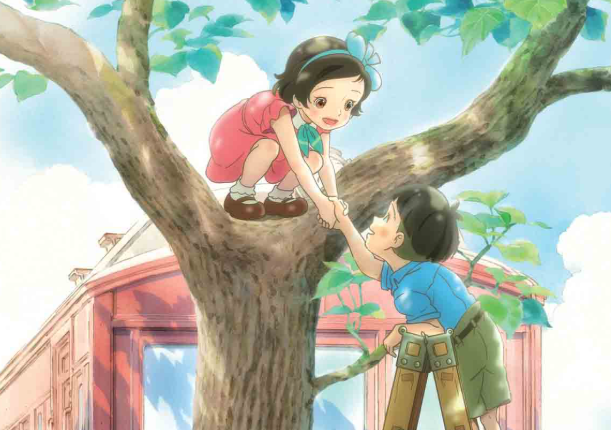
While massive cinematic universes and sprawling science fiction epics dominate the loud aspects of pop culture, the quiet, profound impact of educational literature remains a foundational force in shaping societal values. Tetsuko Kuroyanagi’s autobiographical masterpiece, Totto-Chan: The Little Girl at the Window, serves as a crucial counter-narrative to rigid, industrialized educational systems. The book chronicles the author’s childhood at Tomoe Gakuen, an unconventional school in Tokyo founded by the visionary educator Sosaku Kobayashi during the turbulent years leading up to World War II.
Nurturing Individuality in a Conformist Society
The global resonance of Totto-Chan lies in its gentle but firm dismantling of the one-size-fits-all educational paradigm. At Tomoe Gakuen, classrooms were housed in discarded railroad cars, and students were allowed to dictate their own daily schedules, fostering a deep sense of autonomy and intrinsic motivation. In today’s highly competitive, standardized-testing-obsessed educational climate, the philosophies presented in Totto-Chan are experiencing a massive resurgence in popularity, particularly within discussions surrounding neurodivergence and alternative education models.
- Embracing Neurodiversity: Long before the term existed, Totto-Chan’s narrative highlighted the importance of accommodating what we now recognize as ADHD and neurodivergent behaviors. Kobayashi’s refusal to label Totto-Chan as a “problem child” is a profound lesson in empathetic pedagogy.
- Experiential Learning: The curriculum at Tomoe Gakuen heavily emphasized nature walks, practical life skills, and unguided exploration, directly challenging the modern reliance on rote memorization and indoor, screen-based learning.
- The Psychology of the Window: The titular “window” represents both Totto-Chan’s distraction from traditional schooling and her boundless curiosity about the wider world. The book advocates for opening windows of opportunity rather than forcing children into rigid, predefined boxes.
The legacy of Totto-Chan extends far beyond its status as a beloved children’s book. It has become required reading for educators worldwide, sparking vital conversations about how society values unique intelligences and how educational institutions can be redesigned to nurture the human spirit rather than merely producing compliant workers.
Frequently Asked Questions (FAQ)
- Q1: How does the aesthetic of The Great Gatsby continue to influence modern pop culture?
- The Great Gatsby influences modern pop culture primarily through its visual aesthetic of 1920s opulence, often referred to as the “Roaring Twenties” or “Jazz Age” style. However, its deeper thematic influence is seen in modern narratives that critique the American Dream, explore the emptiness of extreme wealth, and utilize the “tragic anti-hero” trope. Films, music videos, and fashion continually recycle its juxtaposition of glamorous exteriors hiding moral decay.
- Q2: What makes the Barbie movie a significant piece of feminist media?
- The Barbie movie is significant because it uses a globally recognized, highly commodified symbol of traditional femininity to deliver a sharp critique of the patriarchy. Through layered literary references, existential philosophy, and meta-commentary, director Greta Gerwig dismantles the impossible standards placed on women while simultaneously celebrating female solidarity, financial independence, and the complex reality of the modern female experience.
- Q3: What are the main similarities between the world-building of Dune and Elden Ring?
- Both Dune and Elden Ring utilize deep, esoteric world-building that requires active audience engagement. They share structural similarities, such as a universe dependent on a singular, powerful resource (Spice Melange vs. Grace/Runes), a protagonist burdened with a messianic destiny, complex political factions vying for control, and hostile, apocalyptic environmental designs. Both narratives refuse heavy exposition, favoring environmental storytelling and lore discovery.
- Q4: Why are superhero movies often referred to as modern American mythology?
- Superhero movies function as modern American mythology because they utilize the classic “Hero’s Journey” framework to create a pantheon of larger-than-life figures who represent the nation’s ideals, fears, and moral struggles. Just as ancient myths helped societies process natural phenomena and human nature, modern superhero narratives help contemporary audiences process complex issues like global terrorism, surveillance, societal fragmentation, and moral ambiguity.
- Q5: What are the core educational philosophies presented in Totto-Chan?
- Totto-Chan promotes an educational philosophy centered on autonomy, experiential learning, and deep respect for a child’s individuality. Founded on the principles of Sosaku Kobayashi, it advocates for self-directed learning, physical engagement with nature, and the rejection of rigid standardization. It is highly regarded today for its early, empathetic approach to what is now understood as neurodivergence, emphasizing that every child has unique potential if placed in the right environment.