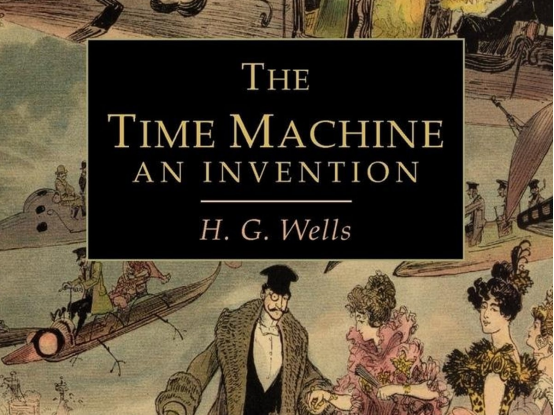
Published in 1895, H.G. Wells’ The Time Machine is far more than a pioneering work of science fiction; it is a profound and unsettling social allegory that uses the canvas of the distant future to critique the societal ills of its own time. By transporting his protagonist 800,000 years forward, Wells constructs a dystopian vision that serves as a stark warning about the consequences of unchecked capitalism and rigid class stratification. The novel is not merely an adventure through time but a deep, philosophical exploration of evolution, degeneration, and the potential for humanity’s self-destruction. This guide delves into the intricate layers of Wells’ masterpiece, dissecting its powerful social commentary, rich symbolism, and the scientific concepts that anchor its speculative narrative.
Wells masterfully transforms science fiction from a genre of pure fantasy into a potent tool for social critique. He leveraged futuristic and fantastical concepts to create a “realistic alarm bell” for Victorian society, forcing readers to confront the potential end-game of their own social structures. The journey into the year 802,701 is a journey into the logical, albeit terrifying, conclusion of the divide between the idle rich and the laboring poor.
The Time Machine as a Vehicle for Social Critique
At its core, The Time Machine is a product of its era—a direct response to the industrial, social, and scientific upheavals of the late 19th century. Wells was deeply influenced by the burgeoning theories of evolution, particularly those of Charles Darwin and Thomas Huxley, and he applied these biological concepts to the social fabric of his time. He saw the stark division in Victorian England between the wealthy, leisured upper class (the bourgeoisie) and the exploited, subterranean working class (the proletariat) not just as a social problem, but as an evolutionary pressure point that could split humanity itself.
H.G. Wells and Social Darwinism
The novel is a powerful literary exploration of Social Darwinism, a concept that applied the “survival of the fittest” principle to human society. However, Wells twists this idea. Instead of a linear progression towards a more advanced state, he presents a future of profound degeneration. He argues that the absence of struggle and challenge for the upper class leads not to perfection, but to weakness and fragility. Conversely, the brutal conditions of the working class lead not to their extinction, but to their adaptation into something monstrous and predatory. This dual path of evolution, driven entirely by class division, is the central mechanism of his social critique.
Science Fiction as a Realistic Alarm Bell
Unlike many of his contemporaries, Wells did not use fantasy to escape reality. He used it to magnify reality’s most troubling aspects. By setting his story in a future so distant it seems fantastical, he was able to bypass his readers’ immediate political and social biases. The story of the Eloi and Morlocks was not about a specific factory or aristocrat; it was about the fundamental principles of a society divided. This allegorical distance allowed him to issue a powerful warning: if the chasm between the rich and poor continues to widen, humanity itself will cleave in two, resulting in a grotesque parody of its former self.

The Eloi and Morlocks: A Dystopian Allegory of Class Stratification
The most enduring and powerful element of The Time Machine is its depiction of the two descendant species of humanity: the Eloi and the Morlocks. They are not aliens or monsters in the traditional sense, but the direct, evolved result of Victorian England’s class structure. Their existence represents Wells’ ultimate pessimism about the trajectory of his society.
The Eloi: The Decadent Descendants of the Bourgeoisie
The Eloi are the surface dwellers, beautiful, frail, and childlike creatures who live a life of passive leisure in a seemingly utopian garden world. They are the evolutionary descendants of the aristocratic upper class. Having conquered nature and eliminated all struggle, their ancestors created a world of comfort that ultimately led to their atrophy.
- Physical and Mental Decline: The Eloi are small, weak, and possess a short attention span and a lack of curiosity. Their intelligence has withered away because it was no longer needed for survival.
- A Life of Superficiality: They spend their days playing, eating fruit, and sleeping, completely devoid of art, science, or any meaningful work. Their existence is beautiful but utterly pointless.
- Loss of Resilience: Their fear of the dark is not a simple phobia but a deep-seated, instinctual terror of their subterranean predators, the Morlocks, against whom they have no defense.
The Eloi represent the ultimate consequence of a life without challenge. They are a warning that the pursuit of comfort and the elimination of hardship, if taken to an extreme, can lead to the erosion of the very qualities that define humanity: intellect, strength, and the drive to progress.
The Morlocks: The Brutalized Proletariat
In stark contrast, the Morlocks are the subterranean, ape-like cannibals who toil in the darkness below. They are the descendants of the industrial working class, who were pushed underground to operate the machinery that sustained the surface world of the elite. Over millennia, they adapted to their dark, mechanical environment.
- Adaptation to Darkness: The Morlocks are pale, with large, greyish-red eyes that are sensitive to light. Their physicality is suited for climbing and living in the tunnels and shafts of their underground world.
- The Engine of Society: They still operate the machinery that ventilates and supports the surface world, a lingering echo of their ancestral role as laborers. They are the producers, while the Eloi are the consumers.
- Predators of the Night: The crucial twist in their relationship is that the Morlocks have become the dominant species. They prey on the helpless Eloi for food, literally consuming their former masters in a horrifying reversal of exploitation.
The Morlocks symbolize the dehumanizing effect of brutal labor and oppression. Pushed out of sight and out of mind, they evolved into something that society no longer recognized as human, eventually rising to reclaim a grim and terrifying form of power.

Deconstructing the Rich Symbolism in The Time Machine
Beyond the central allegory of the Eloi and Morlocks, Wells populates his novel with potent symbols that enrich its themes and deepen its cautionary message. Each element the Time Traveller encounters is imbued with metaphorical weight, representing aspects of progress, knowledge, and decay.
The Time Machine: A Symbol of Progress and Peril
The machine itself is a dual symbol. On one hand, it represents the pinnacle of human intellect, scientific achievement, and the Victorian era’s faith in progress and technology. It is a testament to humanity’s ability to conquer the fundamental laws of the universe. On the other hand, it is the very instrument that reveals the horrifying failure of that progress. It allows the Traveller to see that technological advancement does not guarantee social or moral improvement. The machine is a tool of discovery that ultimately uncovers a truth of decay, making it a symbol of both human ingenuity and its potential for catastrophic shortsightedness.
The White Sphinx: The Unknowable and Forgotten Past
One of the first structures the Time Traveller sees is a large, white sphinx statue. The sphinx is a classic symbol of mystery and riddles. In the context of the novel, it represents the enigma of the future and the forgotten history that led to it. The Morlocks use the sphinx’s base to hide the time machine, symbolically holding the key to the past (and the Traveller’s escape) within the mystery of the present. It suggests that the answers to the future’s decay lie in a past that the Eloi have forgotten and the Morlocks have obscured.
The Palace of Green Porcelain: The Ruin of Human Knowledge
The Time Traveller’s discovery of the Palace of Green Porcelain, which is revealed to be an ancient museum, is a poignant and deeply symbolic moment. It is a mausoleum of human achievement, filled with the decaying remnants of art, literature, and science. The crumbling exhibits represent the ultimate futility of knowledge and culture when the society that created them has lost the intellect to understand or appreciate them. The Traveller finds tools and weapons there—a mace and a box of matches—which are relics of a forgotten age of innovation. His use of these primitive tools for survival highlights how far humanity has fallen.

Evolutionary Theory and the Degeneration of Humanity
Wells’ narrative is deeply rooted in the scientific discourse of his time, particularly the groundbreaking and often controversial theories of evolution. He uses the future world of 802,701 as a thought experiment to explore the darker possibilities of Darwinian principles, suggesting that evolution is not an inherently progressive force. It is simply a process of adaptation, and if the environmental pressures are negative, the resulting adaptation can be a form of degeneration.
From Human to Sub-Human: The Perils of Unchecked Evolution
The bifurcation of humanity into two distinct species is a direct application of evolutionary theory. Wells posits that by physically and socially separating the two classes for countless generations, they cease to be a single interbreeding population. This isolation allows them to follow separate evolutionary paths tailored to their unique environments.
- The Eloi’s Path: In an environment free of predators and challenges, traits like strength, intelligence, and ambition become unnecessary and are gradually bred out. This leads to a state of “devolution” into a weaker, less complex form.
- The Morlocks’ Path: In a dark, industrial environment, traits like physical strength for labor, cunning for survival, and eyes adapted to darkness are selected for. This leads to their evolution into a species perfectly suited for their grim reality, but at the cost of what the Time Traveller recognizes as their humanity.
A Pessimistic View of Humanity’s Ultimate Fate
The novel’s pessimism extends beyond the Eloi and Morlocks. As the Time Traveller journeys even further into the future, he witnesses the end of all life on a dying Earth under a bloated red sun. This final vision underscores a key theme: humanity’s social struggles are ultimately insignificant in the face of cosmic entropy. This bleak ending serves as a final rebuke to Victorian optimism, suggesting that both social progress and life itself are temporary. It reinforces the idea that humanity’s fate is not guaranteed and that the path of evolution can just as easily lead to extinction as it can to advancement.

The Scientific Plausibility: Time as the Fourth Dimension
While The Time Machine is primarily a social allegory, Wells grounded his fantasy in the scientific concepts of his day, lending it a credibility that captivated audiences. His explanation of time travel was revolutionary for fiction and laid the groundwork for countless stories that followed. He was one of the first to present a mechanistic, rather than magical, method for traveling through time.
Wells’s Contribution to the Concept of Time Travel
The novel’s opening chapter features the Time Traveller explaining his theory to a group of skeptical friends. He introduces the now-famous idea of Time as the Fourth Dimension. He argues that just as an object has length, breadth, and thickness, it must also have a duration in time. He reasons that if we can move freely in the three spatial dimensions, it should be theoretically possible to build a machine that can move along the fourth dimension: time.
This conceptual leap was crucial. It moved time travel from the realm of dreams and ghosts into the language of geometry and physics. By providing a plausible (if not practically achievable) framework, Wells made the entire narrative more believable and impactful. The detailed description of the machine itself, with its quartz rods and ivory parts, and the visceral sensations of travel—the flickering of days and nights—all contribute to this sense of scientific realism.
The Legacy in Physics and Fiction
It is fascinating to note that Wells published his novel more than a decade before Albert Einstein published his theory of special relativity, which mathematically unified space and time into a single four-dimensional continuum known as spacetime. While Wells’s concept was a philosophical and imaginative one, it presaged one of the most profound shifts in modern physics. His work cemented the “time machine” as a staple of science fiction and provided the conceptual vocabulary that authors and filmmakers would use for over a century to explore the paradoxes and possibilities of traveling through time.
Frequently Asked Questions (FAQ)
- Q1: What is the main message of H.G. Wells’ The Time Machine?
- The primary message is a warning against the extreme class stratification of Victorian society. Wells argues that the vast divide between the wealthy elite and the laboring class, if left unchecked, could lead to the evolutionary degeneration of humanity into two separate, monstrously adapted species, ultimately destroying society as we know it.
- Q2: Who are the Eloi and Morlocks, and what do they represent?
- The Eloi are the beautiful, frail, and unintelligent descendants of the privileged upper class, who have devolved due to a life without struggle. The Morlocks are the brutish, subterranean descendants of the working class, who have adapted to a life of darkness and labor. Together, they represent the horrifying end-product of class division, serving as a powerful allegory for the relationship between the bourgeoisie and the proletariat.
- Q3: Is The Time Machine scientifically accurate?
- While not scientifically accurate by modern physics standards, the novel was remarkably forward-thinking for its time. H.G. Wells’s concept of “Time as the Fourth Dimension” was a groundbreaking idea in fiction that predated Einstein’s formal theories of spacetime. He used contemporary scientific theories, especially in evolution, to give his story a strong sense of plausibility and intellectual weight.
- Q4: What role does Social Darwinism play in the novel?
- The novel is a critical exploration of Social Darwinism. Instead of showing a “survival of the fittest” that leads to a superior human race, Wells presents a scenario where adaptation leads to degeneration. The Eloi become weaker by adapting to a life of ease, while the Morlocks become monstrous by adapting to a life of oppression. Wells uses this to critique the simplistic and often self-serving application of evolutionary theory to human society.
- Q5: Besides class struggle, what other themes are present in the book?
- Beyond class struggle, the novel explores several other significant themes. These include the degeneration of humanity, the potential dangers of unchecked technological progress, the conflict between capitalism and labor, the nature of time itself, and a deep-seated pessimism about the ultimate fate of humanity in the face of cosmic forces and entropy.