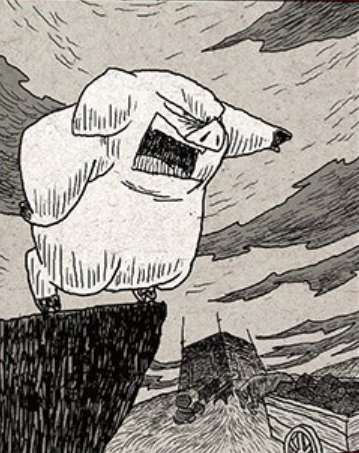
Introduction to Dystopian Frameworks: The Anatomy of Societal Control
Dystopian literature serves as a dark mirror to contemporary society, reflecting our deepest anxieties about authority, individuality, and the fragility of human rights. By constructing exaggerated models of societal control, authors force readers to confront the uncomfortable realities of political manipulation and the erosion of personal freedoms. These narratives do not merely predict grim futures; they dissect the psychological and systemic mechanisms that allow totalitarian regimes to flourish. Whether through the overt violence of a televised death match or the subtle linguistic manipulation of a revised dictionary, dystopian worlds are meticulously engineered to suppress dissent and enforce absolute conformity.
The architectural foundation of any dystopian society relies on the systematic dismantling of individual agency. This is achieved through a combination of relentless surveillance, the rewriting of history, the stratification of social classes, and the weaponization of fear. By examining cornerstone texts such as George Orwell’s 1984 and Animal Farm, Suzanne Collins’s The Hunger Games, and Veronica Roth’s Divergent, we can decode the intricate strategies employed by authoritarian systems. These works provide a comprehensive framework for understanding how power is consolidated and maintained, and conversely, what it takes for the human spirit to ignite the sparks of rebellion.
The Illusion of Utopian Ideals
Totalitarian regimes rarely present themselves as oppressive forces initially. Instead, they rise to power on the promise of a utopian vision—peace, equality, or security following a period of catastrophic instability. This initial justification is crucial for securing the voluntary obedience of the populace. However, the utopian facade quickly crumbles as the ruling class manipulates these foundational ideals to serve their own interests, transforming protective measures into instruments of subjugation.

The Dynamics of Rebellion and Obedience: Lessons from Animal Farm
George Orwell’s Animal Farm stands as a masterful political allegory that meticulously traces the trajectory of a revolution from its idealistic inception to its ultimate corruption. The narrative explores the tragic paradox of rebellion: the very individuals who overthrow an oppressive regime often adopt the tyrannical behaviors of their former masters. The animals’ initial uprising against the human farmer, Mr. Jones, is fueled by a genuine desire for equality and self-governance, encapsulated in the foundational doctrine of Animalism. Yet, the choice between rebellion and obedience soon becomes a complex psychological trap orchestrated by the intellectual elite—the pigs.
The manipulation of the working class is vividly portrayed through the character of Boxer, the loyal and immensely strong cart horse. Boxer embodies the tragedy of blind obedience. His personal maxims, “I will work harder” and “Napoleon is always right,” highlight how authoritarian regimes exploit the earnest dedication of the proletariat. The pigs do not rely solely on brute force; they weaponize the animals’ lack of education and memory to constantly shift the goalposts of reality.
The Gradual Erosion of Truth
The alteration of the Seven Commandments serves as the primary mechanism for institutionalizing inequality. As the pigs acquire more human-like privileges, the laws are subtly amended. The absolute decree that “No animal shall sleep in a bed” becomes “No animal shall sleep in a bed with sheets.” This incremental revisionism demonstrates a profound social implication: oppression is rarely implemented overnight. It creeps in through the gradual normalization of small injustices.
To fully grasp the methodology of control in Animal Farm, we must analyze the specific tactics used by the ruling class to ensure compliance. The pigs utilize a multi-pronged approach to dismantle any potential for a secondary rebellion:
- Linguistic Manipulation: Squealer, the propagandist, uses convoluted language and false statistics to convince the animals that they are better off than before, effectively gaslighting an entire society.
- Manufactured Threats: The constant invocation of “Jones returning” serves as a unifying fear tactic. By keeping the animals terrified of a past enemy, the pigs justify their current authoritarian measures.
- Scapegoating: Snowball is transformed from a hero of the revolution into a perpetual enemy of the state, blamed for every failure and misfortune, thereby deflecting accountability away from Napoleon’s leadership.
Ultimately, the choice between rebellion and obedience in Animal Farm is rendered meaningless by the end of the narrative. The final, horrifying realization that the pigs are indistinguishable from the humans underscores Orwell’s cynical view of unchecked power. The tragedy is not just that the revolution failed, but that the oppressed became complicit in their own subjugation through a failure to critically question authority.

Psychological Warfare and Surveillance: The Social Implications of 1984
If Animal Farm illustrates the political corruption of a revolution, Orwell’s 1984 delves into the terrifying psychological depths of a fully realized totalitarian state. The Party in Oceania does not merely seek to control the actions of its citizens; it demands total ownership of their minds. The conceptual frameworks introduced in 1984—most notably the Thought Police and Doublethink—have become essential vocabulary for analyzing modern surveillance states and the manipulation of objective reality.
The omnipresence of the telescreen is the physical manifestation of the Party’s control, functioning as a panopticon that enforces self-policing. Citizens are acutely aware that any facial expression, nervous tic, or muttered word could be construed as “thoughtcrime.” This constant state of paranoia destroys the foundations of human connection, eradicating trust between friends, lovers, and even family members. The social implication is clear: when a society is stripped of private spaces and private thoughts, the individual ceases to exist as an independent entity.
Doublethink and Cognitive Dissonance
The most insidious weapon in the Party’s arsenal is the concept of Doublethink—the ability to hold two contradictory beliefs in one’s mind simultaneously, and accept both of them. This is not merely lying; it is the conscious destruction of logical reasoning. When the Party declares that “War is Peace,” “Freedom is Slavery,” and “Ignorance is Strength,” citizens must not only repeat these slogans but genuinely believe them.
The implementation of Doublethink requires a profound restructuring of human cognition, achieved through several interconnected systemic processes:
- The Destruction of Language (Newspeak): By systematically eliminating words that express dissent, nuance, or complex emotion, the Party restricts the very capacity for unorthodox thought. If the word for “freedom” is eradicated, the concept of freedom becomes unthinkable.
- The Mutability of the Past: Winston Smith’s job at the Ministry of Truth involves constantly rewriting historical records to align with the Party’s current narrative. He who controls the past controls the future.
- The Cult of Personality: The figure of Big Brother serves as a focal point for the citizens’ manufactured love and devotion, redirecting natural human affections away from individuals and toward the state apparatus.
The ultimate goal of the Thought Police is not just to punish dissent, but to cure it. Winston’s torture in Room 101 is designed to break his spirit completely, forcing him to betray his deepest love and genuinely embrace Big Brother. This represents the absolute triumph of the state over the individual soul, serving as a chilling warning about the fragility of truth and personal identity in the face of absolute power.

The Undercurrent of the Death Race: Life and Death in The Hunger Games
Transitioning from the psychological oppression of 1984 to the visceral brutality of Suzanne Collins’s The Hunger Games, we encounter a society that uses physical violence and media spectacle as its primary tools of subjugation. The nation of Panem maintains the rigid stratification of its districts through the annual Hunger Games—a televised death match involving children. This gruesome spectacle is not merely a punishment for a past rebellion; it is a calculated psychological operation designed to instill absolute hopelessness.
The undercurrent of the death race lies in its manipulation of human survival instincts. The Capitol forces the districts to watch their children murder one another, turning the victims into both participants and spectators of their own oppression. The life-and-death decisions made within the arena are heavily influenced by the invisible hand of the Gamemakers, who manipulate the environment to ensure maximum entertainment value for the Capitol citizens. This dynamic highlights the grotesque commodification of human life in a hyper-mediatized society.
Strategic Alliances and Moral Compromises
Katniss Everdeen’s journey through the Games is a masterclass in navigating the ethical minefields of a rigged system. Her decisions are constantly weighed against the necessity of survival and the desire to retain her humanity. Peeta Mellark’s poignant assertion that he wants to “die as himself” and not as a monster created by the Capitol introduces a profound philosophical conflict: how does one maintain moral integrity when the system rewards savagery?
The rebellion in The Hunger Games is sparked not by a grand political manifesto, but by small, deeply personal acts of defiance that disrupt the Capitol’s narrative. These acts of subversion are critical to understanding the mechanics of resistance:
- The Floral Tribute to Rue: By treating Rue’s death with dignity and mourning, Katniss rejects the Capitol’s premise that the tributes are merely disposable entertainment. This act reclaims their humanity and sparks a riot in District 11.
- The Nightlock Berries: The ultimate act of defiance occurs when Katniss and Peeta threaten double suicide rather than conform to the rule that there can be only one victor. By taking control of their own life-and-death decision, they force the Capitol to yield, exposing the fragility of the Gamemakers’ absolute authority.
- The Manipulation of Persona: Katniss learns to weaponize the Capitol’s obsession with media, playing the role of the “star-crossed lover” to garner sponsorships. She uses the oppressor’s tools against them, highlighting the power of public perception.
The Hunger Games ultimately argues that true rebellion requires not just physical courage, but the ability to break the psychological conditioning imposed by the state. The spectacle of the arena is designed to divide and conquer, but Katniss’s actions prove that empathy and solidarity are the most dangerous weapons against a totalitarian regime.

Categorizing Humanity: Courage, Intelligence, and Loyalty in Divergent
Veronica Roth’s Divergent introduces a different flavor of dystopian control—one based on the rigid categorization of human personality. The society of futuristic Chicago is divided into five factions: Dauntless (courage), Erudite (intelligence), Amity (peace), Candor (honesty), and Abnegation (selflessness). This system operates on the flawed premise that human nature can be compartmentalized, and that forcing individuals to dedicate themselves to a single virtue will eliminate societal conflict.
The faction system is a profound exploration of identity and conformity. At the age of sixteen, citizens must choose a faction, effectively severing ties with their families if they choose to leave their birth faction. The motto “Faction before blood” illustrates the state’s demand for ultimate loyalty to the system over interpersonal relationships. This societal engineering creates a superficial harmony, but it fundamentally suppresses the complex, multifaceted nature of human beings.
The Threat of Divergence
The protagonist, Tris Prior, discovers she is “Divergent”—meaning she possesses traits of multiple factions and cannot be easily controlled by the society’s psychological simulations. In this world, Divergence is not celebrated as well-roundedness; it is hunted as a mortal threat. A system built on absolute categorization cannot tolerate anomalies, because anomalies prove that the system itself is an artificial construct.
To fully understand the symbolic weight of the factions, we must examine how the three major virtues—Courage, Intelligence, and Loyalty—are distorted when isolated from one another:
- Courage without Compassion (Dauntless): The Dauntless faction is intended to protect the city, but their isolation of courage leads to brutality, recklessness, and a culture of toxic dominance. Without the tempering influence of empathy, bravery devolves into cruelty.
- Intelligence without Ethics (Erudite): The Erudite faction pursues knowledge above all else. However, their intellectual arrogance leads them to view other human beings as mere data points or obstacles. Their intelligence is weaponized to engineer a coup, proving that raw intellect devoid of morality is inherently dangerous.
- Loyalty to the Detriment of Self (Abnegation): While Abnegation’s selflessness is noble, their strict suppression of individual desire creates a stifling environment where personal ambition is viewed as a sin, leading to a populace that is easily victimized.
Divergent’s core message is a rejection of reductionist societal structures. Tris’s journey is about embracing the totality of her human identity. The narrative argues that true strength lies in the synthesis of courage, intelligence, and loyalty, and that any society that attempts to force individuals into narrow, predefined boxes is fundamentally unnatural and destined to collapse.

Comparative Analysis: Mechanisms of Control Across Dystopian Worlds
While each of these dystopian narratives presents a unique vision of a ruined society, synthesizing their core themes reveals a universal blueprint for authoritarian control. Whether the weapon of choice is linguistic manipulation, televised violence, or psychological categorization, the ultimate goal remains the eradication of individual autonomy. By placing these works side by side, we can better understand the multifaceted nature of systemic oppression.
The following table provides a comprehensive structural comparison of the mechanisms of control and the nature of rebellion across the four analyzed texts. This multi-dimensional dissection highlights how different authors approach the fundamental conflict between the state and the individual.
| Literary Work | Primary Mechanism of Control | Method of Enforcing Obedience | The Catalyst for Rebellion | Core Social Implication |
|---|---|---|---|---|
| Animal Farm | Linguistic Manipulation & Revisionism | Exploiting lack of education; Scapegoating (Snowball) | Initial inequality; though ultimate rebellion fails due to complacency. | Revolutions are easily corrupted when the populace lacks critical thinking. |
| 1984 | Psychological Warfare (Doublethink) | Omnipresent Surveillance (Telescreens); Erasing history. | The innate human desire for privacy, memory, and authentic connection. | The destruction of language and objective truth leads to the death of the self. |
| The Hunger Games | Media Spectacle & Physical Terror | Resource starvation; The annual televised slaughter of children. | Acts of empathy and solidarity that disrupt the Capitol’s narrative of division. | Media can be weaponized to desensitize the masses to horrific violence. |
| Divergent | Categorization of Identity | The Faction System; Psychological simulation serums. | The existence of “Divergents” who cannot be controlled by single-trait logic. | Human nature is multifaceted; enforcing rigid conformity breeds instability. |
This comparative lens demonstrates that the dystopian genre is not a monolith. Orwell focuses on the corruption of political ideology and the fragility of truth. Collins emphasizes the dangers of a hyper-capitalist, media-obsessed culture. Roth explores the psychological damage of forcing complex human identities into restrictive social boxes. Yet, they all converge on a single, powerful conclusion: obedience demanded through fear or manipulation is a temporary illusion, and the human drive for freedom is an inextinguishable undercurrent.

Breaking the Cycle: The Ultimate Cost of Dystopian Uprisings
The transition from obedience to rebellion in dystopian literature is never without catastrophic cost. These narratives do not offer sanitized, triumphant victories. Instead, they force readers to grapple with the messy, often devastating consequences of dismantling entrenched power structures. The act of breaking the cycle of oppression requires a sacrifice that forever alters the physical and psychological landscape of the protagonists.
In The Hunger Games, Katniss survives the rebellion, but she is left deeply traumatized, bearing the invisible scars of war. The realization that the leaders of the rebellion (like President Coin) are willing to employ the exact same ruthless tactics as the Capitol underscores a grim reality: defeating a monster often requires monstrous actions. This mirrors the cyclical failure seen in Animal Farm, where the pigs simply replace the human oppressors. True liberation, these texts suggest, requires more than just overthrowing a leader; it demands a fundamental restructuring of societal values.
Frequently Asked Questions (FAQ)
- What is the significance of Doublethink in modern society?
- Doublethink, introduced in George Orwell’s 1984, is highly relevant today as it mirrors the phenomenon of cognitive dissonance in the era of “fake news” and hyper-partisan media. It represents the ability of individuals to accept conflicting narratives simultaneously without logical objection, often due to political tribalism or algorithmically driven echo chambers that prioritize ideological loyalty over objective truth.
- How does The Hunger Games use media as a tool of oppression?
- In Panem, the Capitol uses the Hunger Games as a mandatory television spectacle to achieve two goals: it desensitizes the Capitol citizens to violence, turning the suffering of the districts into mere entertainment, and it serves as a constant, terrifying reminder to the districts of the Capitol’s absolute power. It weaponizes the concept of “panem et circenses” (bread and circuses) to keep the populace distracted and divided.
- Why does the faction system in Divergent ultimately fail?
- The faction system fails because it relies on a fundamental misunderstanding of human psychology. By forcing individuals to suppress all traits except one (e.g., intelligence for Erudite, courage for Dauntless), the system creates imbalanced, extreme personalities. Divergents like Tris prove that human beings naturally possess multiple, intersecting virtues, and any societal structure that attempts to eradicate this complexity is inherently unstable.
- What is the main lesson regarding rebellion in Animal Farm?
- Animal Farm illustrates that a successful physical rebellion is not enough to secure freedom. If the oppressed class lacks education, critical thinking, and the willingness to hold their new leaders accountable, the revolution will inevitably be hijacked by a new elite. The novel warns that tyranny can easily re-emerge under the guise of revolutionary rhetoric.
- Can utopian ideals ever exist without becoming dystopian?
- Dystopian literature broadly suggests that any attempt to enforce a perfect society (a utopia) inevitably requires the suppression of free will, thereby transforming it into a dystopia.
Literary and art analysis note: This article is independent literary, science-fiction, art-history, or cultural commentary. It is not official publisher, author, estate, museum, gallery, school, award, franchise, brand, or rights-holder material, and it does not provide legal, academic, collecting, conservation, health, safety, or professional advice.Independent commentary note: Names of authors, books, artworks, characters, artists, publishers, franchises, awards, museums, films, platforms, and rights holders are used only for identification and commentary. This site is not affiliated with, sponsored by, authorized by, or endorsed by those parties, and does not claim official status, licensing, ownership, or definitive interpretation.Speculative fiction boundary note: AI, cyberpunk, nuclear, weapons, war, gene editing, space, robotics, surveillance, and high-technology topics are discussed as literature and cultural criticism. They are not technical instructions, scientific protocol, operational planning, security advice, medical advice, weapons guidance, investment advice, or encouragement of harm.